A250 June | Romantic and Victorian Styles
North Carolina’s 19th century Romantic Era was inspired by an artistic, literary, musical, and intellectual movement that began in Europe. Romanticism emphasized emotion and beauty over the logic and order of the previous Neoclassical Period. Romantic Era architecture chronicled wealth derived from cotton and tobacco booms and the rise of industrialization beginning in 1844.
Romanticism is a contrast to Neoclassicism. Where Neoclassicism was symmetrical, Romanticism is increasingly asymmetrical. As Neoclassicism imposes itself on the landscape, Romanticism blends with the landscape. The style turned away from the monumentalism of Greece and Rome, and instead championed expressions of Gothic, Tuscan, and medieval styles that evoked nostalgia, nationalism, and the picturesque.
Italianate and Gothic Styles
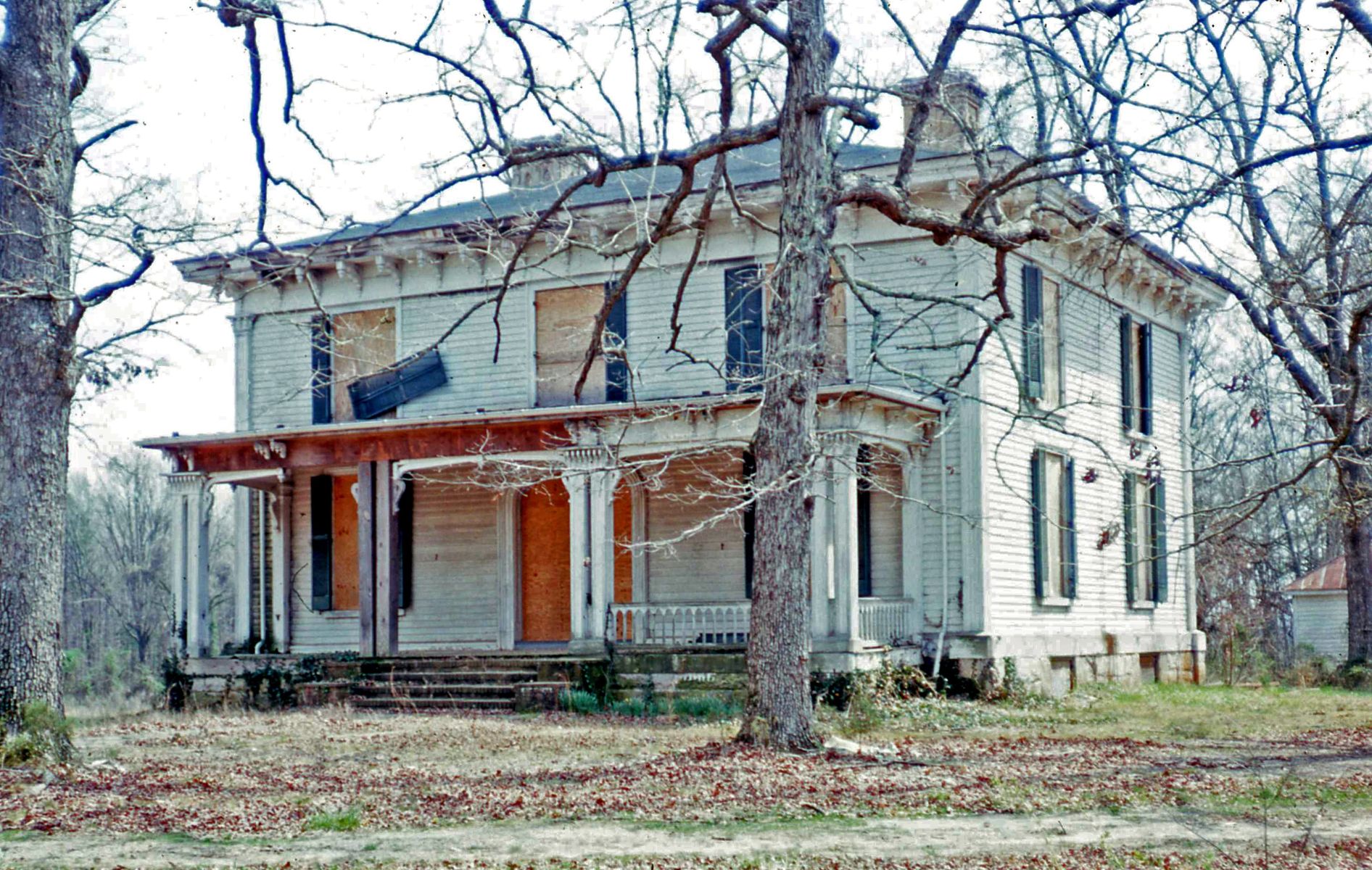
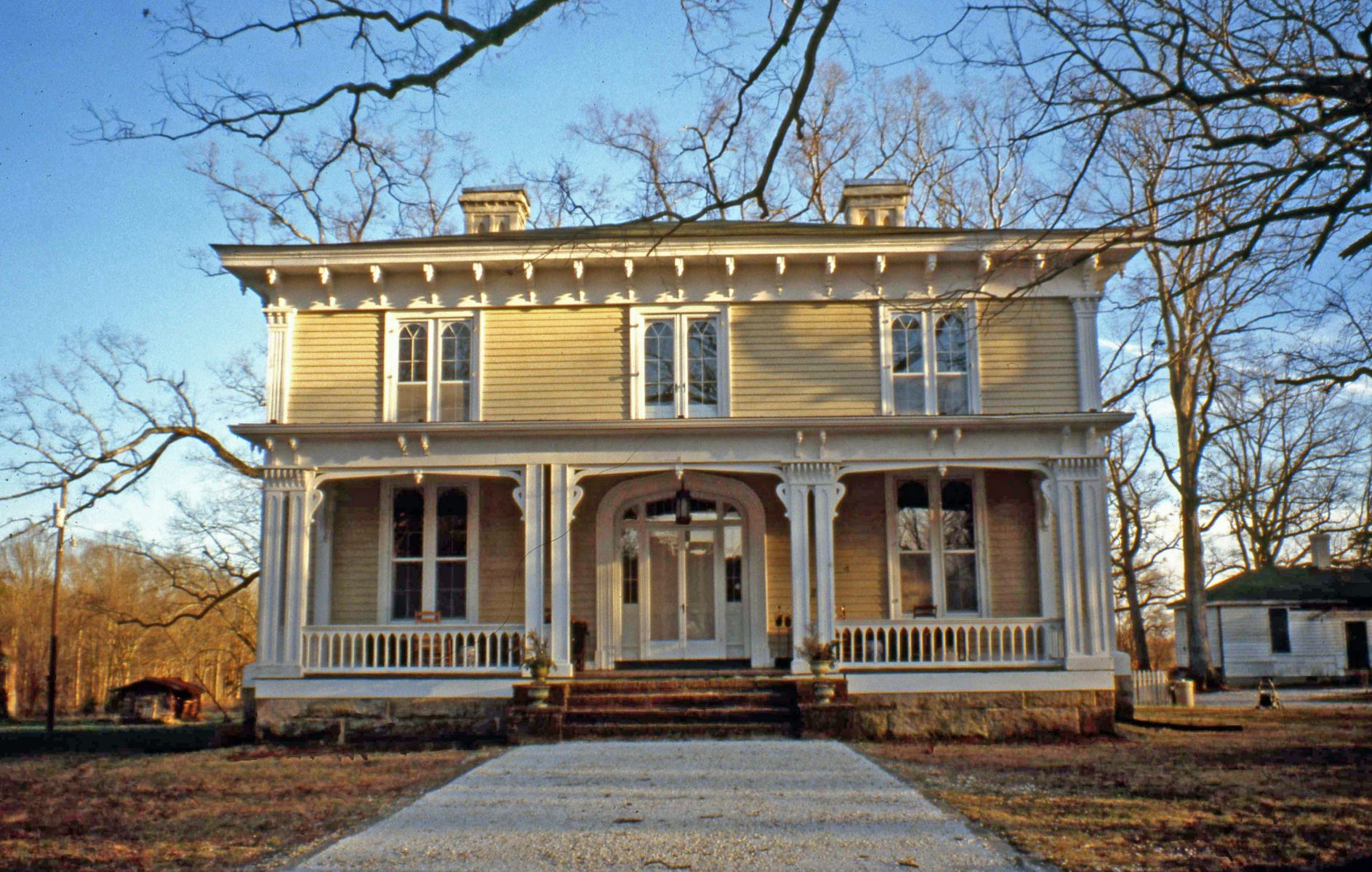
Among the first North Carolina architects to adopt the Italianate style was Warrenton’s Jacob Holt. Holt was a Virginia-born carpenter who established one of the state’s largest antebellum building firms, working in the wealthiest counties. His distinctive style blended Neoclassical forms with Italianate details, including heavy bracketed overhangs, paired arched windows, and elaborate bracketed, transomed, and sidelit front doors. His work in Warren County includes Oakley Hall, located near Ridgeway. The Greek Revival and Italianate plantation house was built about 1855 for Dr. William J. Hawkins who served as president of the Raleigh and Gaston Railroad from 1855-1875 and later founded Citizens’ National Bank in Raleigh. The two-story, three bay by two bay, frame dwelling has a hipped roof with deep overhang and brackets and is more ornate than other Holt-designed homes in Warren County. Oakley Hall was saved through PNC’s Endangered Properties Program in 1992 when it was purchased and fully renovated by owners Don Arnold and Ernie Fleming.
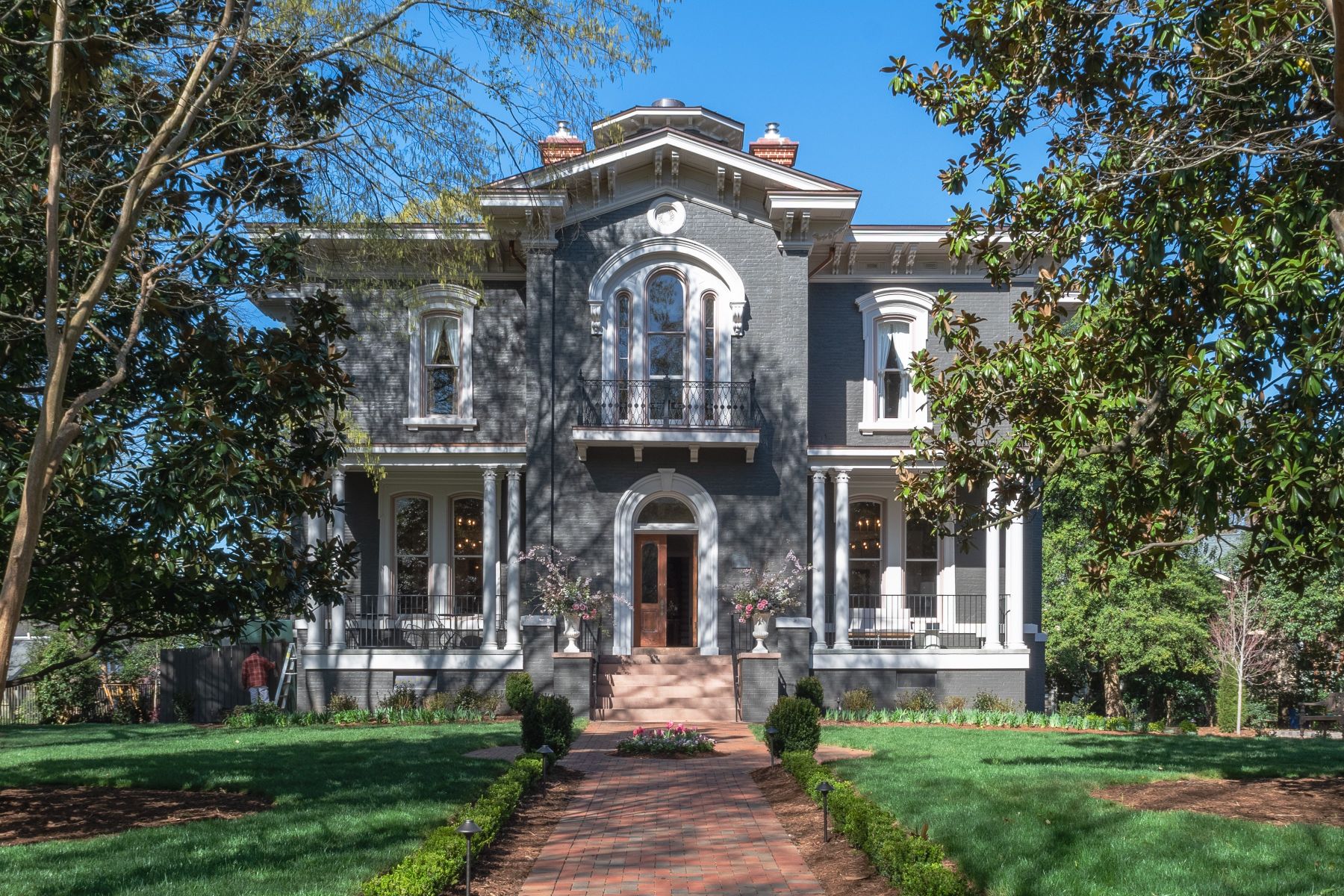
Full expressions of the Italianate style were built around our state in the 1850s. Two suburban villas were designed by English architect William Percival who arrived in Raleigh in 1857. Monfort Hall in Raleigh was commissioned by planter William Montford Boylan. The Italianate house was completed in 1860 and sits on the highest point of the now historic Boylan Heights neighborhood in Downtown Raleigh. It features a symmetrical brick facade with a variety of round- and segmental-arch windows trimmed with wide label molding. The low roof is accentuated by deep bracketed eaves and an octagonal cupola at the roof. The preservation story of Montfort Hall is long and winding. One of Raleigh’s few antebellum mansions to survive the Civil War, Montfort Hall changed hands a number of times over the 20th century. By the late 1970s — having passed through so many hands in so short a time — much of the property’s Italianate Style features were obscured by later additions. In 1979, the Jadwick family purchased the house and undertook the major project of restoring many of the original features of the home in the Italianate style. Before selling Montfort Hall in 2016, the Jadwicks ensured its permanent protection with a preservation easement. In 2018, Sarah and Jeff Shepherd acquired the property, transforming it into Heights House Hotel which opened in 2021.
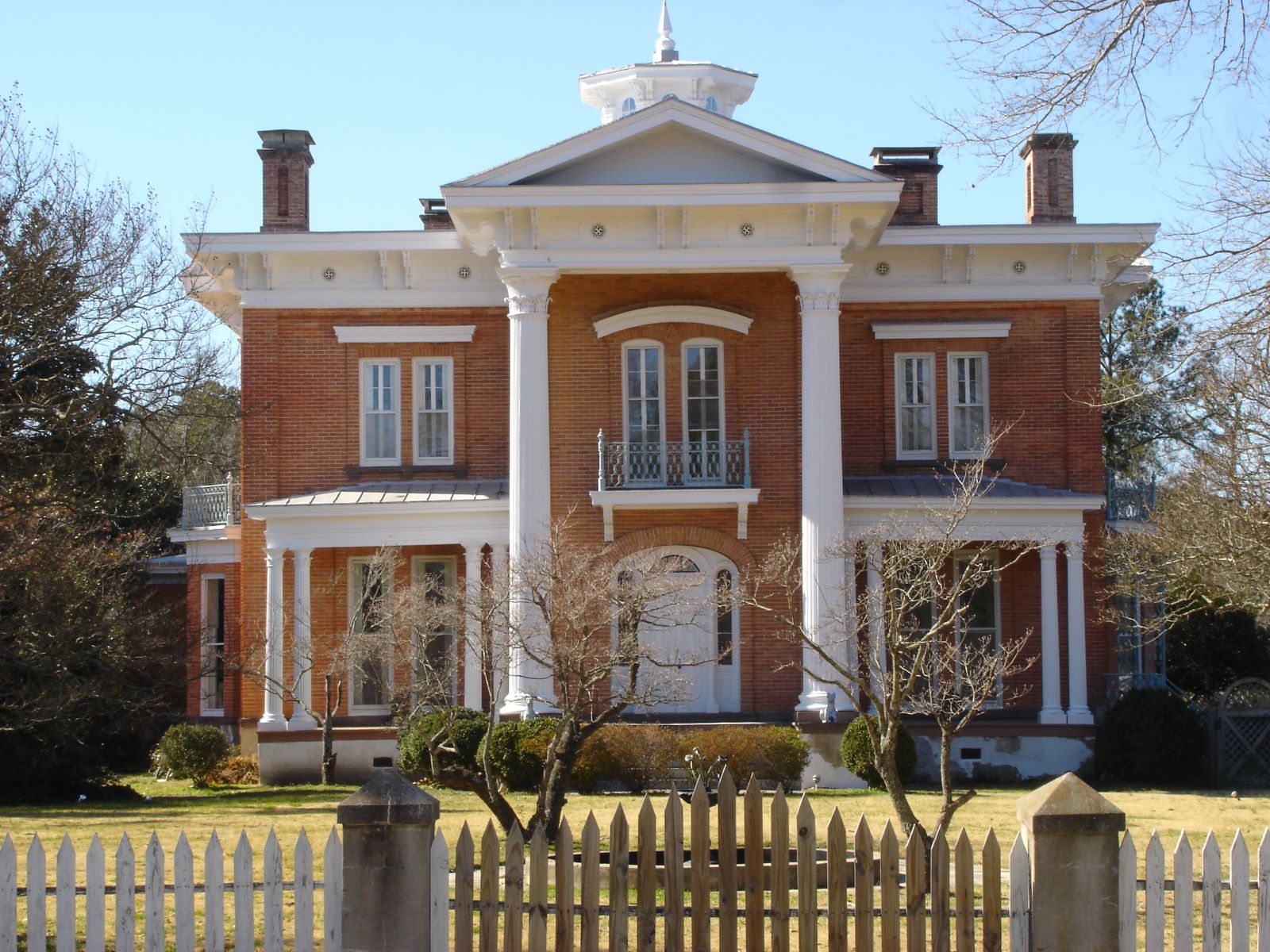
Percival’s other suburban villa is The Barracks in Tarboro, commissioned by planter William S. Battle in 1858. Percival created a symmetrical brick facade centered on a portico with fluted columns, punctuated with segmental-arch and flat lintel openings. The low roofline sits atop bracketed eaves and is capped by an octagonal cupola. The rear portion of The Barracks was badly damaged by fire in 2016 and was subsequently donated to PNC and placed under preservation covenants in 2017. Its current owners have been bringing the massive house back to life room by room.
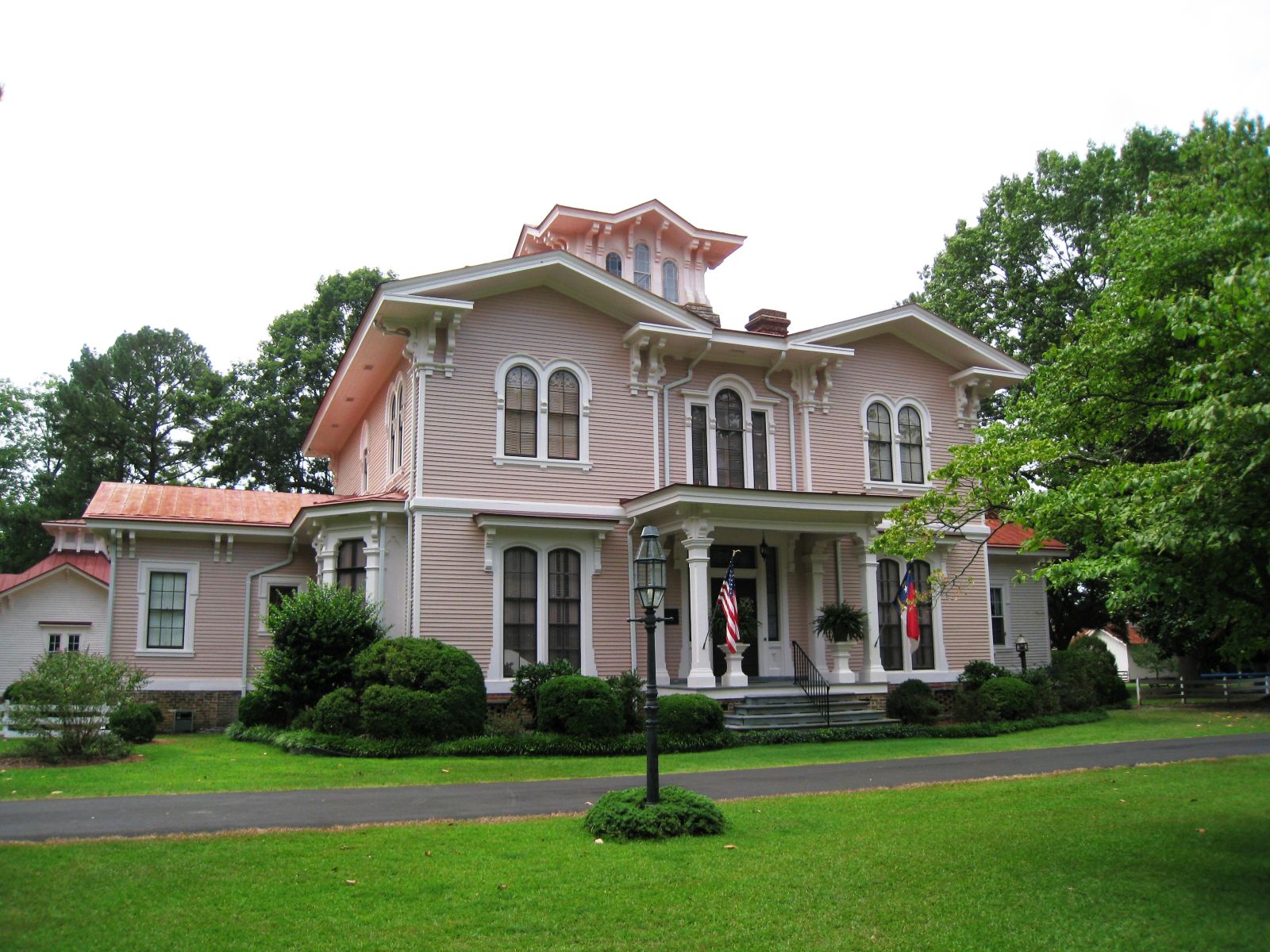
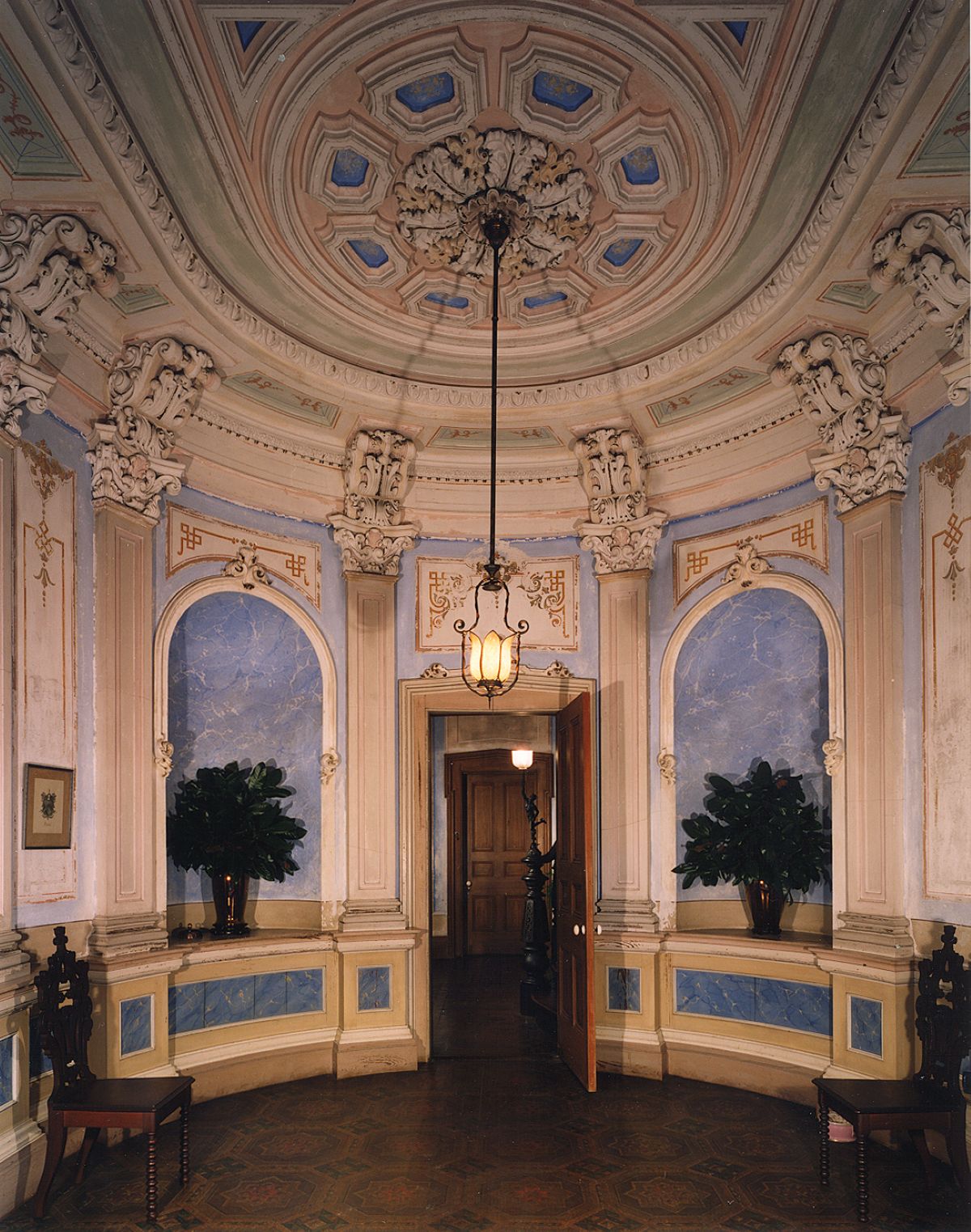
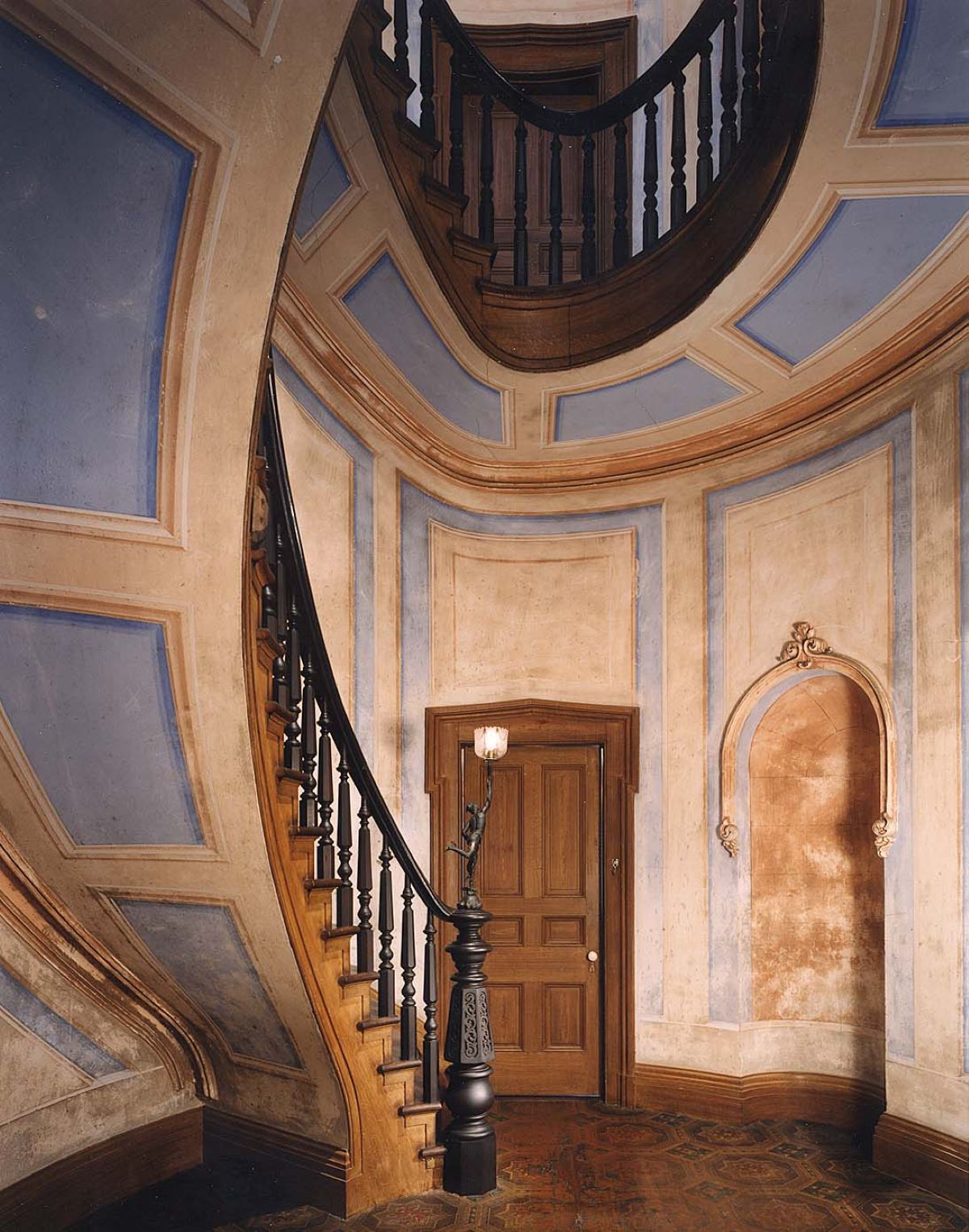
Just down the road in Tarboro is Coolmore, one of NC’s most exuberant and finest examples of Italianate architecture. Built 1858-1861, planter Joseph J. W. Powell commissioned architect Edmund Lind of Baltimore to design the house and its complement of outbuildings. The two-story frame main house presents a symmetrical facade flanked by two low-pitched gable wings. Italianate features include round- and segmental-arch windows, heavy bracketed eaves, and an impressive cupola. The interior features elaborate plaster work and high quality decorative paint and murals, and a freestanding elliptical staircase. The house was designated as a National Historic Landmark in 1978, one of only 40 in NC. The house has been protected by PNC since 1995.
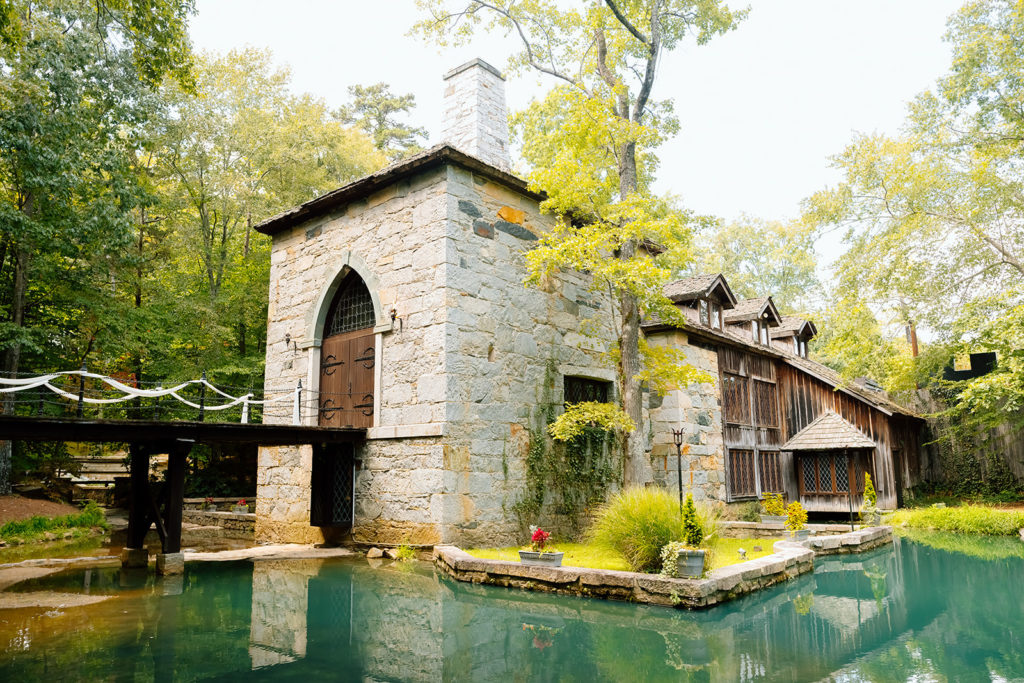
The Gothic style, with its high-pitched roof and narrow lancet windows, never gained the following that the Italianate style held. A few examples of the style are protected by PNC, including the unusual McCulloch Gold Mill near Jamestown. The 1831 mill processed milk quartz to extract gold and features a fortified main entry that takes the form of a Gothic arch. Today, the site is operated as a special events venue. McCulloch Gold Mill has been protected by PNC since 1985.
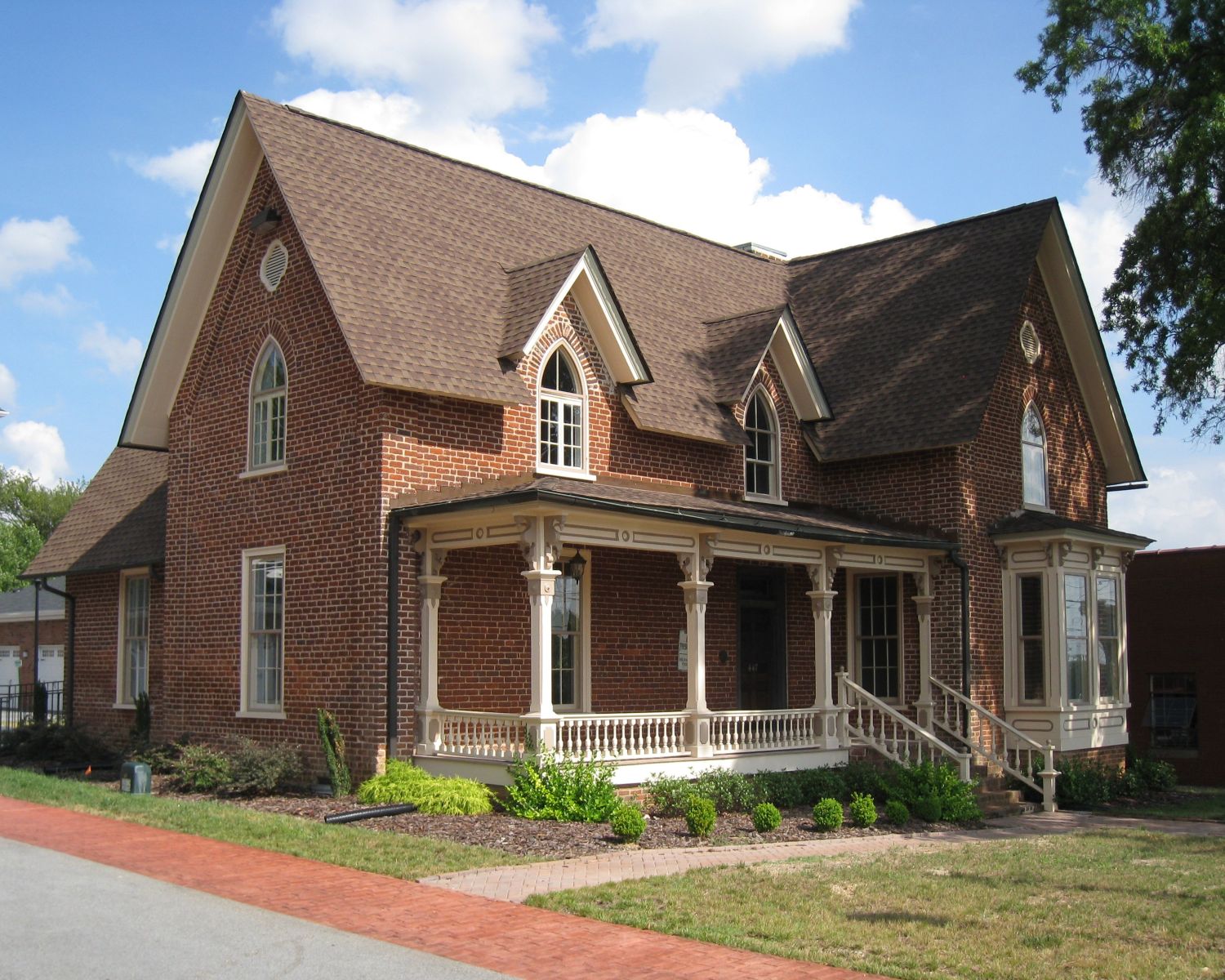
In nearby Greensboro, the William Fields House is a brick expression of Gothic Revival architecture. The house is thought to have been designed in 1875 by Lyndon Swaim, a newspaperman, turned mayor, turned architect. The brick house features an asymmetrical facade with pointed arch windows, wall dormers, and quatrefoil attic vents. The Fields House has been protected by PNC since 1984.
Second Empire
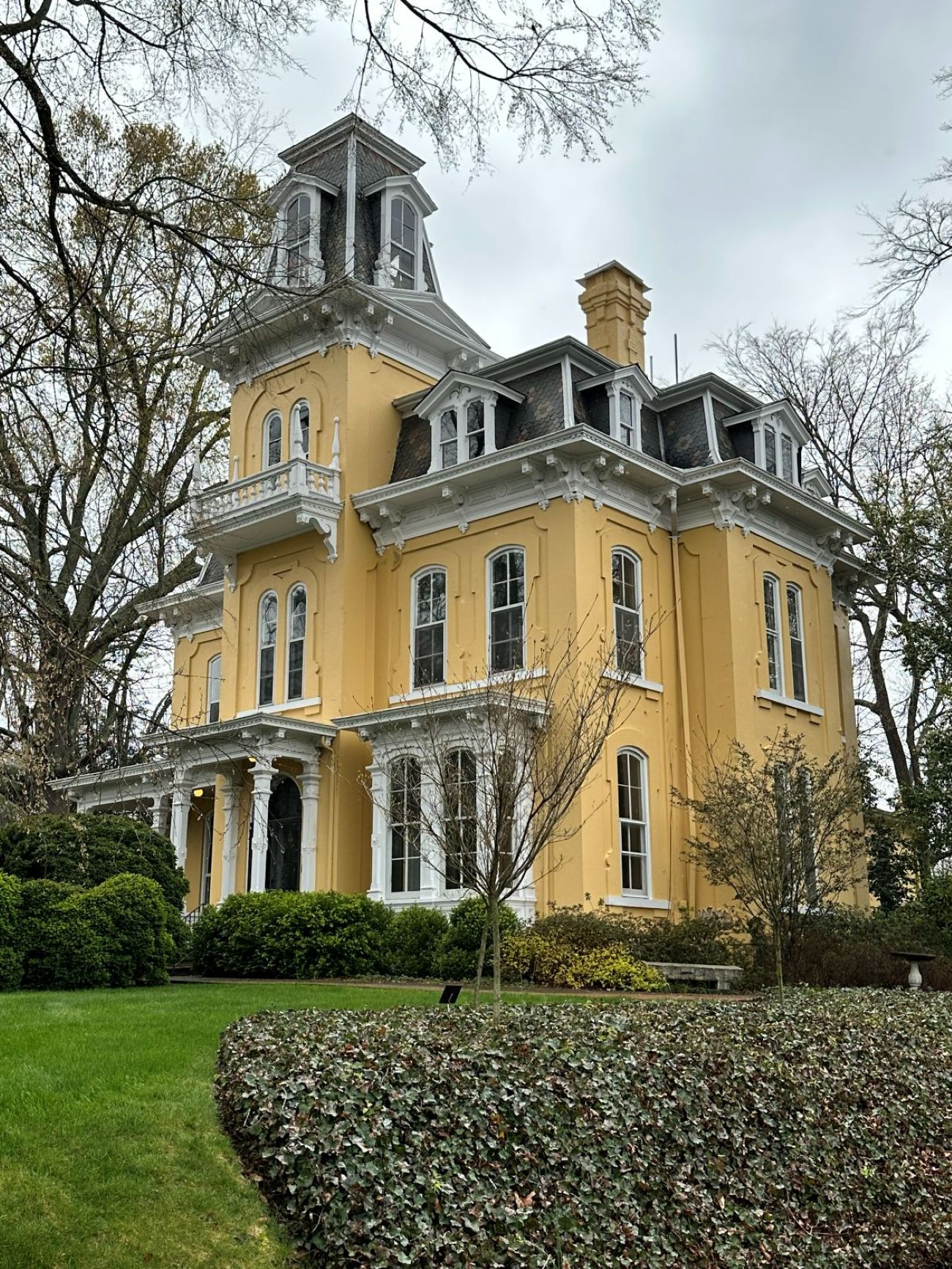
On the heels of Italianate and Gothic designs came the stylish and updated French-inspired Second Empire style. Easily identified by its distinctive mansard roof silhouette, the style was named for France’s Second Empire under the reign of Napoleon III. Second Empire-style houses were promoted in pattern books from 1857 into the 1880s.
The Dodd-Hinsdale House in Raleigh was built in 1879 for merchant and later mayor William H. Dodd. The house features sumptuous wood ornamentation inspired by Englishman Charles Eastlake with a low side gable roof, but its central tower is topped by a mansard roof silhouette, enough to qualify the house as an example of the style. The house, a miraculous survivor along Raleigh’s Hillsborough Street, has been operated as Second Empire Restaurant & Tavern for nearly 30 years. The Dodd-Hinsdale House has been protected by PNC since 1995.
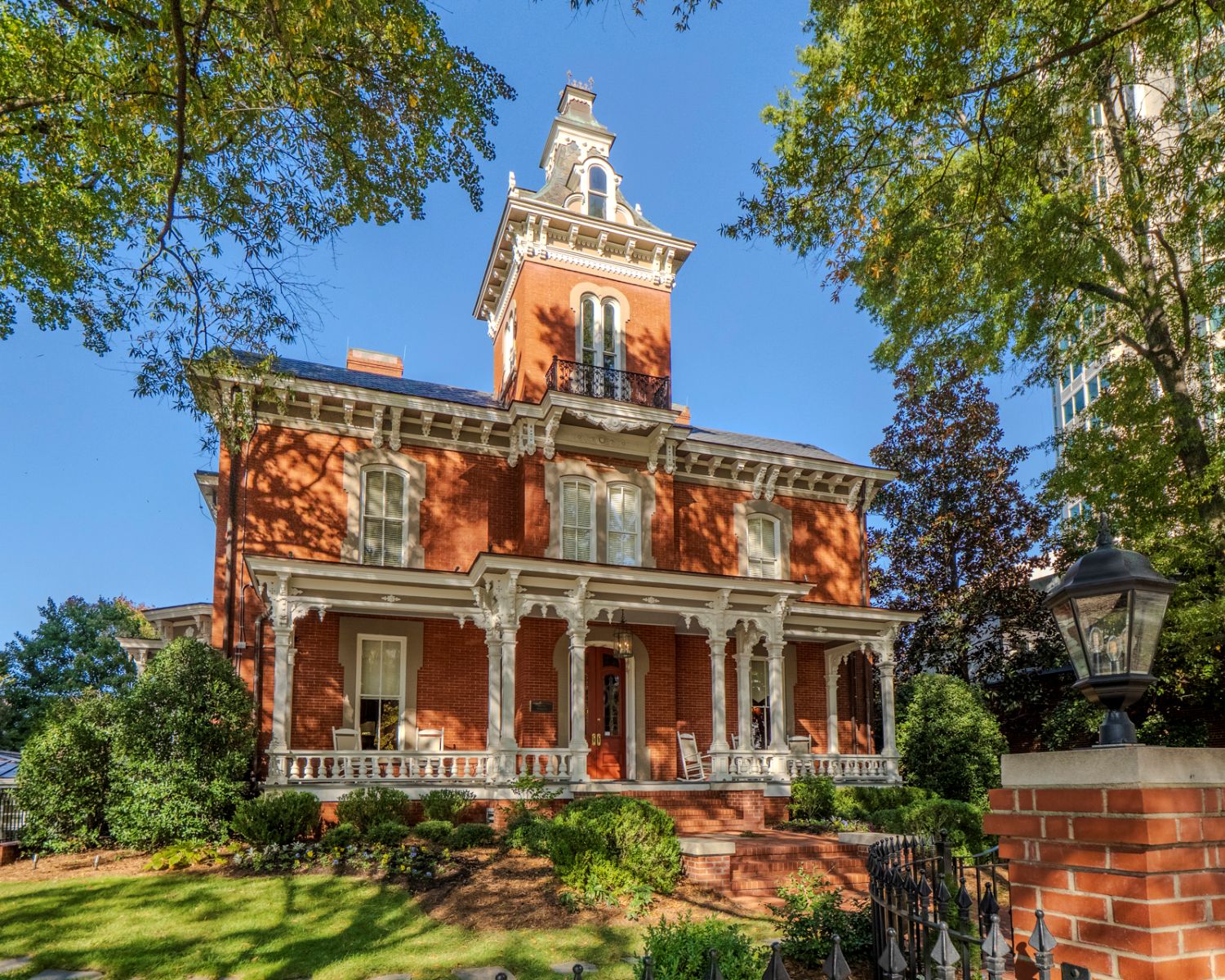
A fine and full expression of the Second Empire style can be found in the Banker’s House in Shelby. The house was commissioned by Jesse Jenkins, founder of the town’s first bank. Many features of the asymmetrical brick are shared with the previously popular Italianate style, including bracketed eaves and segmental-arch windows, but it is the mansard roof on the house and its tower that define its style as Second Empire. Home to many local banking families through the years, its final residential stewards were banker George Blanton, Jr. and his wife, Nancy. Their careful preservation of the Banker’s House included having the house and stable listed on the National Register in 1975. The Blantons deeded the property to PNC subject to a life estate, along with a generous endowment with the goal of preserving the home as a resource for the community. The house was used for office space and meetings for a number of years, until it was transferred to the Banker’s House Foundation to find a new purpose. In 2017, the Blanton’s surviving daughters – Catherine Blanton Freedberg and Lydia Blanton Matthews, both of whom grew up in the house – funded a $1 million project that included a major landscaping and barn restoration. Today, The Banker’s House is fulfilling their mission of engaging, entertaining and educating by providing extraordinary events and encounters in a stunning, historical setting. PNC holds protective covenants on the property and is thrilled to see the Blanton family’s vision in action.
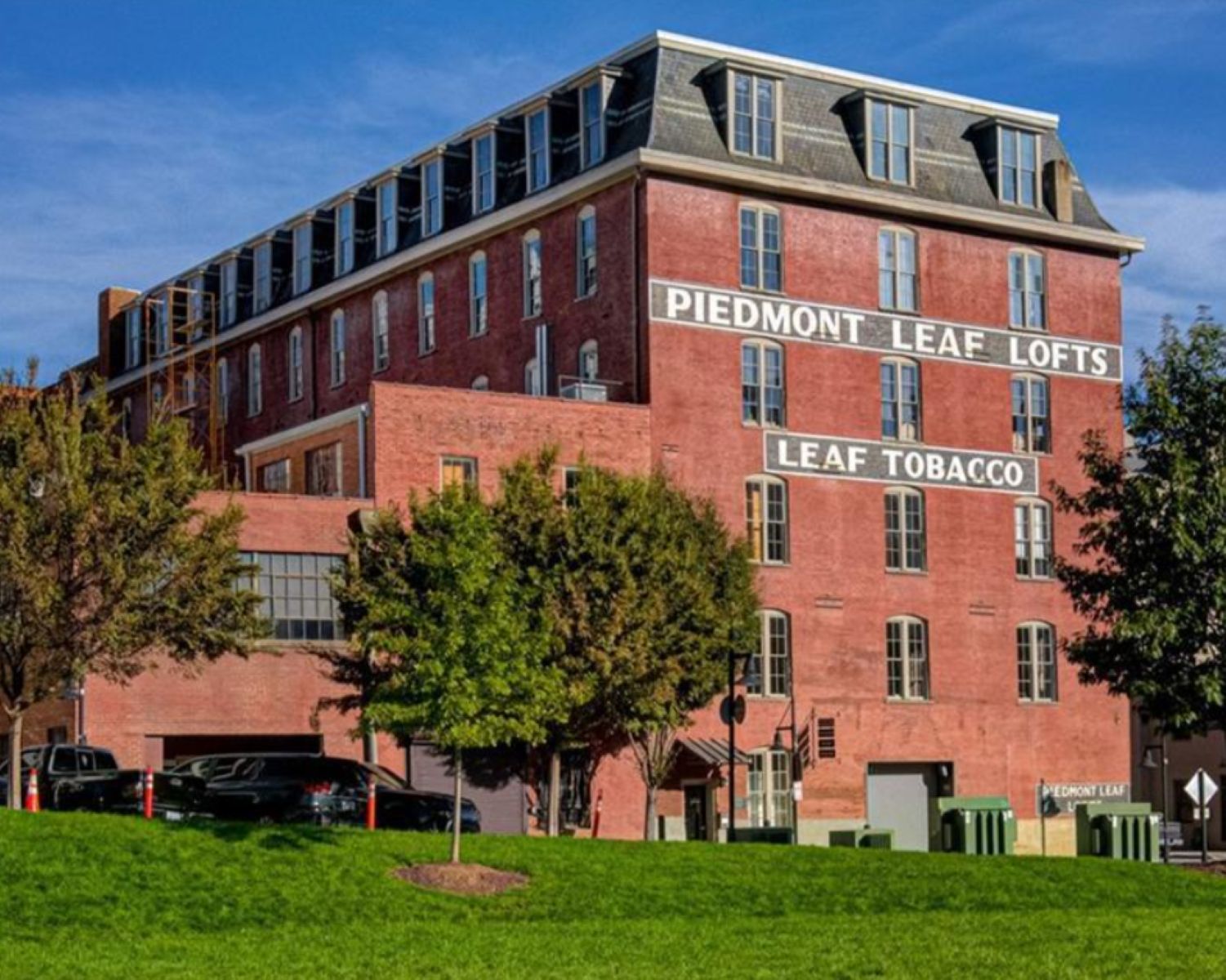
An interesting example of Second Empire architecture can be found in Winston-Salem in the Piedmont Leaf Tobacco Buildings. One building in the complex, the Brown Brothers Tobacco Prizery, is a six-story brick Second Empire-style building topped by a mansard roof. The building is otherwise pragmatic and industrial, featuring multiple double-hung windows within segmental-arch openings. The mansard roof is sheathed in a picturesque fish scale pattern. It stands as one of the few industrial examples of the style in the state. The Piedmont Leaf Tobacco Buildings have been protected by PNC since 1998.
Queen Anne Style
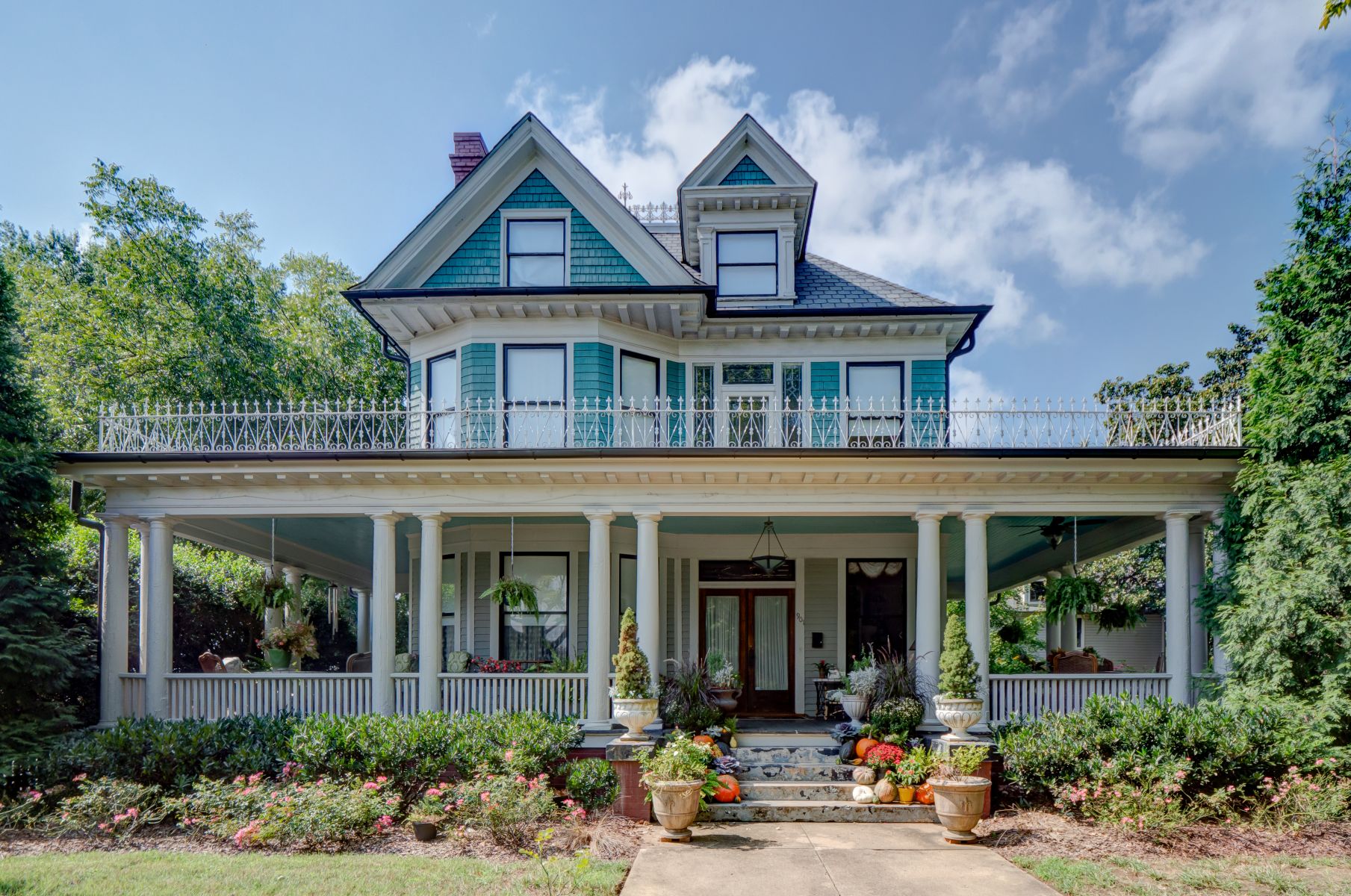
Perhaps the most popular style of the Romantic Era, the Queen Anne style was thought to emulate the medieval turreted structures of the reign of Great Britain’s Queen Anne (1665-1714). Queen Anne architecture blended Italianate towers, steep Gothic roofs, and patterned French mansard roofs, and added patterned brick- and shingle-work, stained and lead glass windows, wrought-iron rails and balconies, and other features that evoked hand-crafted and artisan-made materials. In North Carolina, Queen Anne exceeded all previous high styles to be representational for wealthy industrialists in our state’s growing manufacturing towns. Every community of wealth’s main street had a selection of Queen Anne-style houses.
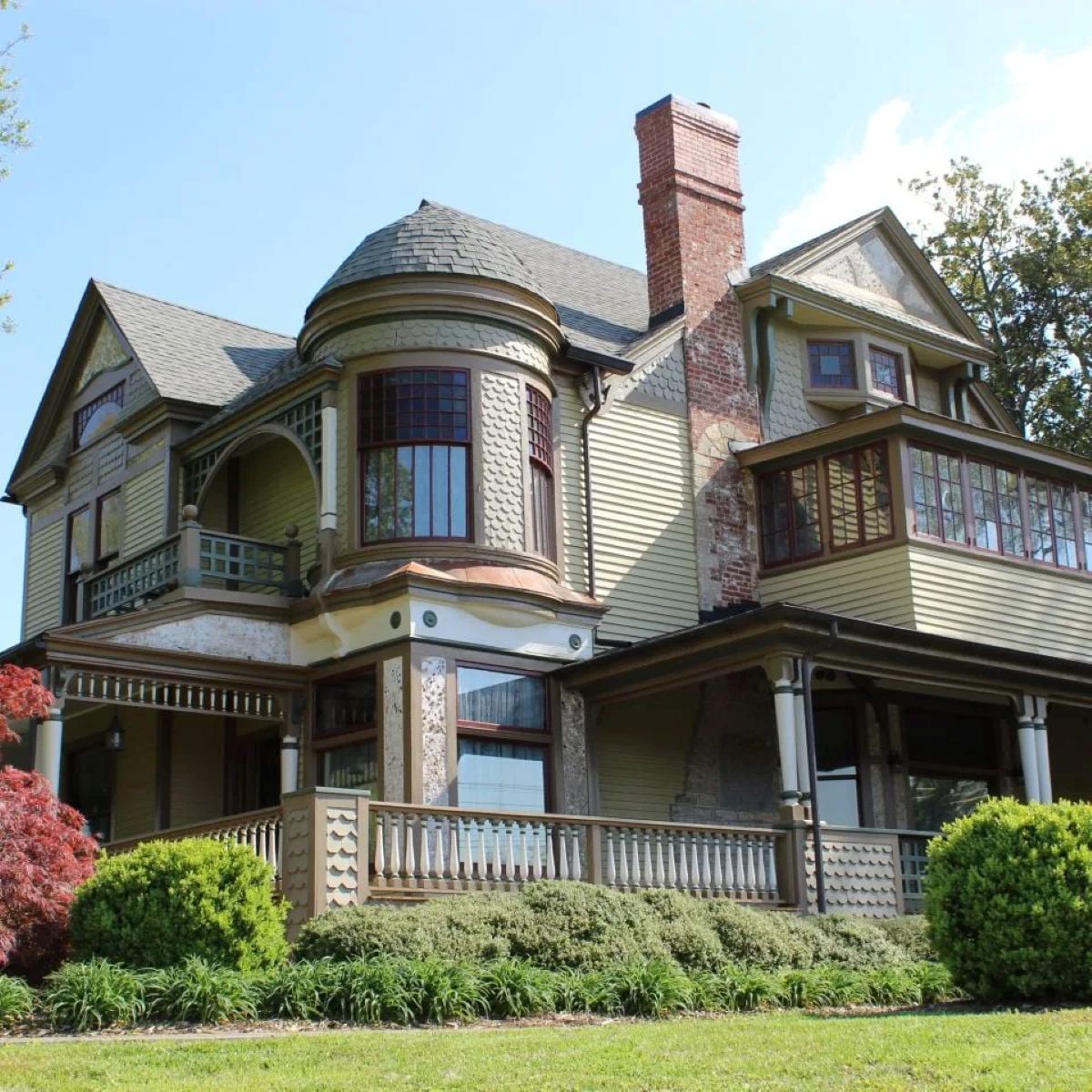
In Hickory, the Shuler-Harper House was built in 1887 for banker David Webster Shuler. The asymmetrical facade features an imaginative array of embellishments such as a round tower, scalloped wood shingles, and half-timbered pebbledash surfaces. Other Queen Anne-style details include small-pane windows, heavy turned porch supports, a patterned masonry chimney, and a spindlework frieze. Read more about the Historical Association of Catawba County’s operation of the house museum in Our State. The Shuler-Harper House has been protected by PNC since 2000.
The Charles T. Holt House in Haw River represents the work of Knoxville TN architect George F. Barber, considered to be the most prolific architect of the upland South in the late 19th and early 20th centuries. Barber published his work in various publications, including American Homes which was published under his direction from 1895 until 1901. Constructed in 1897 on the crest of a hill overlooking the Haw River, the Charles T. Holt House represents the emergence of a wealthy class whose fortunes came from the rise of the state’s textile industry, specifically the prominence of the Holt family who pioneered the industrial revolution in Alamance County. The property has been protected by PNC since 2007.
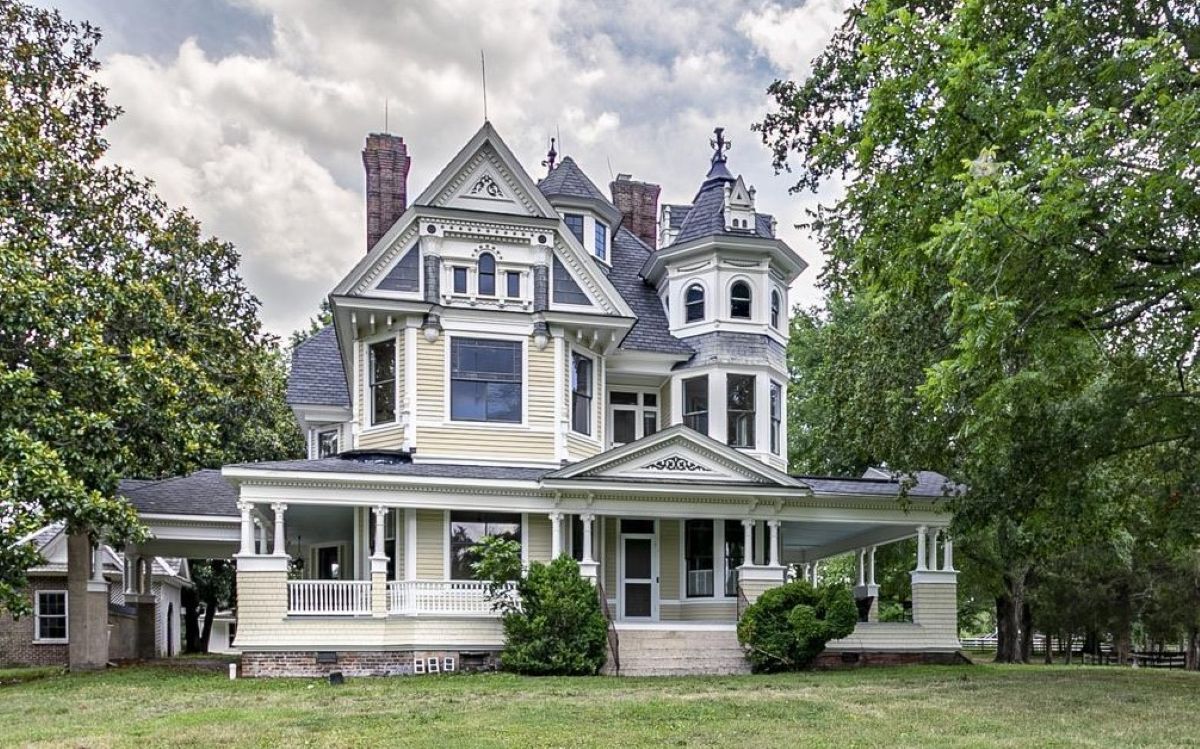
The Ferd Ecker House in High Point was constructed in 1908 for Frenchman Ferdinand Ecker and his two daughters after he relocated his Brooklyn NY glass company to High Point to serve the city’s growing furniture industry. The design of the two-and-a-half story frame house is attributed to Frenchman Richard Gambier, and blends late Victorian details such as wrought-iron rails and cast-iron roof cresting with Colonial Revival elements such as dormer windows, modillion cornice, and paired Tuscan columns. Interior details include the use of quarter-sawn oak for mantels, pocket doors, and floors. Threatened with demolition after a fire in 1989, the house and its large urban carriage house have been protected by easements held by PNC since 1992.
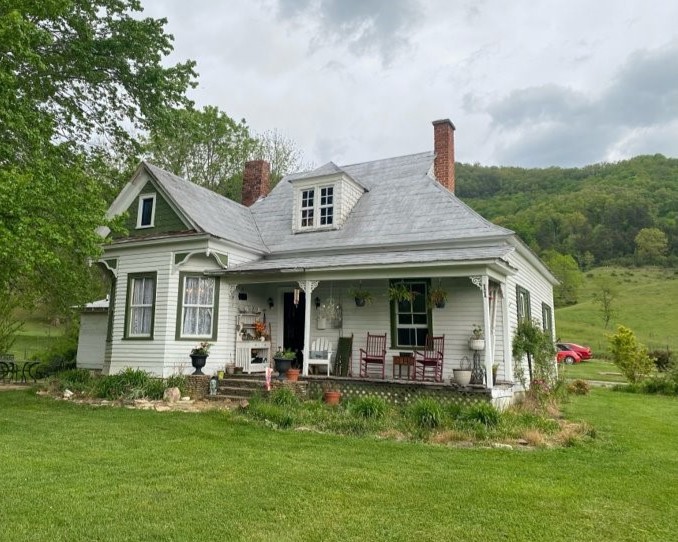
The Alma Elizabeth Cathey and George Bascombe Justice House in the Cathey Cove community of Haywood County is a one-and-a-half-story vernacular Queen Anne and folk-style frame house that was built soon after the couple married in 1880. They raised three sons and four daughters in the home, which remained in the family’s possession until 1991. The house fell into disrepair, and successive land sales eventually reduced the estate to its present 1.6 acres. Will and Lori Thompsen purchased the home in 2016 and restored its original porch with historic turned posts and the cutaway gable with bracketed supports. The property has been protected by PNC since 2022.
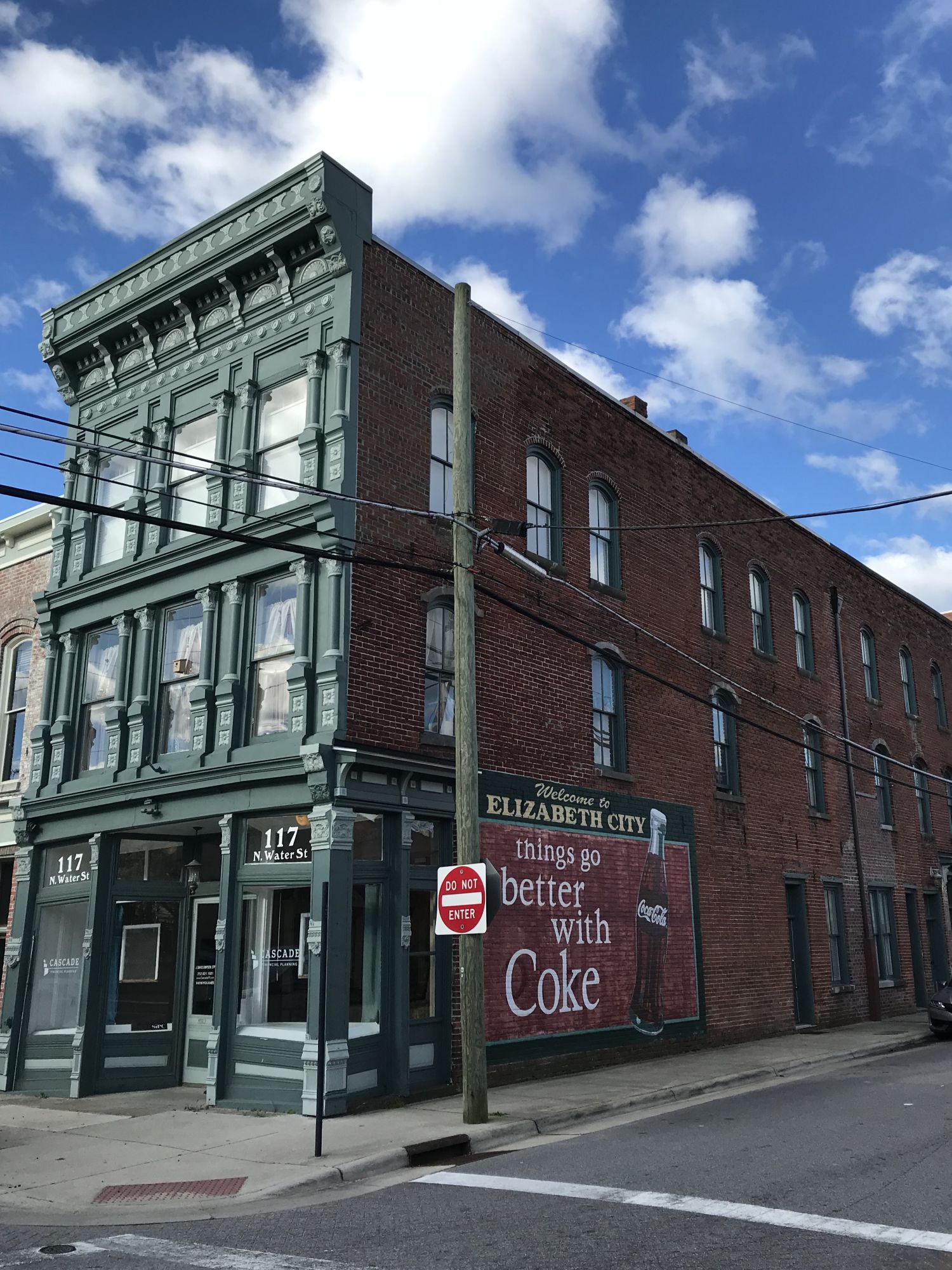
The McMullen Building on Water Street in Elizabeth City was built by Dr. Oscar McMullen as a drug store and hotel. It is the only cast-iron and tin facade-front commercial building remaining in Elizabeth City, and one of the few remaining in the state. The first two stories of the building were built around 1887, with the third story, the rear addition, and the Venetian-Revival style metal facade added before 1908. The street level storefront has a recessed entrance and large display windows, and cast-iron pilasters stamped with the “Mesker Bros.” trademark. The Mesker Brothers Iron Works was based in St. Louis, Missouri, and was operated by brothers Bernard and Frank Mesker. The unusually well-preserved interior contains the original Eastlake style wooden display shelves and a wooden bracketed ceiling cornice. The building has been protected by PNC since 1992.
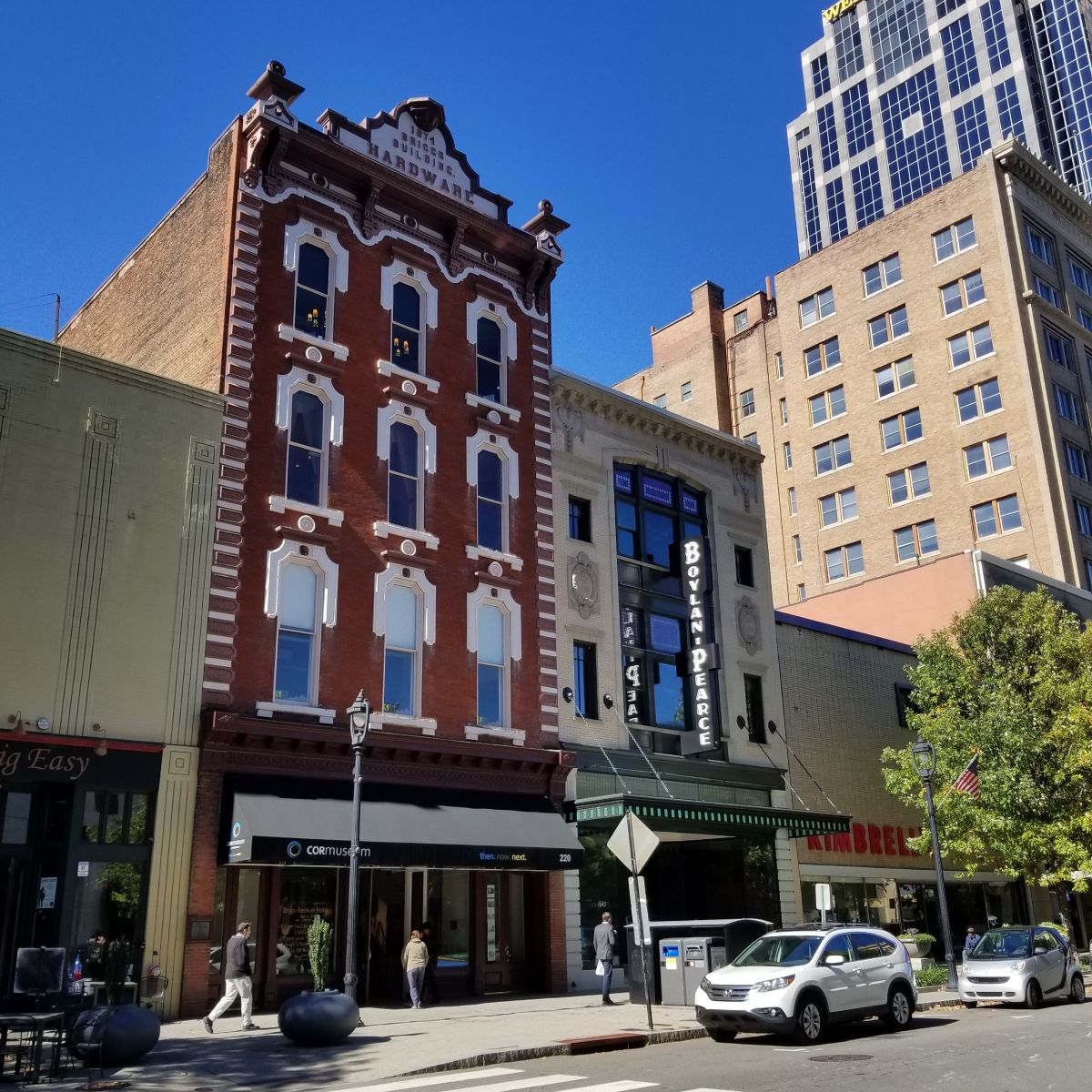
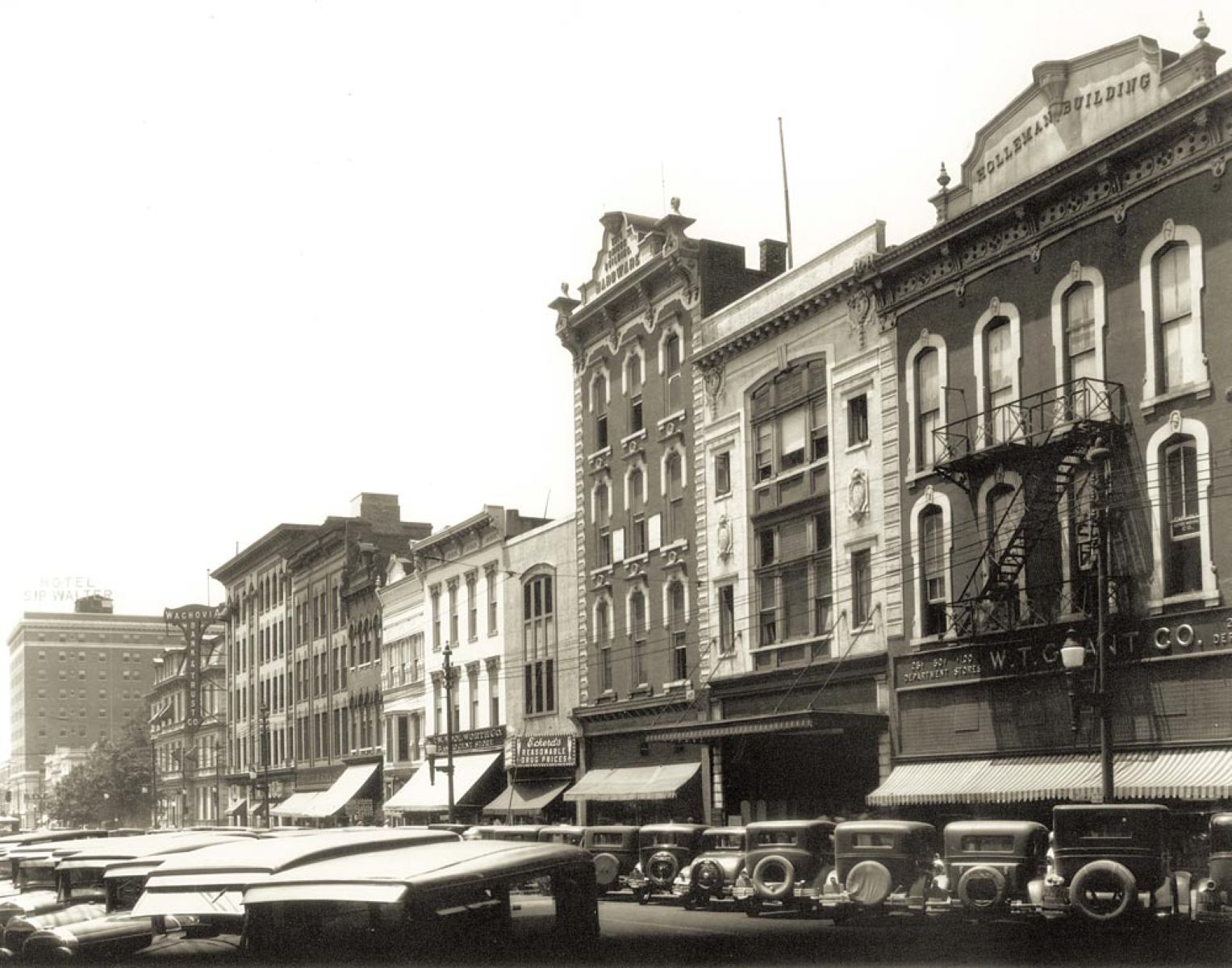
As the only nineteenth-century commercial building surviving essentially unchanged on Raleigh’s main street, the Briggs Hardware Building is an exuberant landmark and one of the most historically significant commercial structures in North Carolina. Upon its completion in 1874, the richly decorated, four-story Venetian-Revival structure was celebrated as the tallest building in eastern North Carolina and recognized as Raleigh’s very first skyscraper. For 120 years, it housed the hardware business of the prominent Briggs family, who also developed the historic Oakwood neighborhood and supplied building materials for many of the city’s defining landmarks. Beyond its commercial legacy, the building occupies a unique position in the state’s cultural history. Its upper floors dynamically served the community over the decades, hosting Raleigh’s first YMCA, providing early worship space for new Catholic and Lutheran congregations, housing the Raleigh Little Theater, and was the original home of the State Museum. After falling into decline in the 1990s, PNC and the AJ Fletcher Foundation partnered to renovate the building as offices for nonprofit tenants. The renovated landmark served as PNC’s statewide headquarters from 1998-2019 and helped spur the revitalization of Fayetteville Street in the early 2000s. The Briggs Hardware Building has been protected by PNC covenants since 2016.