March | Religious Enclaves and Historic Churches
North Carolina has been described by many historians as a patchwork quilt of religious communities that provide our state with a variety of traditions, each lending distinct character to our rural and urban landscapes. Unlike many of our sister thirteen original colonies that were dominated by congregations such as Puritans (Massachusetts), Dutch Reformed (New York), Quakers (Pennsylvania), Catholics (Maryland), and Anglicans (Virginia and South Carolina), our state was established primarily by domestic migrants whose diverse religious traditions contributed to our fascinating history.
North Carolina Quakers
PNC protects a number of significant houses with Quaker heritage. The earliest settlers in eastern NC’s Albemarle region included Quakers and Anglicans/Episcopalians. Quakers first settled in the Albemarle region in the 1670s and migrated inland to the Piedmont, where they were joined by members from the Mid-Atlantic. Eighteenth and early nineteenth century Quaker architecture in North Carolina features pragmatic and sometimes frugal practices that include phased construction, recycled materials, and handmade interpretations of stylish designs that result in substantial and durable compositions.
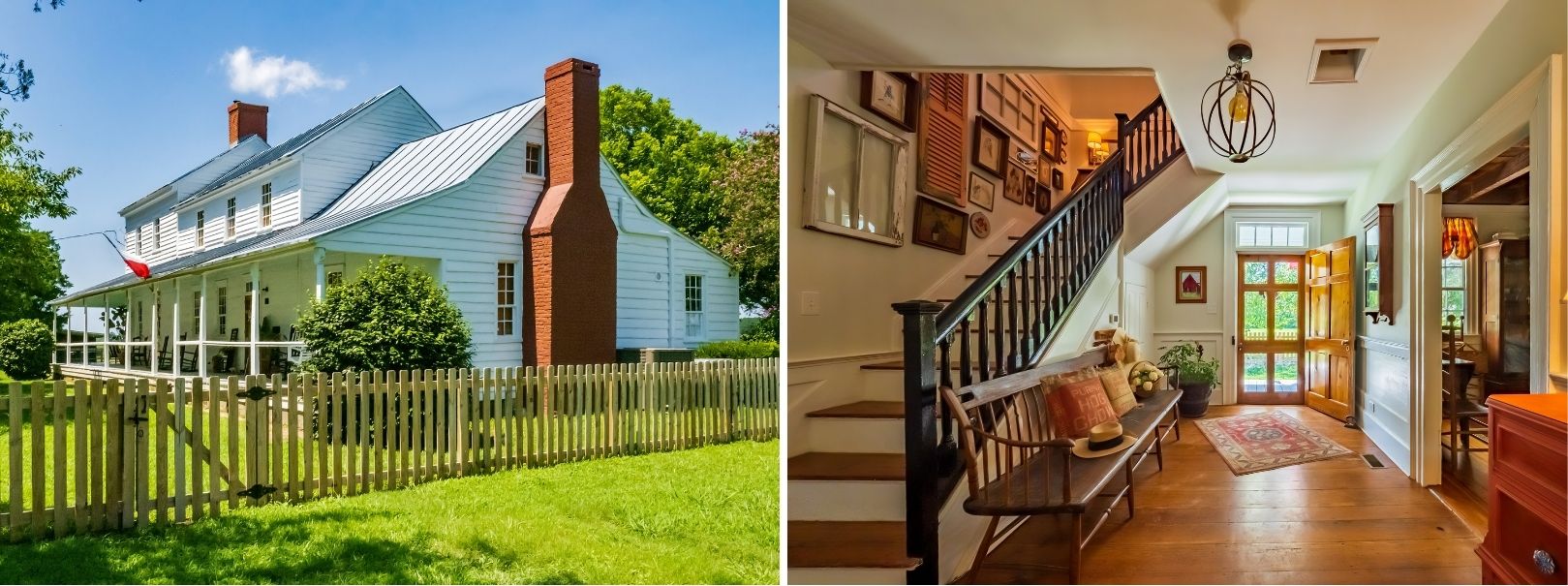
In the heart of the Albemarle region, the Old Neck community in Perquimans County is an important historic rural landscape that is linked to the navigable waters of saltwater sounds and is influenced by its early Quaker heritage. The Francis Nixon House, known as The Homestead, represents early dwellings associated with prosperous and influential Quaker families. Harriet and Francis Nixon were married in 1818 and began raising a family of ten children in their newly built home. The three-part telescopic form of the house represents its pragmatic enlargement to accommodate the growing family with the earliest section being a 1½-story cottage that dates to 1818, a middle section built in 1821, and the tallest 2-story addition constructed ca.1835. In Quaker keeping, details are austere but reflect features of the then-popular Federal design. The house is protected by an easement donated to PNC in 2017.
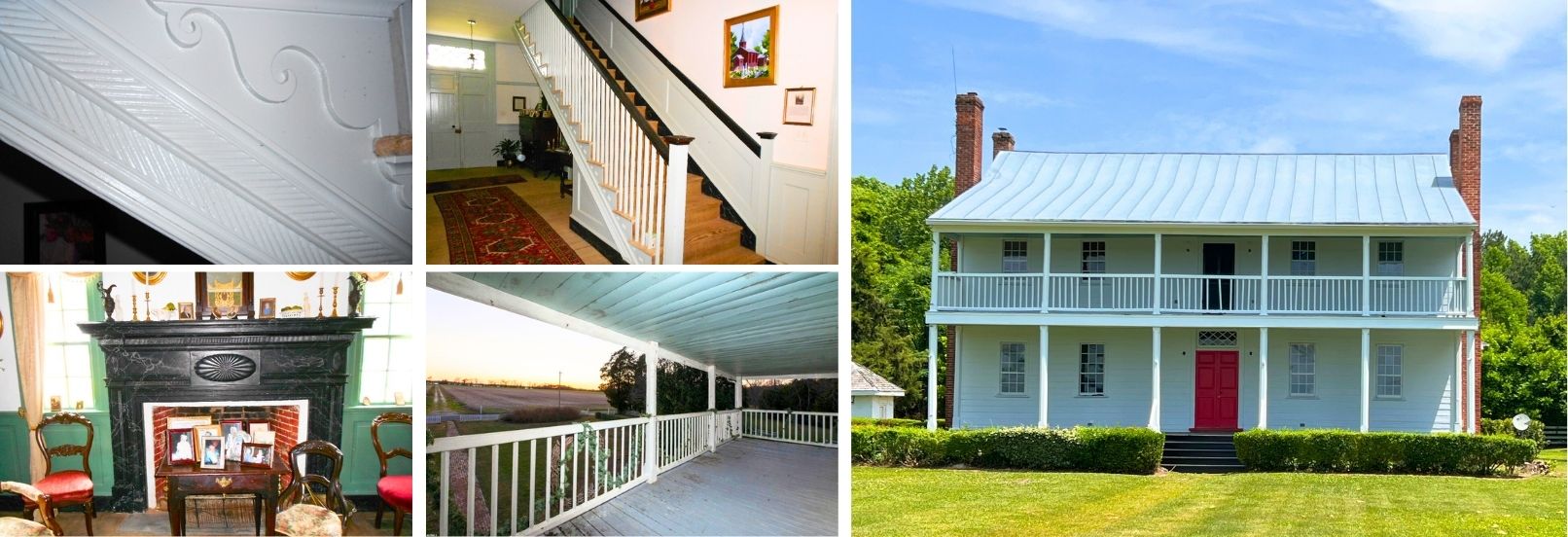
Nearby, the Fletcher-Skinner-Nixon House is surrounded by woodland and sweeping agricultural fields in the heart of Old Neck. Life in the Sarah and William Fletcher household centered around their farm and included five slaves. Their frame, two-story frame house was built ca.1820 with then-popular Federal-style details, but the house stands apart from the Francis Nixon House by having an impressive double-tier piazza. The asymmetrical presentation of the five-bay facade and simple chamfered porch supports may hint at pragmatic Quaker preferences, but interior features include sophisticated details such as tripartite mantels and staircase stringer with reeding and sunburst medallions. William Fletcher’s life was prematurely cut short when he was lost at sea during a trading voyage to the West Indies in 1826. As stipulated by will, his property was sold except for his enslaved workers and special bequests. One of the first North Carolinians to do so, Fletcher had made special provisions in his will for his enslaved people to be freed and transported to Liberia, Haiti, or any free state they might choose. The property is protected by an easement donated to PNC in 2012.
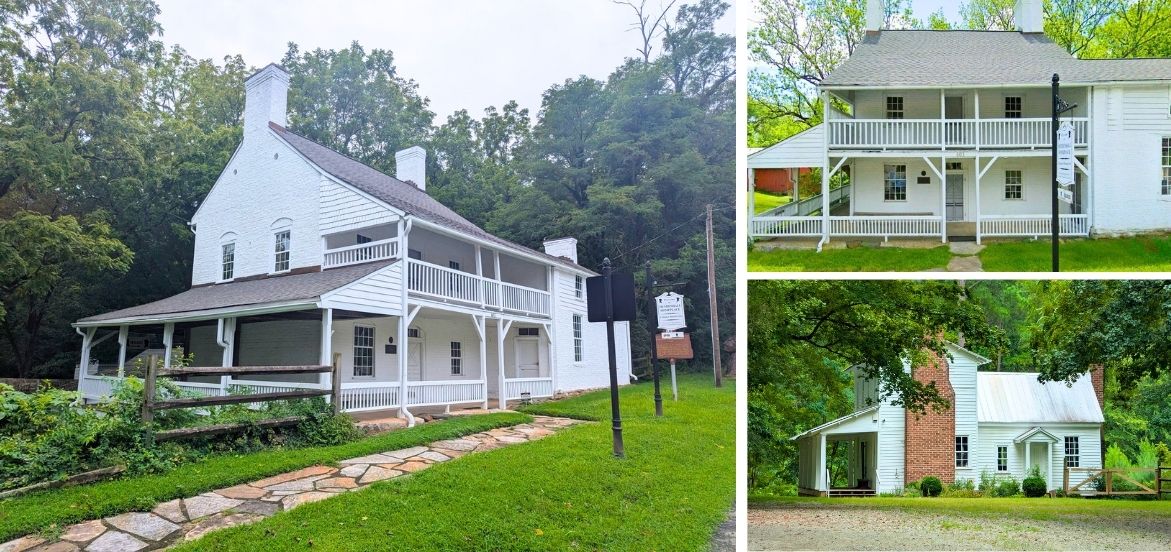
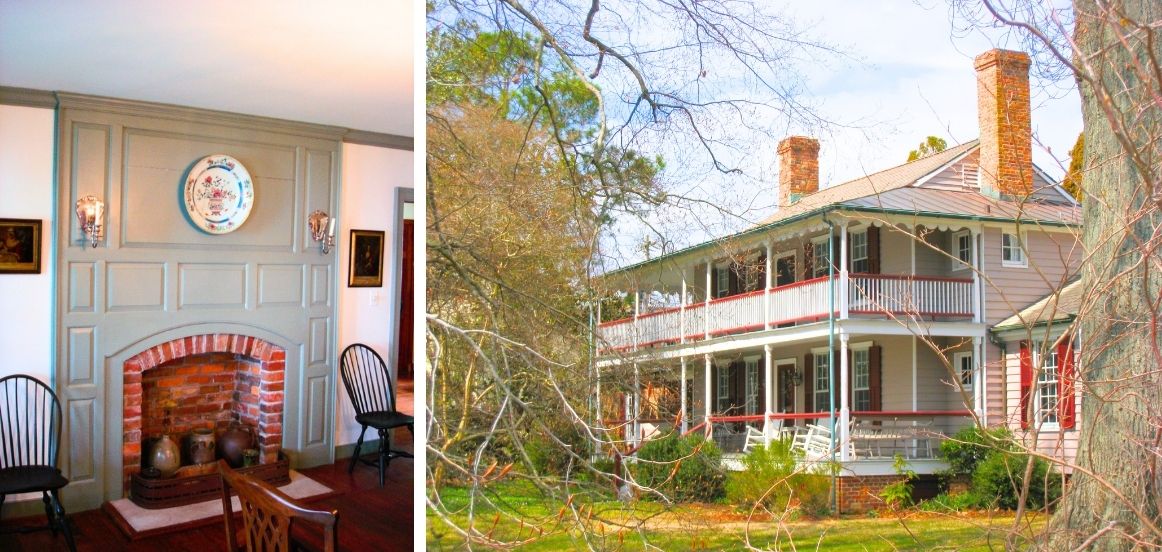
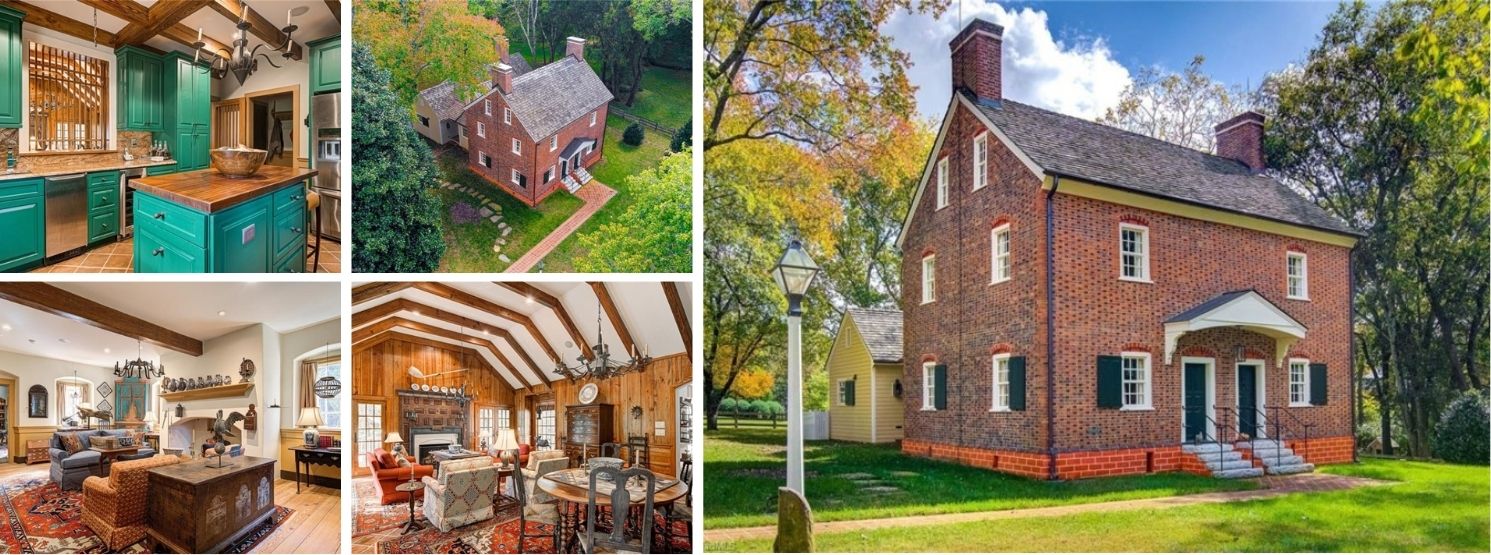
In the Piedmont village of Jamestown in Guilford County, the Richard Mendenhall House is illustrative of the influence of Mid-Atlantic Quakers. Erected ca.1811 for Richard and Mary Mendenhall, the house is a well-preserved example of the Pennsylvania-style dwellings built for Quakers in the central Piedmont. The rambling brick residence is composed of three distinct periods of construction. The First Period section of the house stands two stories in height, with windows and doors featuring segmental arches. Richard Mendenhall, though born in Jamestown, was sent to Chester County, Pennsylvania, as an apprentice. His experience likely reinforced his preference for vernacular traditions of the Mid-Atlantic. The house did not turn its back on the realities of its location, however. In subsequent years, traditional North Carolina double-tier porches were added around three sides of the structure to extend the interior to cooling breezes outside. An exterior brick kitchen was later joined to the main house by a wood frame connector. The Mendenhall house has been protected by PNC since 1985. Today, it is open to the public as the Mendenhall Homeplace house museum.
North Carolina Episcopalians
The Anglicans, taking the name Episcopalians after the American Revolution, established their first congregations in Edenton (1701), New Bern (1710), Beaufort (1724), and Bath (1734). These four towns constitute the four oldest communities in the Old North State, and the Anglican church was the sole church of authority of each community in their earliest years. Leading merchants, lawyers, and planters were members of the Anglican church. In North Carolina, Anglican and Episcopalian architecture exemplified wealth and fashionable styles in its earliest years. Over time, the faith returned to its English and Gothic roots for design inspiration, including churches and chapels.
In Edenton, The Homestead is exemplary of the earliest domestic architecture of prosperous Anglican merchants. The house was likely built just before the Revolution for Robert H. Smith, a member of the nearby St. Paul’s Episcopal Church. Smith was a business partner of the better-known Joseph Hewes, famous as a signer of the Declaration of Independence and the first Secretary of the Navy. By contrast, little is known of Smith, who has been identified by historians as an attorney, merchant, and shipbuilder. He occupied a fine two-story frame house built on a prominent corner lot overlooking both the Courthouse Green and the Chowan River. Thought to have been built in the 1770s, the house initially featured double-tier porches on all four elevations. Interior features include handsome raised paneling. If architecture is any indication of Smith’s place of birth, the West Indies would be a candidate! The residence is protected by an easement donated to PNC in 2006.
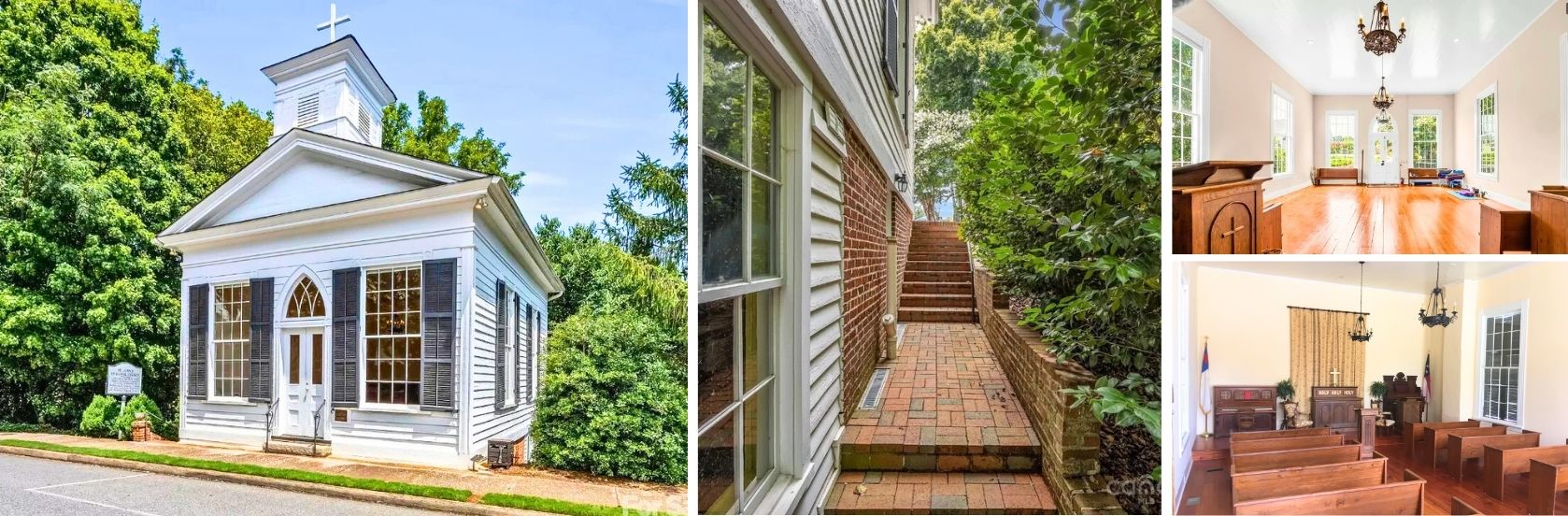
Generations of Episcopalians made their contributions across North Carolina. In the western Piedmont, St. John’s Episcopal Church in Rutherfordton was built in 1848-49 as a notable example of Greek Revival architecture. It was built as a mission church during Bishop Levi Silliman Ives’ initiative to expand the Episcopal church into the western counties. St. John’s is a small but exuberant expression of Greek Revival architecture. Its facade is three bays wide and is composed of generous 12 over 12 windows, green shutters, baseboard, corner boards, and an entablature. The pediment and square tower are classic Greek Revival, but the arched window above the entry lends a hint of romantic Gothic style. The Rutherford County HIstorical Society donated an easement to PNC in 2018 before it was sold for adaptive use as a private residence.
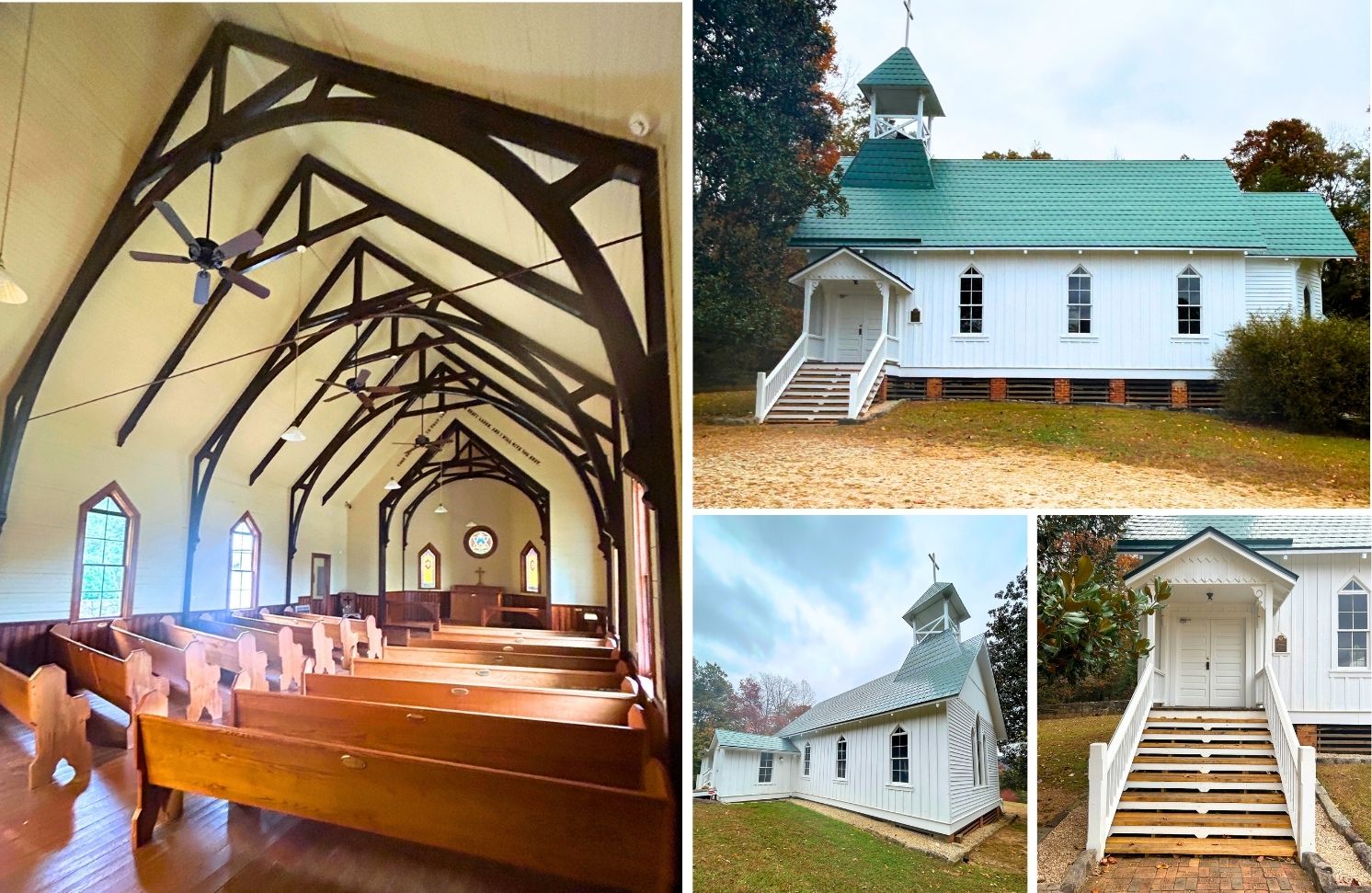
A generation later, Samuel Legerwood Patterson donated a plot surrounding his family cemetery to the Episcopal Diocese of Western North Carolina for the establishment of a new Episcopal church. The Chapel of Rest was built in 1916, but within a year, the first chapel burned to the ground. It was reconstructed in 1917 under the direction of Reverend Hugh A. Dobbin. The chapel is a full expression of Carpenter Gothic design, including board-and-batten siding, pointed windows, exposed rafter tails, a side entrance porch with sawn shingles, and an open belfry. The interior contains beadboard siding and arched king trusses. The chapel is protected by an easement donated to PNC in 2017.
North Carolina’s Moravians
Central European Moravians selected land in the piedmont to establish communities in their Wachovia tract (Forsyth County). Moravians in North Carolina made substantial investments in their built environment, with many buildings representing the finest examples of their period in the Piedmont. Although early buildings were often closely aligned with central European buildings in terms of materials and designs, later examples began to incorporate features shared with other buildings found throughout the Carolina Piedmont.
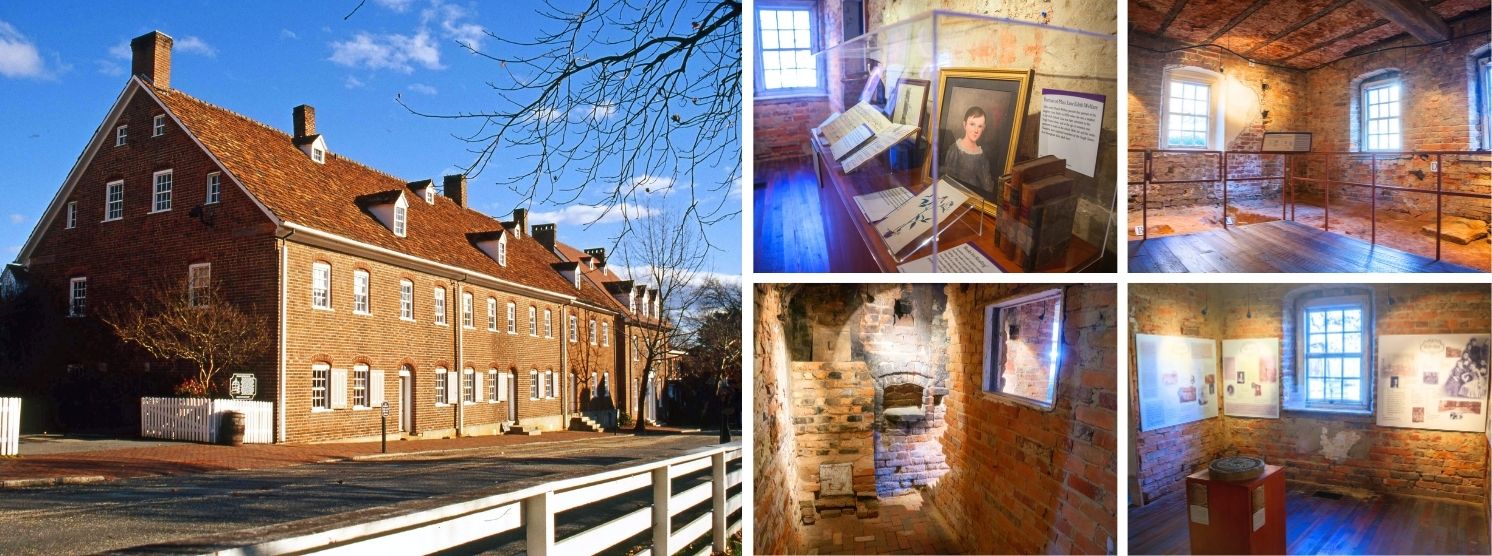
Located in their largest town, Salem (today’s Winston-Salem), the Single Sisters House is representative of Moravian architecture and traditions. Members were organized into communal groups called choirs according to age, sex, and marital status. The Single Sisters House is located on Salem Square, diagonally from the Single Brothers House. The large two-story building takes a strong European appearance, with Flemish bond walls, a double row of gabled dormers, and a red clay tile roof. The 1786 building had an addition made in 1819, and it stands as the oldest building on the Salem College campus. The Moravian tradition of female education is represented in the legacy of Salem Academy and College, today the oldest institution of higher learning for women in the United States. The building is recognized as a National Historic Landmark and is protected by an easement donated to PNC in 2004.
Philip and Johanna Frey Hoehns were part of the Moravian Church, and their farmhouse represents a high-water mark in the rural economy of the late eighteenth and early nineteenth centuries in the Piedmont. Shortly after Philip moved to the state from Pennsylvania in 1774, the couple were married and first lived in a hickory-pole hut. Their family of 10 children then graduated to a log house, before starting their brick farmhouse in the winter of 1797-1798. Their fine two-story, Flemish-bond brick house was adorned with herringbone patterns in the gable ends. Though the house was closely aligned with the fine brick buildings constructed in Salem at the time, the farm is representative of rural traditions brought from central Europe by way of Pennsylvania to the back country of North Carolina. The house is protected by an easement donated to PNC in 2008.
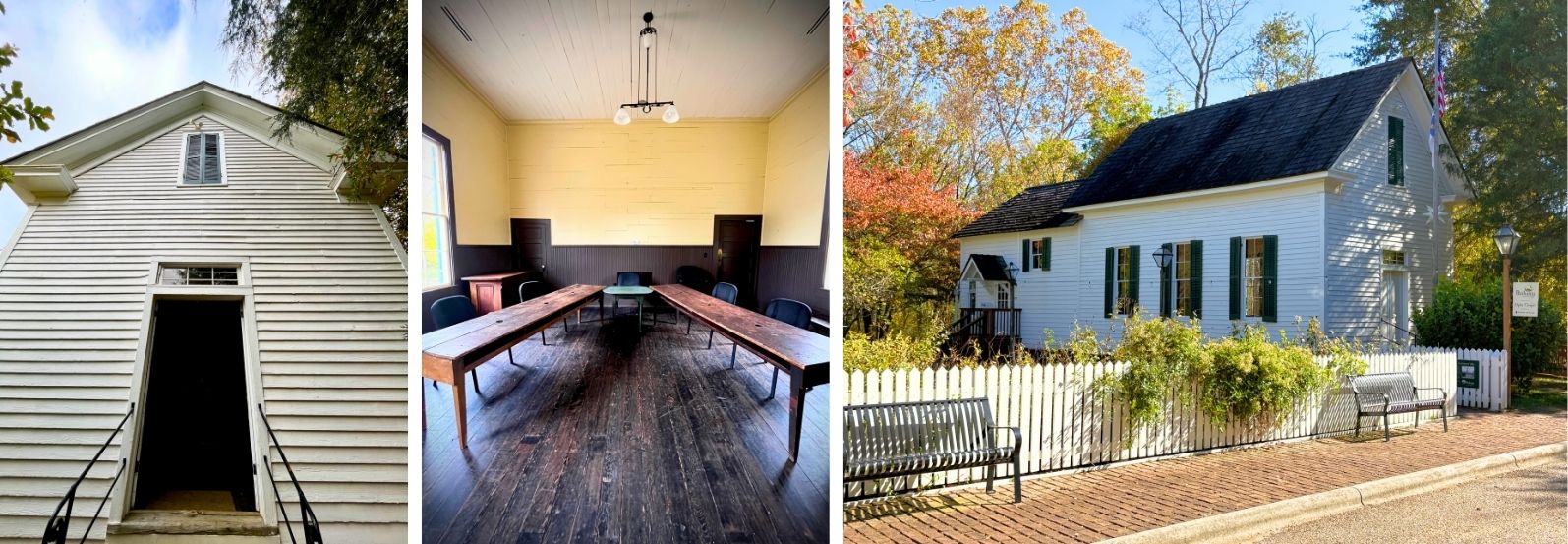
Alpha Chapel in Bethania is an example of Moravian religious architecture in Forsyth County. Originally located two miles northeast of Bethania, the use of the term “alpha” indicated this chapel as branch “A” initiated by the Bethania Moravian Church as its mother church. The wood-frame chapel is more aligned in appearance with traditional American vernacular design of the late nineteenth century than the Single Sisters House, with clapboard siding, a prominent cornice, cornice return, and corner posts. Interior features are simple with beadboard wainscotting, plaster walls, and a high 14-foot ceiling. It is a charming example of utilitarian chapels that were once commonplace across our state’s rural landscape. Alpha Chapel was relocated to Mizpah Moravian Church north of Bethania in 1932, where it served as a school and fellowship hall. That use continued until the 1950s when Mizpah built a larger brick Sunday school building and the chapel was relocated to private property. In 2001, the chapel was moved a third time, to its present site in Bethania where it serves as the Town Hall. It is one of seven properties in Bethania legally protected through historic preservation agreements held by Preservation North Carolina.
Black Churches in North Carolina
The nineteenth century witnessed an institutional transformation of Black churches in North Carolina as formerly enslaved people were emancipated and found agency in their worship. Though many churches included integrated worship before emancipation, freedmen eagerly left white churches to organize their own churches and schools during Reconstruction. Black churches in North Carolina served as meeting places and incubators for political and social organizations. Church-affiliated schools laid the foundation for Black schools, colleges, and universities. These churches strived to follow the latest architectural styles and became symbols of their communities.
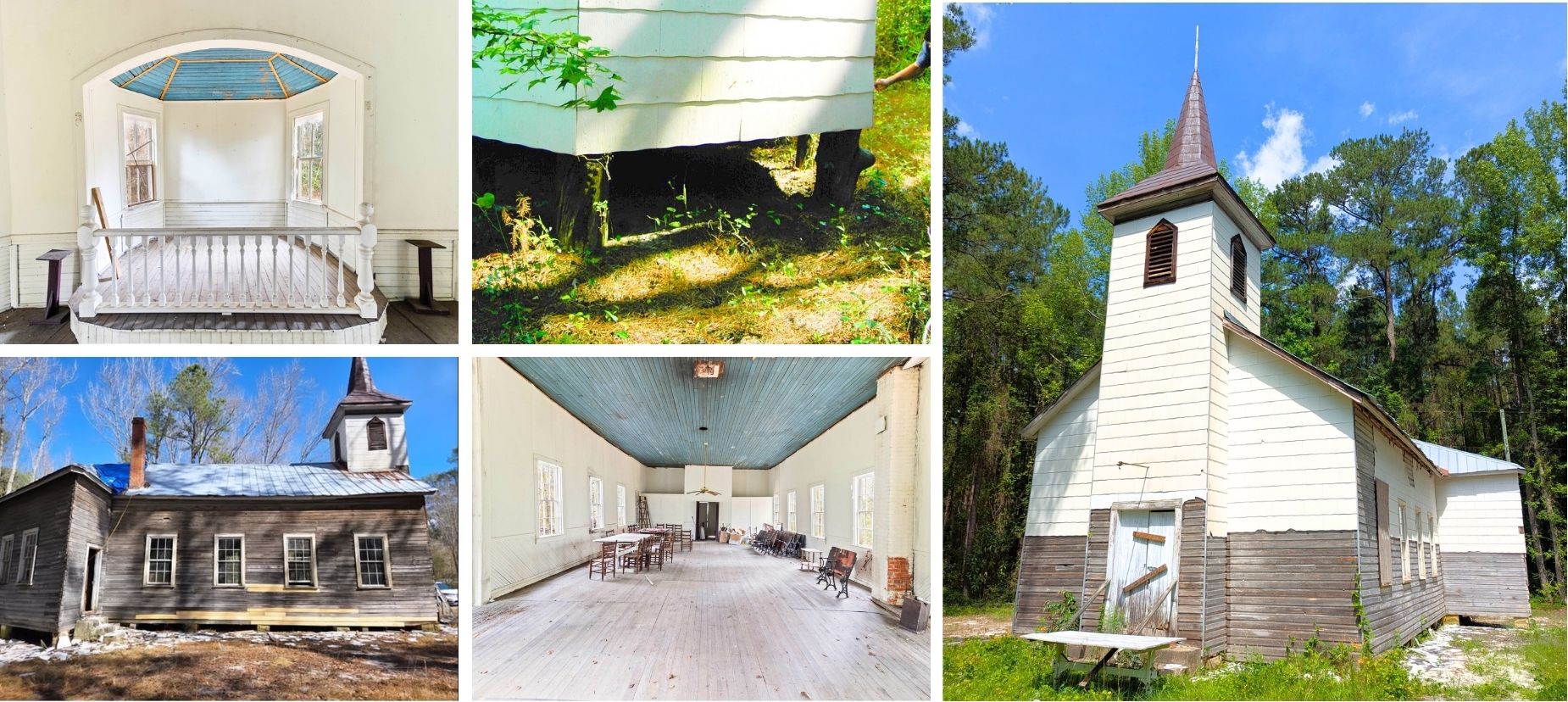
In the Sandhills region of Moore County, the Keyser Christian Church, more recently known as Free Liberty United Christian Church or Addor Church, was built around 1890 in the town of Keyser, a whistle-stop on the Raleigh to Augusta Airline Railway. The name was changed in 1918 to honor resident Felix Addor, who was among the first killed in World War I. Most recently this rural church served Black congregants in the community into the twenty-first century. The sanctuary remains largely open with wood floors, diagonal tongue-and-groove wainscot, an octagonal apse on a raised platform separated by a railing of turned balusters, and topped by a tongue-and-groove ceiling covered in brilliant blue paint. The rear section may have been added in the early 20th century. Exterior features include a majestic tower featuring pointed arch vents, a metal shingle roof, and an octagonal spire. Also of interest, many of the foundation piers are molded concrete blocks simulating stone and the back part of the church is supported by stumps! The church has been protected by PNC since it was donated in 1993. Despite extensive vandalism in 2004, the church remained standing and was sold in 2020. Its new owners are actively working to renovate the building to host special events.
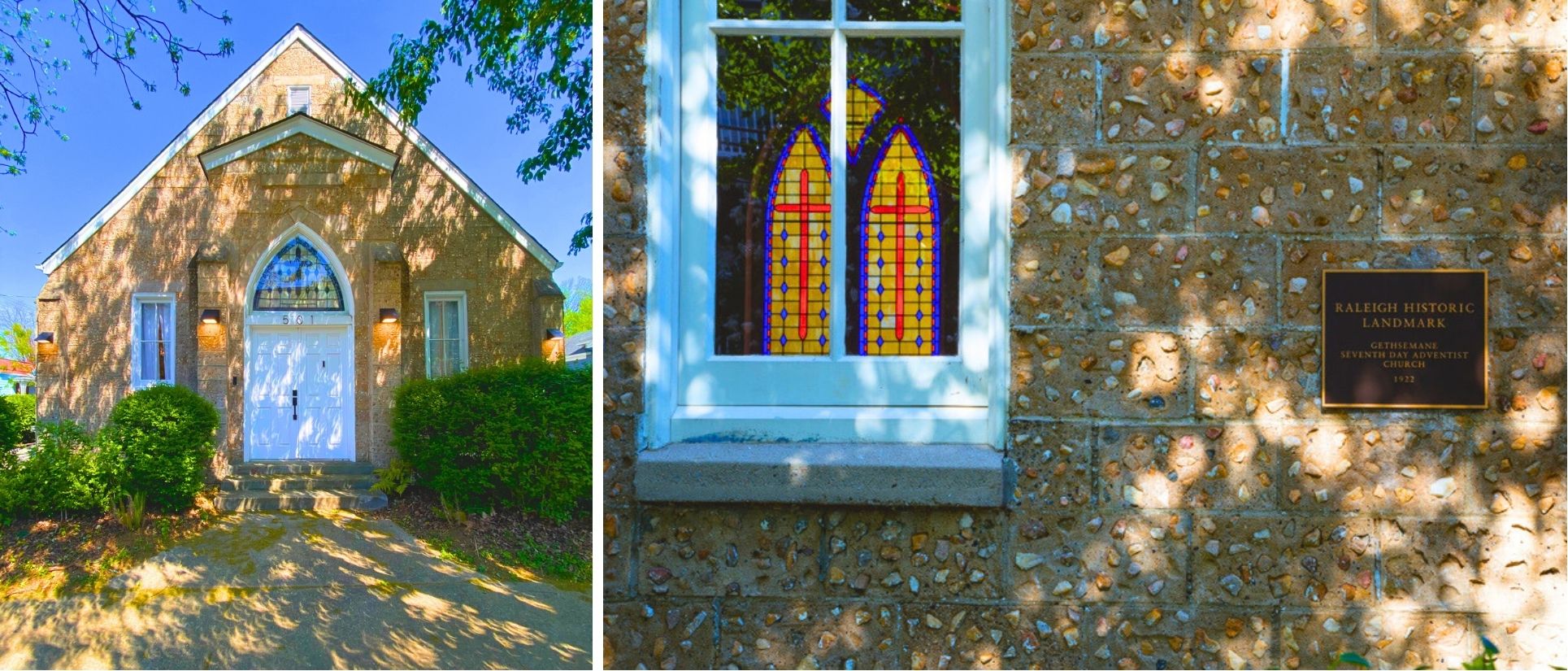
Gethsemane Seventh Day Adventist Church in downtown Raleigh was the city’s first SDA church. The congregation’s former sanctuary is a white concrete block structure built in 1923 and stands as one of the oldest black SDA church buildings in North Carolina. Its notable concrete blocks are decorated with smaller stones that are hand-pressed into each block. The Gothic Revival-style church features a low entry tower centered on its facade that contains the main entrance that is topped by a pointed arch with stained glass. Pointed arch openings, diminutive buttresses, and interior scissor trusses round out the Gothic theme. The congregation outgrew its historic sanctuary and located to a new sanctuary in 1982, but kept the property as a spiritual home until a tornado damaged the building in 2011. The church is listed in the East Raleigh-South Park National Register Historic District. The property was sold by PNC with preservation covenants in 2012 and is currently in use as the office of architecture firm, Clearscapes.
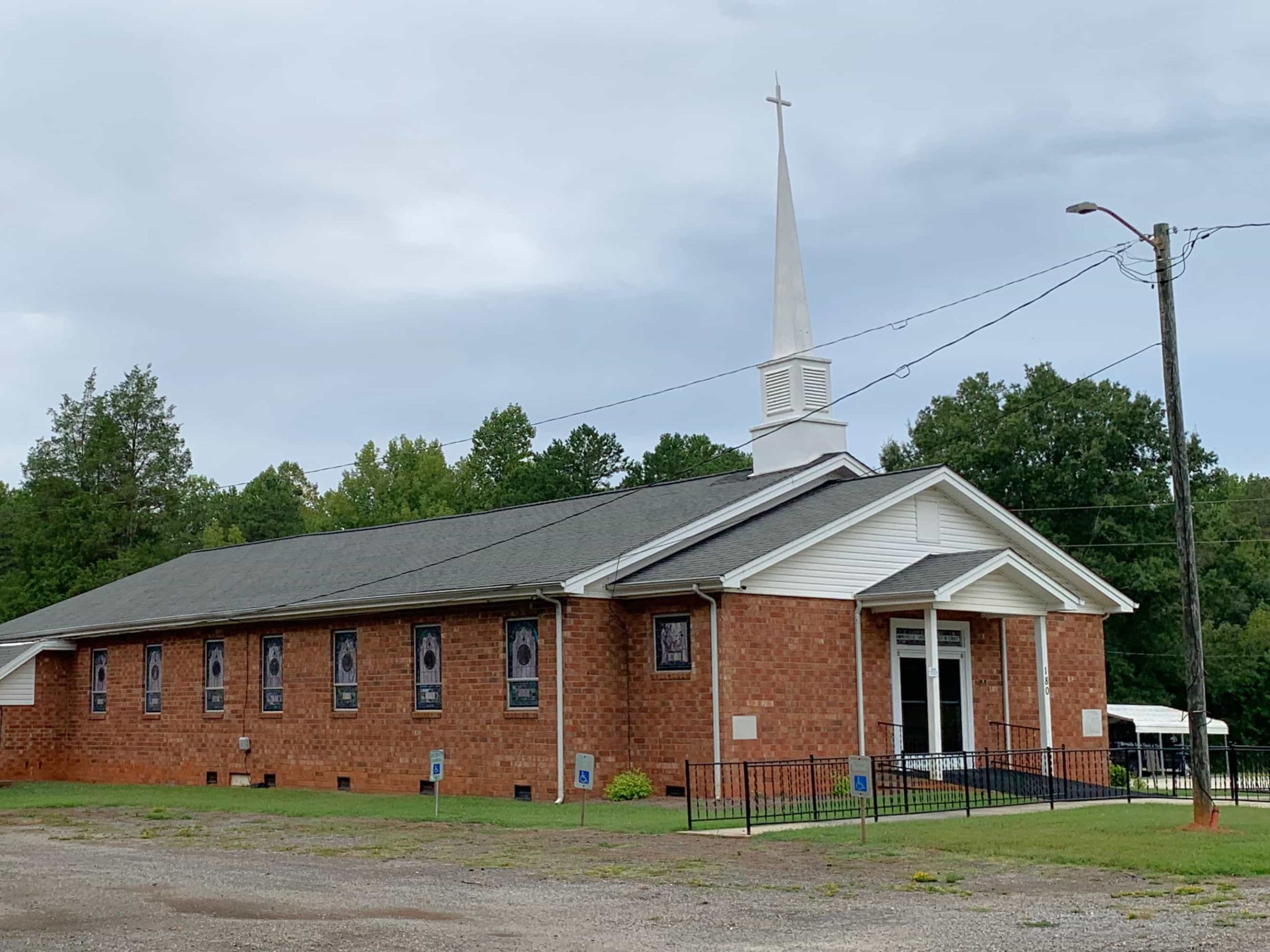
Located near Troutman in Iredell County, the Shinnsville United Church of Christ had its beginning in 1898 as Shinnsville First Congregational Christian Church, prior to the 1957 formation of the United Church of Christ.The congregation first met under a brush arbor until starting its new sanctuary in 1902, with an expansion in 1919. In 1957, the Evangelical and Reformed Church merged with the Congregational Christian Church, and Shinnsville took its current name in 1964. Shinnsville was an active agricultural community that was formed during the Reconstruction Era. In time, the South Iredell Rosenwald School was erected in front of the church. The original wood frame sanctuary was replaced in 1971 with the current brick church structure, an example of Mid-Century Modern design composed of oversized commercial brick, front gabled roofline, and stained glass windows. The sanctuary, the adjoining one-story fellowship hall, and the cemetery are located on five acres of land that are integral to the local Black religious and cultural life of the community. The property is protected by an easement donated to PNC in 2022.