

May | North Carolina’s Diverse People
This May, Preservation Month has a special purpose. As we approach America’s 250th anniversary, Preservation North Carolina (PNC) is celebrating with the National Trust for Historic Preservation and all preservation organizations across the country to honor the places that prove one powerful truth:
For PNC, this means protecting the special places and landmarks that represent the rich diversity of North Carolina’s people. This month we are highlighting an eclectic mix of historic properties that are as diverse as the North Carolinians they represent. Our work is never done, and we continue to explore opportunities to increase the representation of all people.
Once again, PNC’s America 250 in NC series focuses on properties protected by our preservation covenants. These are legally-binding protections that owners place on a property and are monitored by PNC in perpetuity.
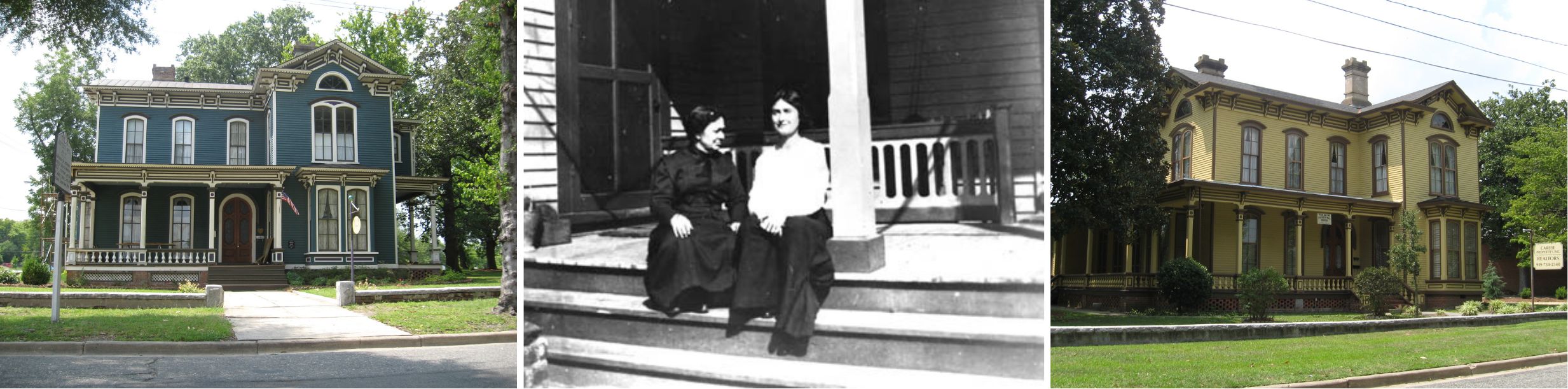
In Goldsboro, the Henry and Solomon Weil Houses stand side-by-side as a testament to the success of German-Jewish immigrants. The Weil brothers established H. Weil & Bros variety store in 1866 and helped found the Oheb Sholon Congregation in 1883. In 1875, they commissioned these twin Italianate-style residences which feature distinctive arched windows, bracketed cornices, and low-pitched roofs, possibly designed by Raleigh architect G.S.H. Appleget. Henry’s daughter, Gertrude Weil (pictured below with her mother Mina), lived here her entire life. She was a social activist involved in progressive and often controversial causes, including women’s suffrage, labor reform and civil rights. To ensure this legacy of Jewish history in our state, PNC accepted easements on the Henry Weil House in 1982 and the Solomon Weil House in 1984.
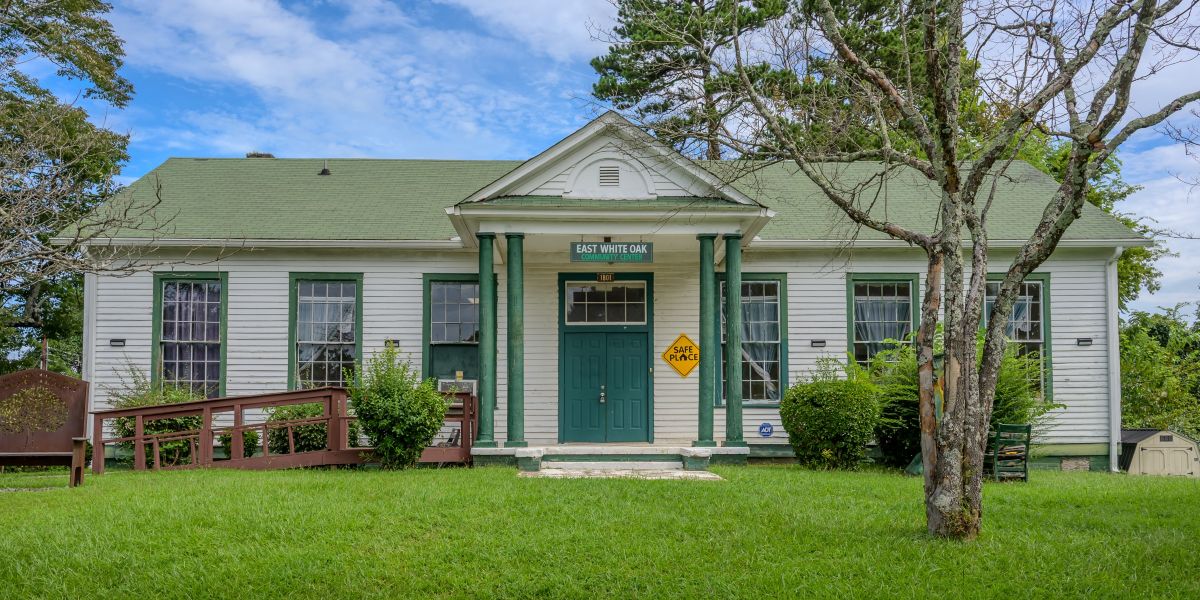
During the 1890s, Jewish brothers Moses and Ceasar Cone established major flannel and denim plants in Greensboro, with their massive factories eventually employing 5,000 workers. Black employees lived in the segregated East White Oak mill village. To serve this community, the Cone brothers built the wood-frame East White Oak School in 1916 near the entrance to the neighborhood to provide education for workers’ children. A notable student was David Richmond Sr., one of the Greensboro Four who peacefully protested at the Woolworth lunch counter in 1960. Similar to Rosenwald Schools, this corporate-funded facility featured classrooms with large windows, offices, and recreation spaces, and represents education as part of a business model that included social betterment. It now serves as a community center, with an easement placed on the property in 2025.
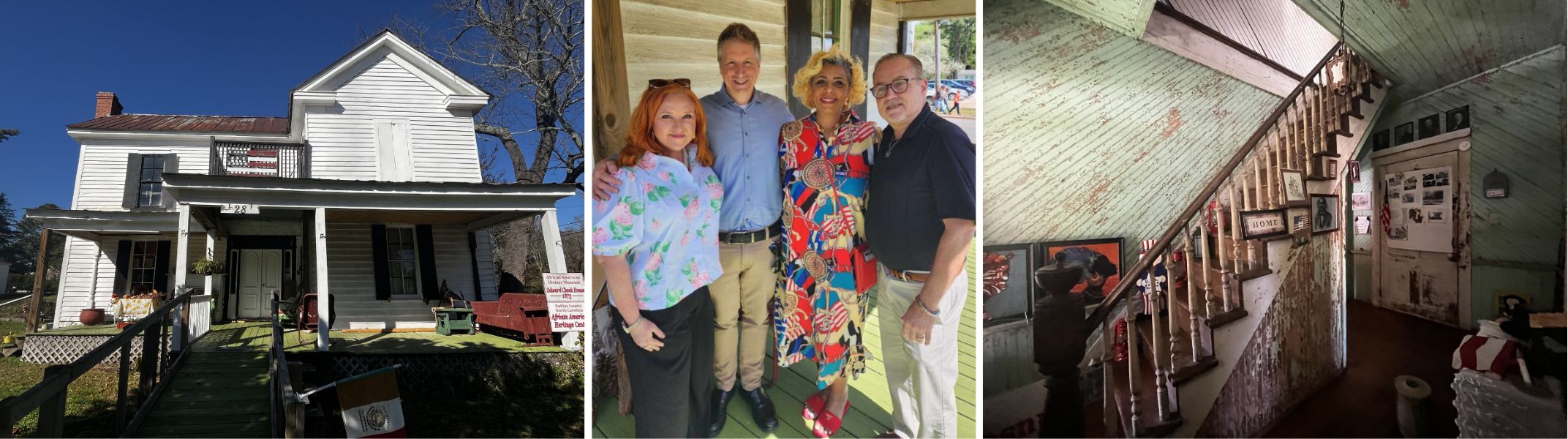
The Edward Cheek House in Halifax is a two-story, vernacular frame house representative of the success achieved by Freedmen during the Reconstruction Era. Built in 1874 by John H. Hannon, a Black postmaster, the house was sold to Cheek in 1888 and remained in his family until 1947. Born enslaved, Cheek was also a postmaster, and his community leadership prioritized culture, faith and education in Halifax County. Cheek and his wife, Mary E. Arrington, raised 10 children in their Halifax home. In 2022, the house was donated by David Birdsong to serve as the Edward Cheek House Museum & Halifax County NC African American Heritage Center, a nonprofit formed to operate the site as a museum. An easement was placed on the property in 2025.
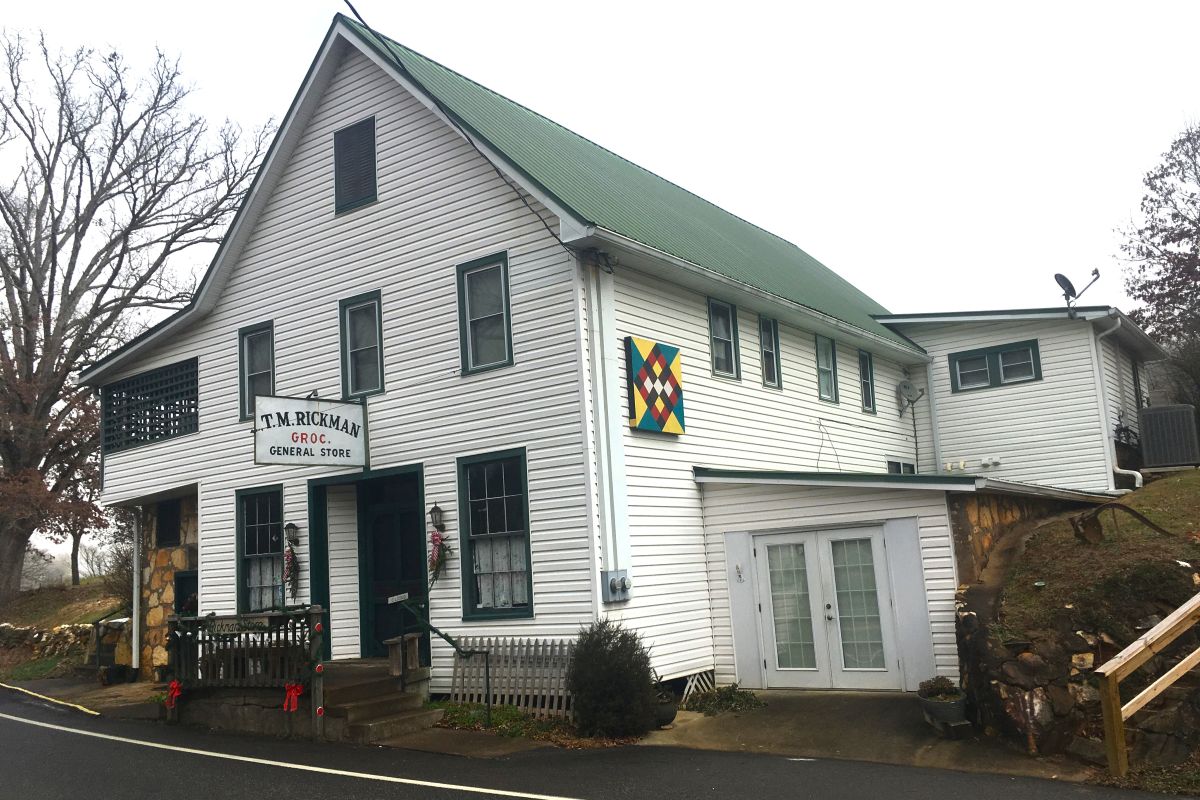
Located in the rural mountain community of Cowee in northern Macon County, the T.M. Rickman Store was built in 1895 by John Hall before being sold to Thomas Rickman in 1925. The substantial two-story frame building retains most of its original interior fixtures, including wormy chestnut paneling. A commercial and social hub for over a century, the store represents common ground for the independent people in sometimes isolated mountain communities. Today, the building is a museum and special events center operated by the Friends of the Rickman Store. Along with several other sites located in the Cowee Mountain range, T.M. Rickman Store has been protected through an easement in partnership with the Mainspring Conservation Trust since 2020.
The former Qualla Park Shop, located in Cherokee near the entrance of the Great Smoky Mountains National Park, represents an intersection of Cherokee culture with the rising tourism economy that followed the construction of new parkways and highways in the early twentieth century. The US Government established the Qualla Boundary after the Cherokee removal of 1838. The reservation covers 63,000 acres and is the largest Indian reservation in the state. With the influx of tourists, many shops, eateries and inns opened up along the new highways. In the late 1930s, Mrs. Irene Robinson curated one of these shops with hand-made Cherokee crafts to derive income as a divorcee; a coffee shop was located on the second floor. In response to these local tourism shops selling their crafts, about sixty Cherokee craftspeople organized in 1946 and officially formed the Qualla Arts and Crafts Mutual, Inc. to take ownership of their work. PNC has protected the Qualla Park Shop since 2009, enabling us to learn more about this important regional history.

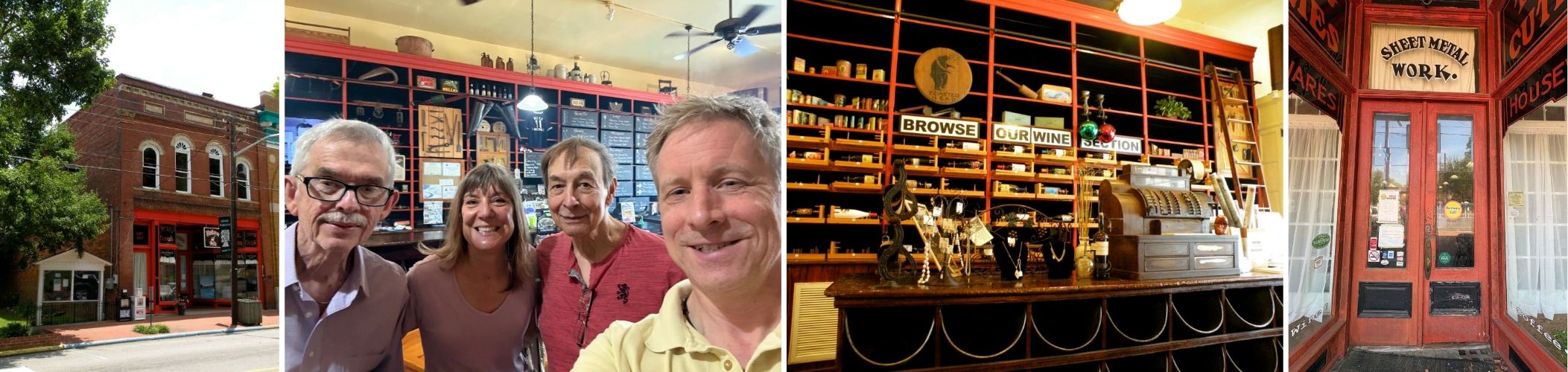
Prominently sited on Main Street in Warrenton, the Miles Hardware store is a red brick building with handsome round-arch second-floor windows and a corbelled cornice of cream brick built around 1910. Now occupied by the Hardware Cafe, the building retains remarkably preserved lettering on the front windows, and original interior shelving and counters. The landmark was restored by Dr. Donald G. Arnold and Ernest F. Fleming III, a High Point couple who became enamored by rural Warren County and moved there to restore several endangered properties and start a business. They represent the important contributions made by the LGBTQ community to the preservation movement since its start. Thanks to Don and Ernie, this fascinating building has been protected by PNC covenants since 1997.
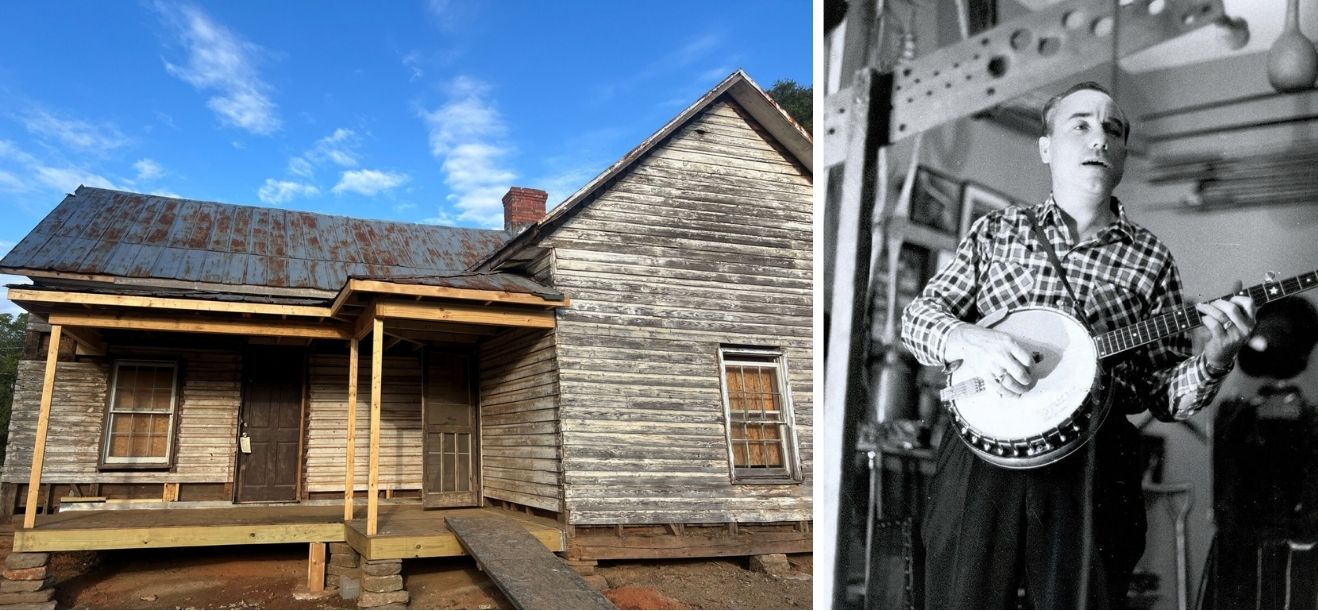
The ca.1900 single-story, wood framed Earl Scruggs Homeplace is located in rural Cleveland County. Scruggs was born in 1924, and his family moved to this vernacular farmhouse in 1933. He spent his most formative years here developing his three-finger picking banjo style which became known worldwide as the Scruggs Style. In the early 1940s he took a job at the Lily Mills in Shelby but left the area around 1945 to fully pursue his musical career. Many recognize Scruggs through his popular banjo instrumental “Foggy Mountain Breakdown” (1949), as well as his work for the 1960s television sitcom The Beverly Hillbillies. The property will serve as a museum recognizing this important touchstone to North Carolina’s innovative and influential musical heritage. In 2024, PNC accepted a preservation easement from the Earl Scruggs Center to ensure its permanent protection.
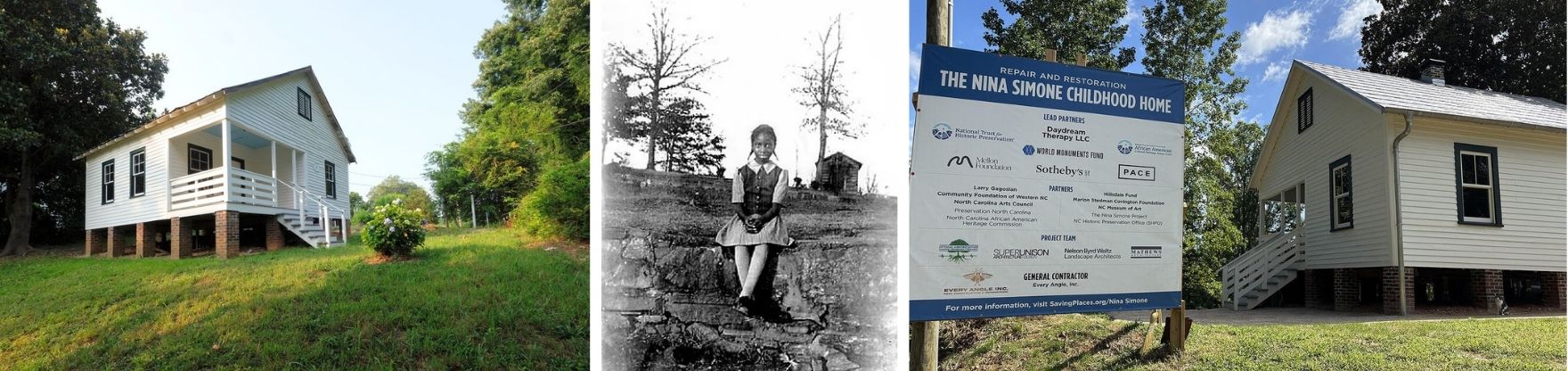
Constructed ca. 1918, the Nina Simone Childhood Home in Tryon is the birthplace of the legendary musician and civil rights activist. Born Eunice Waymon in 1933, Simone lived in this three-room, wood-frame, house until 1937. Located in Tryon’s historically African American East Side neighborhood, the home sits close to St. Luke’s C.M.E. Church, where her mother preached. After decades of changing ownership and falling into decay by the 1990s, the property was purchased in 2016 by four African American artists. In partnership with the National Trust for Historic Preservation and others, the dwelling has been restored to its original appearance for use as a museum. The vernacular style house has retained its early fabric and represents the modest beginnings of North Carolina’s creative and cultural class. A preservation easement was granted to PNC in 2020.
Körner’s Folly is a fascinating Victorian-era house built in 1880 by the creative innovator and artist Jule Gilmer Körner. The house was built to showcase his talent and craftsmanship and resulted in an eccentric and unconventional residence of 22 rooms spread over multiple levels, hence the term “folly” in its name. Körner was a Kernersville native who studied art in Philadelphia before returning home to practice as an interior designer, portrait artist, and sign painter. His clients included Bull Durham Tobacco, and his commissions ranged from theatres to churches, auditoriums to colleges, and mansions across the region. Unusual features of his house include round-arch windows, corbelled brickwork, and steep-pitched gables. The house is operated as a museum by the Körner’s Folly Foundation and represents North Carolina’s creative talent and artistic traditions. The site has been protected by covenants held by PNC since 1999.

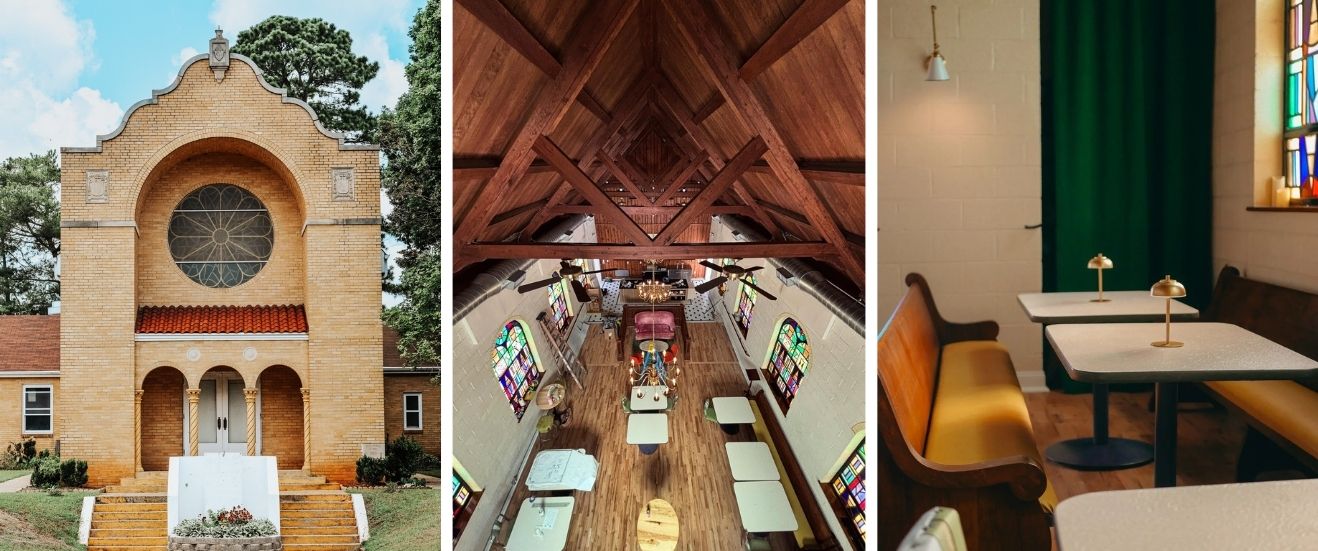
Located in Oxford, the Spanish Revival style Saint Catherine of Siena Catholic Church was constructed in 1955. Designed by the Greensboro firm of Andrews and McGeady, the unusual Spanish Baroque-style sanctuary features Solomonic columns and a high, rounded arch topped with an ogee parapet. Before the church was built, the growing Catholic population in Oxford and nearby Camp Butner were served by a “mobile” railroad car chapel known as St. Peter’s Chapel. The church represents a high-water mark in architecture and culture for this rural county’s modest Catholic population. After the congregation relocated and the building was deconsecrated, it fell into a period of disrepair. Today the building has been beautifully renovated as a coffee and wine bar and has been protected by an easement since 2024.
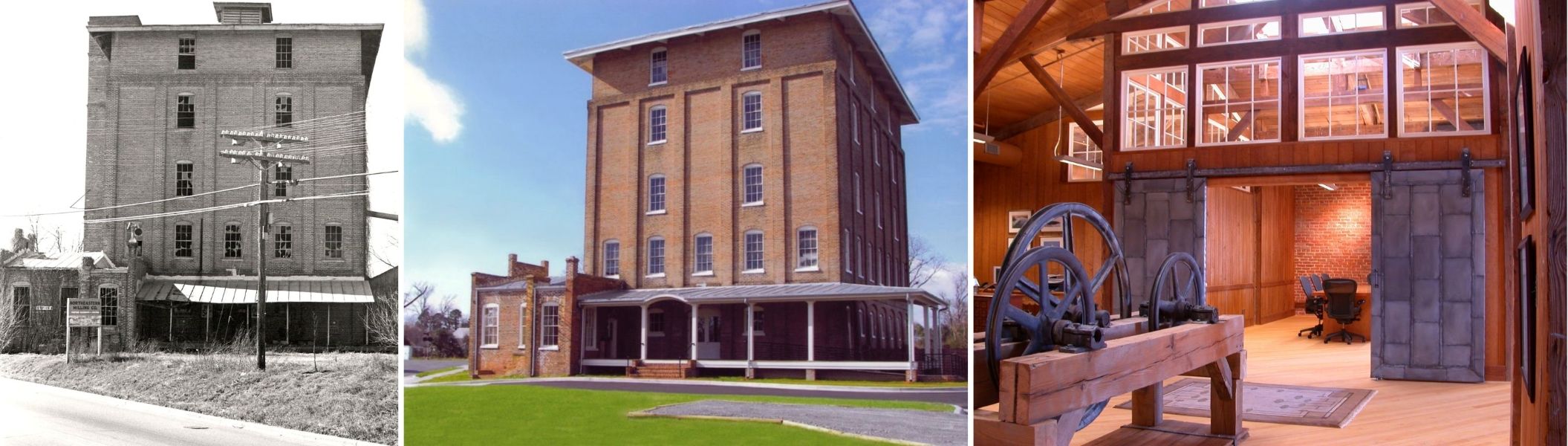
The Edenton Peanut Mill is a tangible reminder of the Albemarle region’s agricultural legacy in growing one of North Carolina’s most lucrative products. Built in 1909 to process area’s peanut crop, the imposing industrial structure rose five stories over the town. The massive brick building was built adjacent to the town’s railroad tracks and is embellished with a deep corbelled cornice, arched windows, and load-bearing pilasters. The mill was organized by local businessmen and once processed 1,400-1,500 100-pound bags of peanuts per day with a staff of 100. The first floor was initially used for storage, the second floor for picking, the third and fourth floors for polishing, and the fifth floor housed hoppers. The property has been protected by PNC’s covenants since 1982.
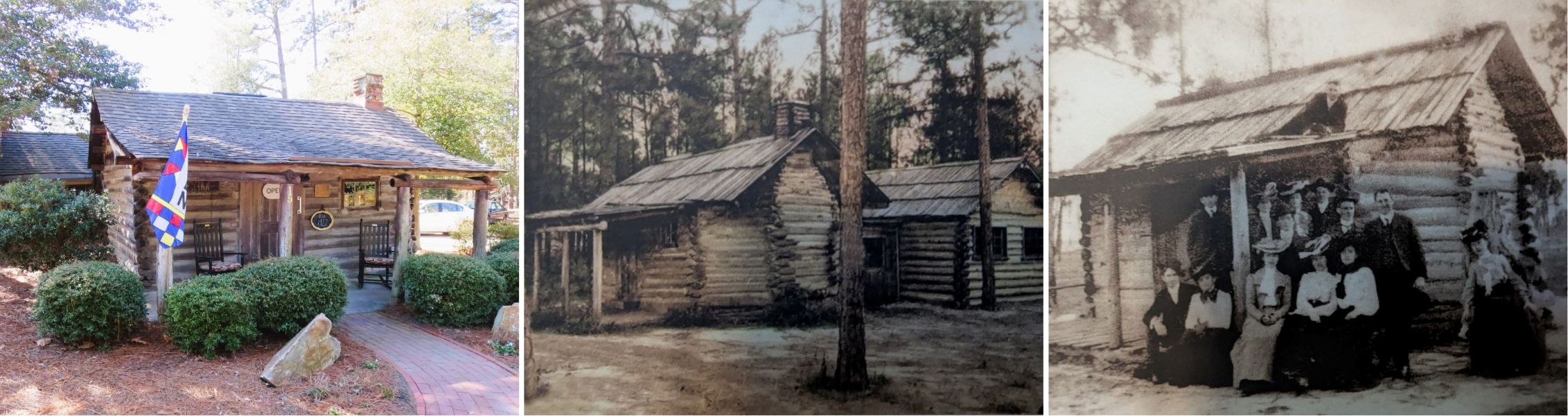
Overlooking the Village Green in Pinehurst, the historic Sandhills Woman’s Exchange serves as a testament to early 20th-century women’s empowerment, providing a retail outlet for handmade goods that offered financial independence to local women. This log cabin, believed to have been built by James Ray in the early 1800s, was moved and restored in 1896 by Pinehurst developer James W. Tufts to serve as a museum. The local exchange was established in 1923 after visitors recognized the need to support households in the area; the cabin was donated to the Exchange for use as their shop. The building is a charming reminder of early life in the sandhills. Today, this treasured cabin remains part of a select national group, being one of only 15 remaining members of the Federation of Woman’s Exchanges. The site has been protected by PNC since 2015.
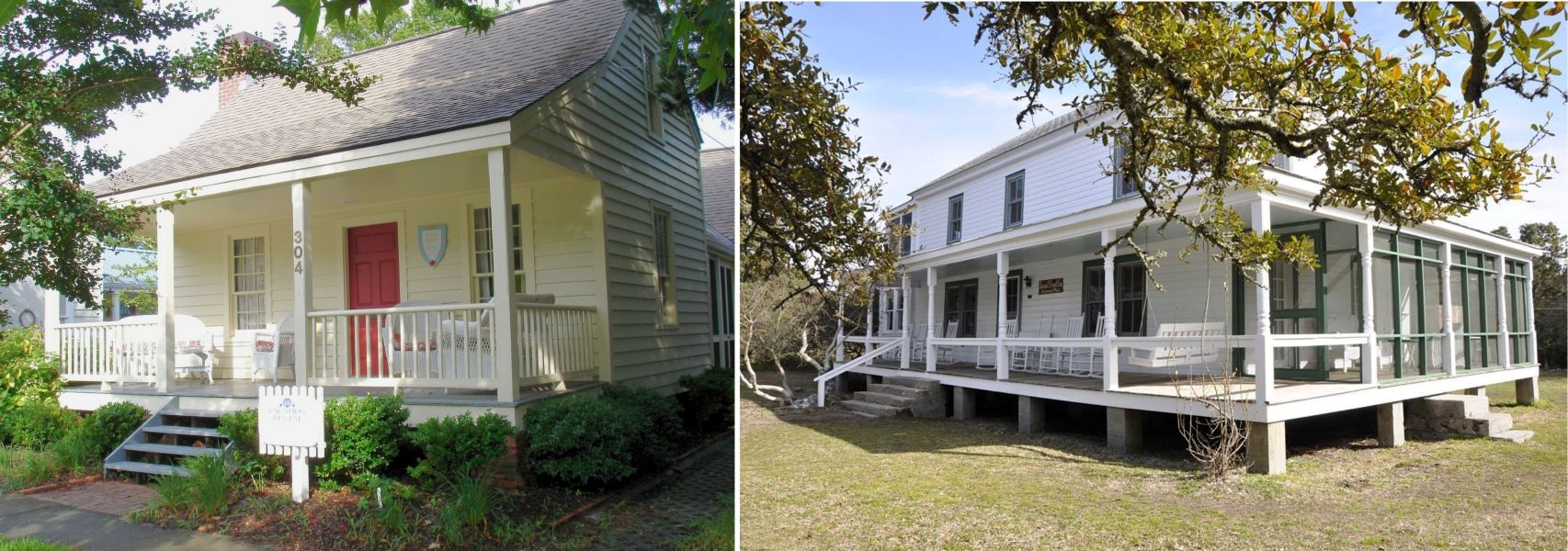
North Carolina’s vernacular coastal building traditions are exemplified by the Piver-Rhue House in Beaufort and the Chase-Bragg-Boos House in Ocracoke. The pragmatic wood-framed structures reflect the absence of stone or clay along our sandy coast. These coastal cottages feature broad porches that create shaded, breezy spaces. The Piver-Rhue House is a one-and-one-half story (known locally as “story-and-a-jump”) frame structure constructed around 1825-1830. The Pivers were prominent river pilots and turpentiners. The Chase-Bragg-Boos House in Ocracoke is a larger, two-story, frame house with a hipped roof constructed between 1828 and 1834 for a New England sea captain named Elisha Chase. Believed to be one of the oldest houses on the island, it features a closed string staircase and Federal era mantels that have survived the harsh climate of the Outer Banks.
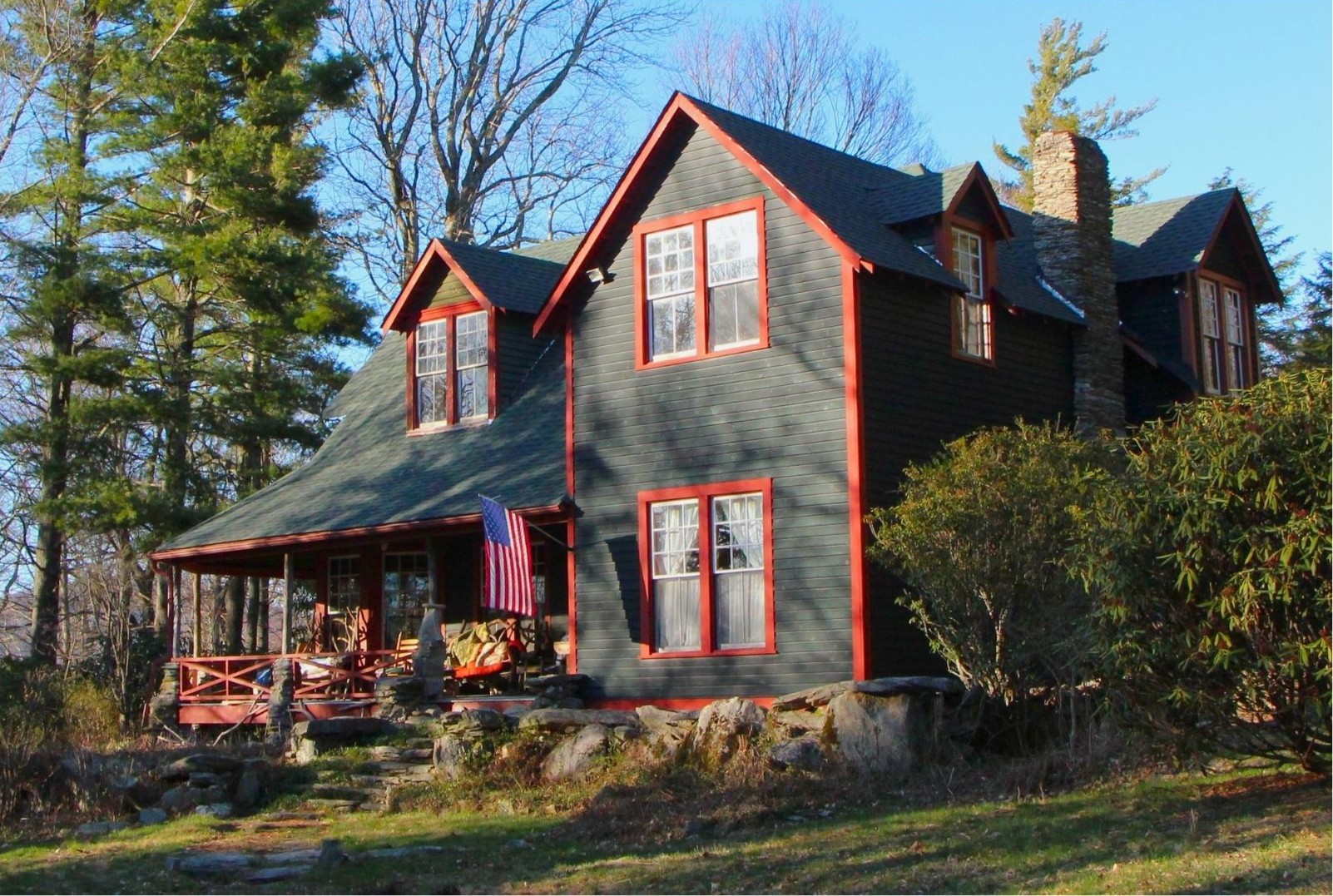
On the opposite side of our state, the Vardell House named “Opicherhoka” in Blowing Rock is an excellent example of a highland seasonal cottage. It is named from the first letters of timber types used in its construction: oak, pine, chestnut, rhododendron, and kalmia. The two-story Arts and Crafts-style house was built in 1899 by local carpenters Roe Hartley and Joseph N. White for Dr. Charles and Linda Vardell at 3,700 feet above sea level. Dr. Vardell was a founder and first president of Flora McDonald College in Red Springs. Their summer cottage consists of stone chimneys and post-on-piers that support wide porches to take advantage of the cool mountain climate. Opicherhoka is the oldest known cottage in Blowing Rock and remains in the Vardell family. It has been protected by an easement since 2002.
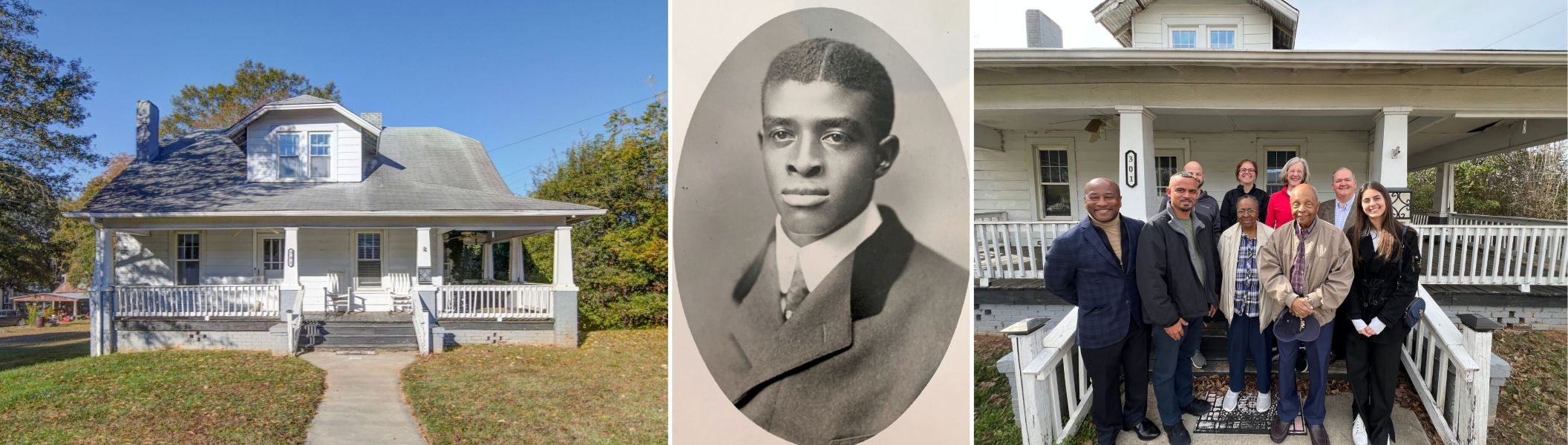
The Charles Jesse Bynum Reid House represents advancements in Black education despite marginalization during the Jim Crow Era. Born in 1879 in the village of Lowell in Gaston County, Professor Charles Jesse Bynum Reid graduated in 1904 from Lincoln Academy in Kings Mountain before enrolling in Knoxville College in Tennessee. He returned home to pursue a lifelong teaching career. In 1918, he married fellow educator Maude Herndon, and by 1920, they built their Craftsman-style bungalow in Belmont. This story-and-a-half home, featuring a distinctive wrap-around porch with brick piers, served as a base for their extensive work in education and ministry. In 2024, the Reid family sold the house through PNC with protective covenants to ensure its preservation. It is currently under renovation by its new owners.
Sited on a rise in rural Franklin County, the Patty Person Taylor House features architectural sophistication exceeding many other houses in the Carolina Piedmont. Martha (Patty) Person Thorpe was the widowed sister of Thomas Person, a Brigadier General in North Carolina’s Revolutionary War militia and namesake of Person County. In 1783, Patty received a gift of 3,000 acres from her brother, on which she commissioned her residence by 1785. The house was built by unnamed free and enslaved workers, and boasts grand features including Georgian wainscoting, robust chair rails, a stately staircase, and elegantly carved mantels. This plantation house stands as a testament to the exceptional skill of enslaved Black artisans who worked alongside free Black and white workers such as joiners, carpenters, and brick masons. These craftspeople achieved a notably refined design that has been protected by PNC since 1981.
