America 250 in November | NC’s Mid-Century Modern Architecture
This series is part of our America 250 Across NC celebration where Preservation North Carolina shares our state’s contributions to American History through the varied stories of historic preservation.
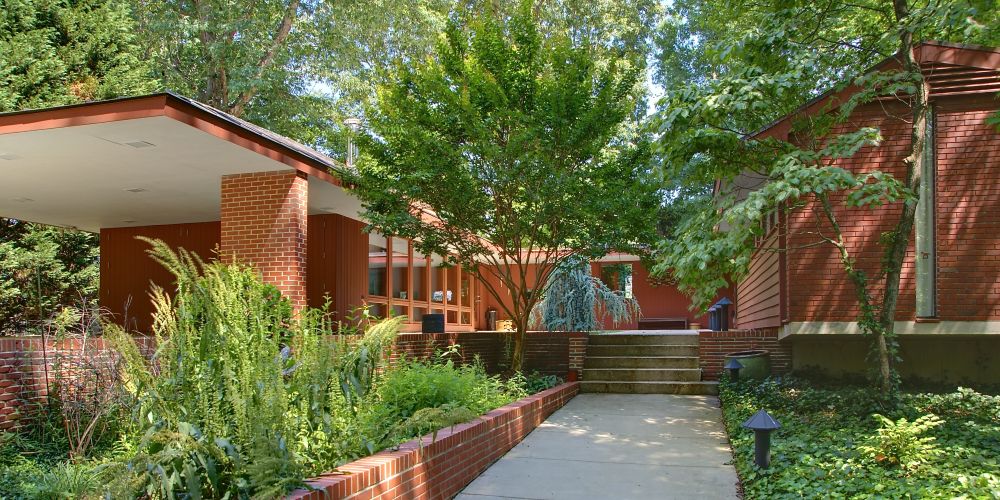
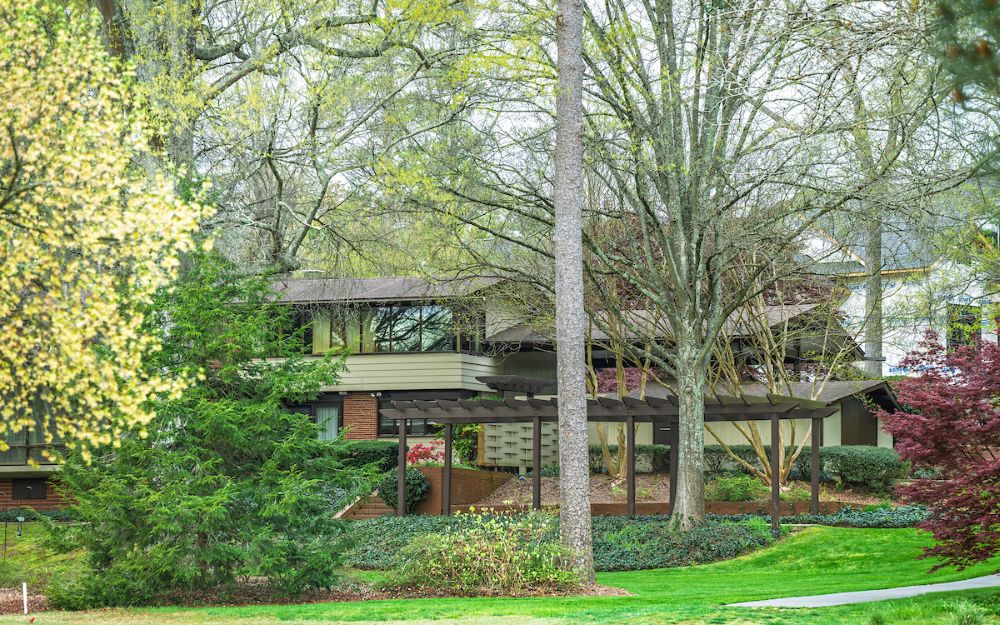
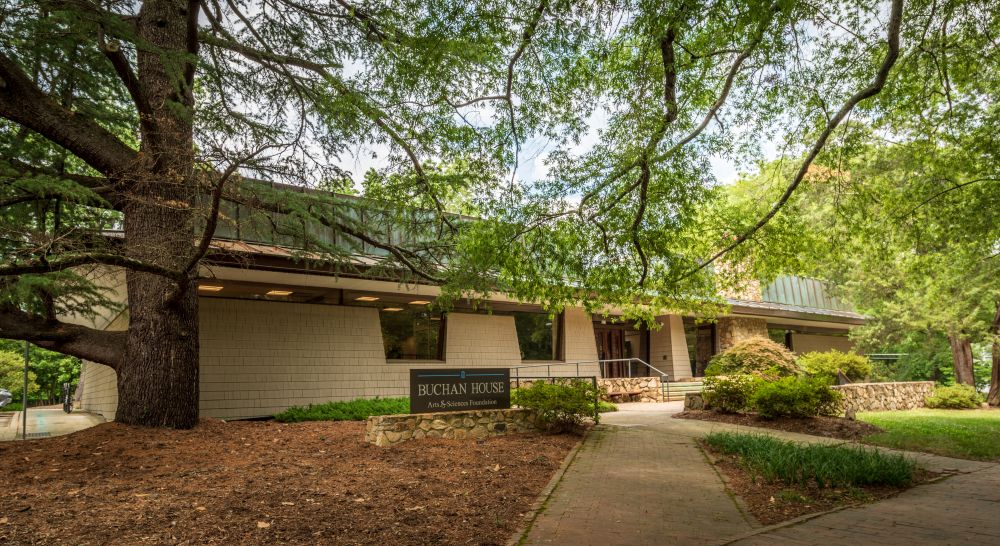
By the mid-twentieth century, North Carolina was a primary engine of the “New South” movement, propelled by sweeping political, industrial, and social shifts. Forward-thinking leaders like Governor Terry Sanford rejected Dixiecrat resistance to desegregation, choosing instead to comply with federal civil rights laws. They recognized that racial strife choked economic progress, whereas moderation could unlock it. Coupled with the advent of air conditioning, a large pool of affordable labor, and business-friendly policies, this shift fueled a massive “Sun Belt” boom. As a result, North Carolina cities transformed into vibrant corporate hubs, research centers, and manufacturing centers. Modern architecture became the ultimate visual expression of this rapid industrialization and the state’s concerted break with the past. Embracing the post-war boom of the 1940s and 1950s, leaders and architects discarded the columned neoclassicism of the “Old South” in favor of glass, steel, and concrete to project a progressive identity. A major catalyst for this movement occurred in 1948, when NC State University recruited modernist Henry Kamphoefner to serve as the dean of its School of Design. Explicitly rejecting historicist styles, Kamphoefner sought to forge a distinct modern style tailored to North Carolina’s materials and climate that includes orientation to the sun, outdoor spaces, and open floor plans. The school infused European Bauhaus philosophy into the region, training a new generation of Southern architects who filled the built landscape with innovative mid-century homes and civic buildings. Today, several of these landmark structures are permanently protected through easements and covenants held by Preservation North Carolina, such as the ones highlighted in this series.
Click on the images below to learn about different eras of modern architecture in North Carolina