

Milton Marvels
As Preservation North Carolina works to find the next steward for the Gordon-Brandon House in the town of Milton, we’re revisiting some of our other protected historic properties in this special part of the state.
Located in Caswell County neighboring the Virginia state line, Milton, North Carolina might be small by population standards, but it’s packed with history and charm, drawing visitors from near and far. Some folks love landing there to unwind after the thrill of watching or driving at the Virginia International Speedway. Some enjoy the art and culture the historic downtown brings, while others enjoy the outdoor recreation around the Dan River. Preservationists appreciate its important history and the prominent Federal and Greek Revival- Style architecture that tell Milton’s story. Preservation North Carolina is proud to hold permanent legal protections on seven historic properties in this small town. Learn about some of them below.
Public Spaces
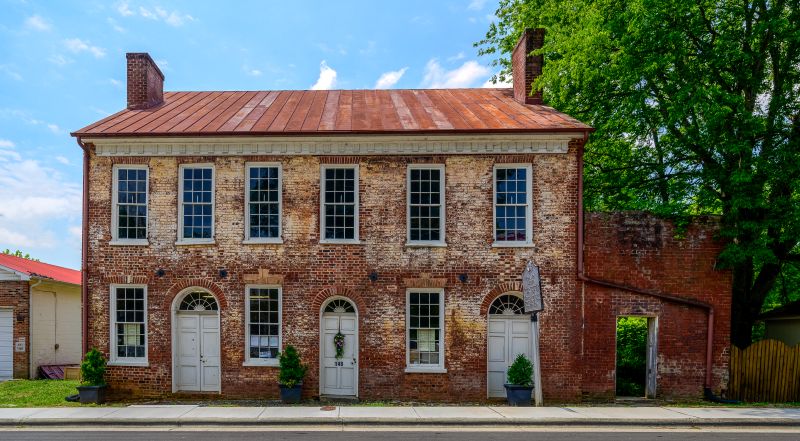
photo by Jim Lamb for Capital City Camera Club
Union Tavern, the Thomas Day Historic Site
One of the most historically significant PNC Protected Properties is Union Tavern, once the home and workshop of master craftsman Thomas Day. Day, a free Black man, came to Milton in the 1820s, where he produced furniture and wood architectural elements for esteemed clients. With help from enslaved people on his property and free artisans living with him, he became a renowned and successful artisan during a time when most Blacks were still enslaved. His furniture is still highly collected today and his architectural influences are evident in a number of buildings in the region, and especially in Milton. When Union Tavern was badly damaged by fire in 1989, Preservation North Carolina stepped in to stabilize the building and preserve it. In February 2024, the property was designated as North Carolina’s newest State Historic Site.
Private Homes
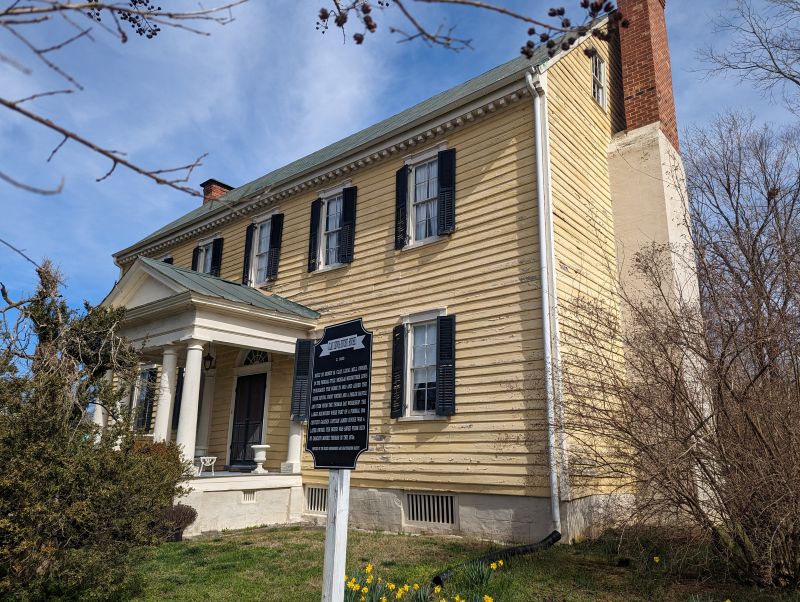
Clay-Lewis-Irvine House
This Federal-style house belonged to Nicholas Meriwether Lewis in 1830, when he added the Greek Revival front portico, a parlor mantel, and trim created in Thomas Day’s workshop. It was later owned by Captain James Irvine and then, in the 1970s, was saved from ruin by Carolyn Moore Thomas. Her son, Jim Upchurch, inherited the home upon her death and in 2009, he permanently protected the private residence with an easement held by PNC.
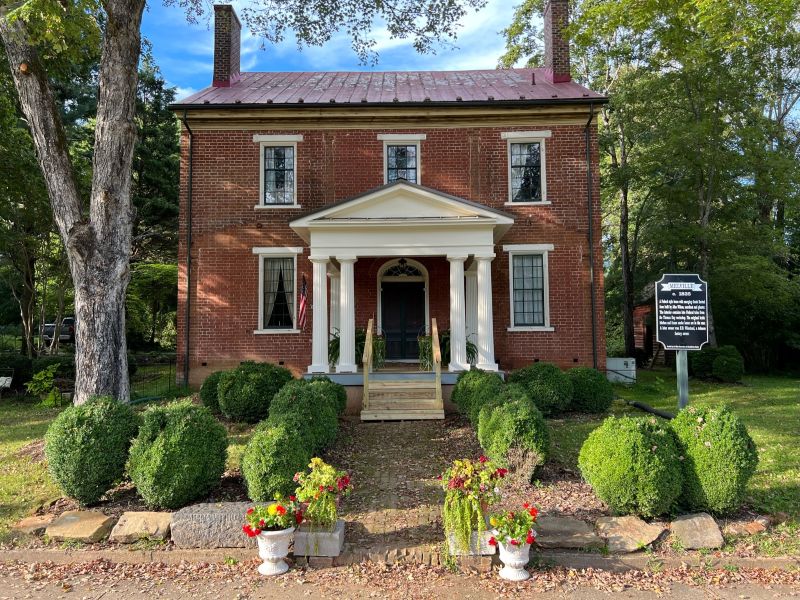
Wilson-Winstead House
Built around 1835, the Wilson-Winstead House (a former Carraway Award of Merit winner!) is named for its builder and first owner, John Wilson, and its second owner, local business and tradesman Edward D. Winstead. The two-story Greek Revival style house has Federal style interiors with woodwork by Thomas Day. Jim Upchurch purchased the property in 1989 and began an extensive restoration that was put on pause when he inherited his mother’s home (see above). In 2009, Jim placed a PNC easement on the Wilson-Winstead House. Decades later in 2020, Jim’s daughter Alex and her husband Josh purchased the house and completed its restoration, including restoring the lost front portico.
Vacation Rentals
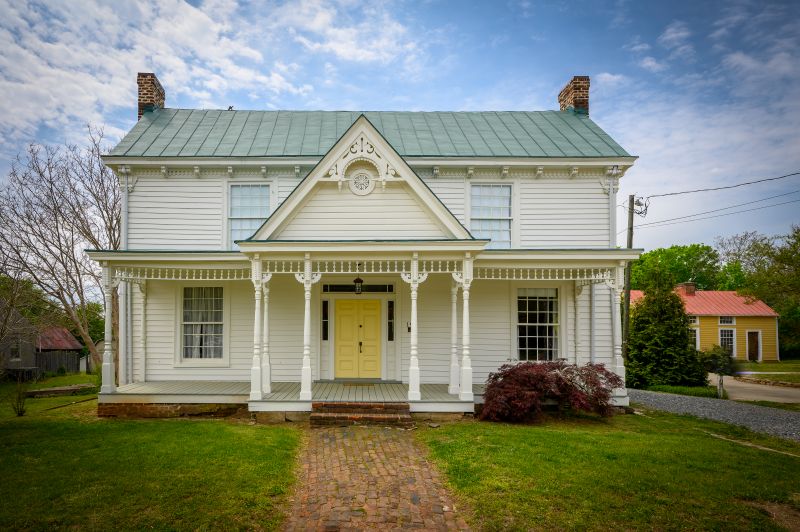
photo by Jim Lamb with Capital City Camera Club
Jones House
More than 170 years old in the heart of Milton, this late Federal-Greek Revival residence is dotted with Queen Anne-style flourishes, including a fine cross-gable bargeboard — a striking example of craftsmanship rarely found today. Original heart pine floors and hand-carved mantels speak to a bygone era, while graceful double porches and mature landscaping invite quiet reflection and connection. The interior boasts late Federal trim attributed to Thomas Day. Today visitors to Milton can enjoy this lovingly restored home as a vacation rental. It became a PNC Protected Property in 2018.
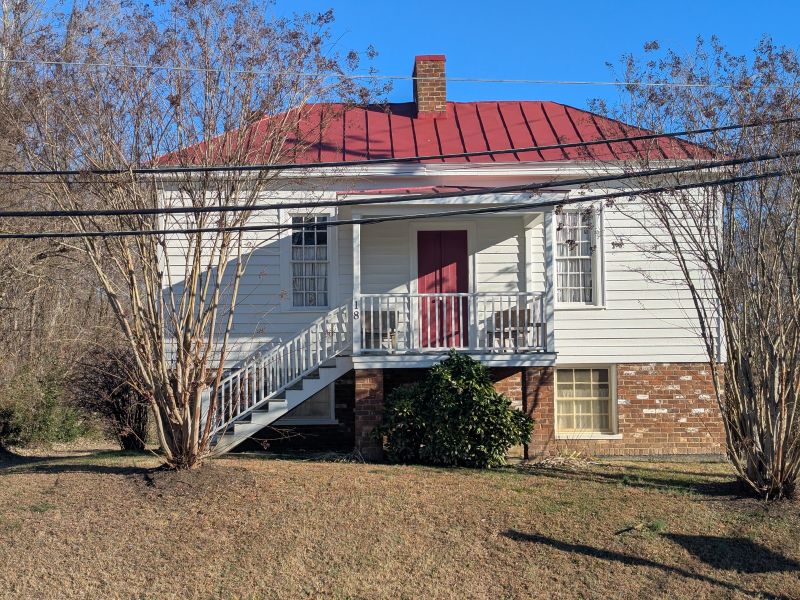
Oliver House
Built in 1845, the Oliver House is one of only four raised unique Greek Revival cottages in Milton. According to the Milton National Register Nomination: The dominant Milton house-type of the antebellum period is the modest, raised cottage, consisting of a brick story with an upper frame story containing the main entrance. These homes were built for local merchants from the 1840s to 1860s when Milton was a commercial boomtown with thriving factories and warehouses, taverns, hotels, a state bank, and of course, the woodworking shop of Day. The interior exhibits a center chimney with three fireplaces, plastered walls, simple trim, and classical revival mantels. It was carefully restored in the 1990s by noted North Carolina craftsman Dean Ruedrich who donated an easement on the house in 2002 before selling it. Today, the Oliver House is also enjoyed as a vacation rental.
On the Market
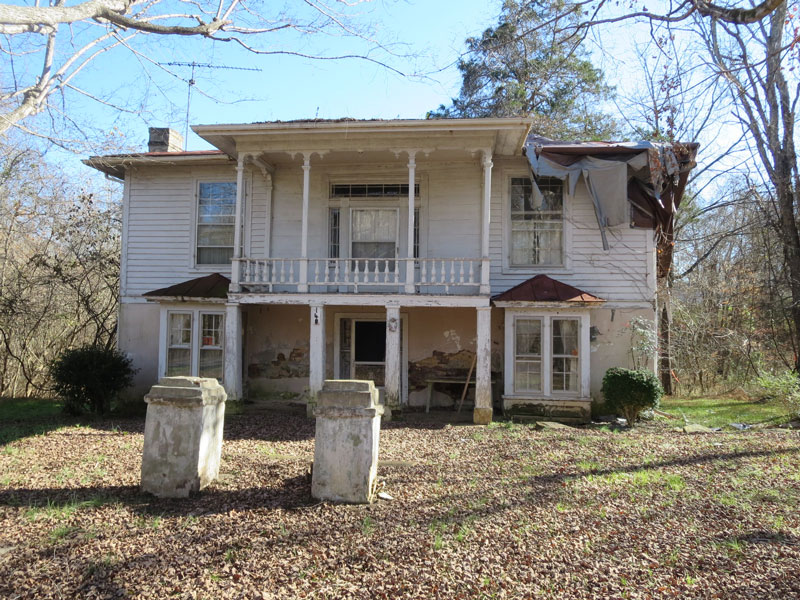
The Gordon-Brandon House
On a private wooded lot, through masonry gates is the Gordon-Brandon House, awaiting its next chapter whether that’s also a vacation rental or a peaceful small-town family retreat. Like the Oliver House, it’s one of the last remaining unique-to-Milton style homes or “cottages” as they’re referred to. Though Gordon-Brandon is more grand than your typical cottage. Near County Line Creek, this lovely spacious two-story home has nearly 2,000 square feet of original character. The front façade is dominated by a two-story, three-bay-wide porch supported by four large, beaded posts on the lower level, and more delicate chamfered posts on the upper level dressed with molded caps, decorative brackets and turned balustrade. The two-paneled, double-leaf doors on the upper level are set within an irregular-glazed transom and sidelights similar to other area homes indicative of Thomas Day’s local legacy. Gorgeous large upper-level windows consisting of 8-over-12 sash with wide architraves and delicate molding catch the eye. While some rehabilitation has been started, its next owner will need take it all the way to completion. Rehabilitation will include rebuilding the two front bay windows and masonry, foundation, roof, and structural repairs. The property is located in the Milton National Register Historic District and is eligible for rehabilitation tax credits.