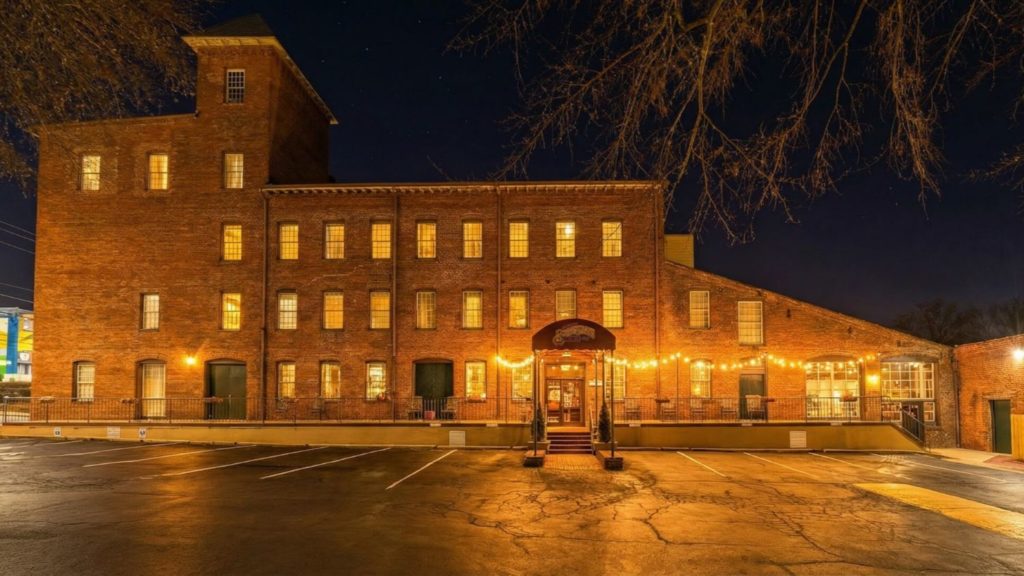
Get to Know: Brookstown Mill
This series is part of our America 250 Across NC celebration where Preservation North Carolina shares our state’s contributions to American History through the varied stories of historic preservation. July’s theme is textile mills and villages being used in different ways today while maintaining their original significance.
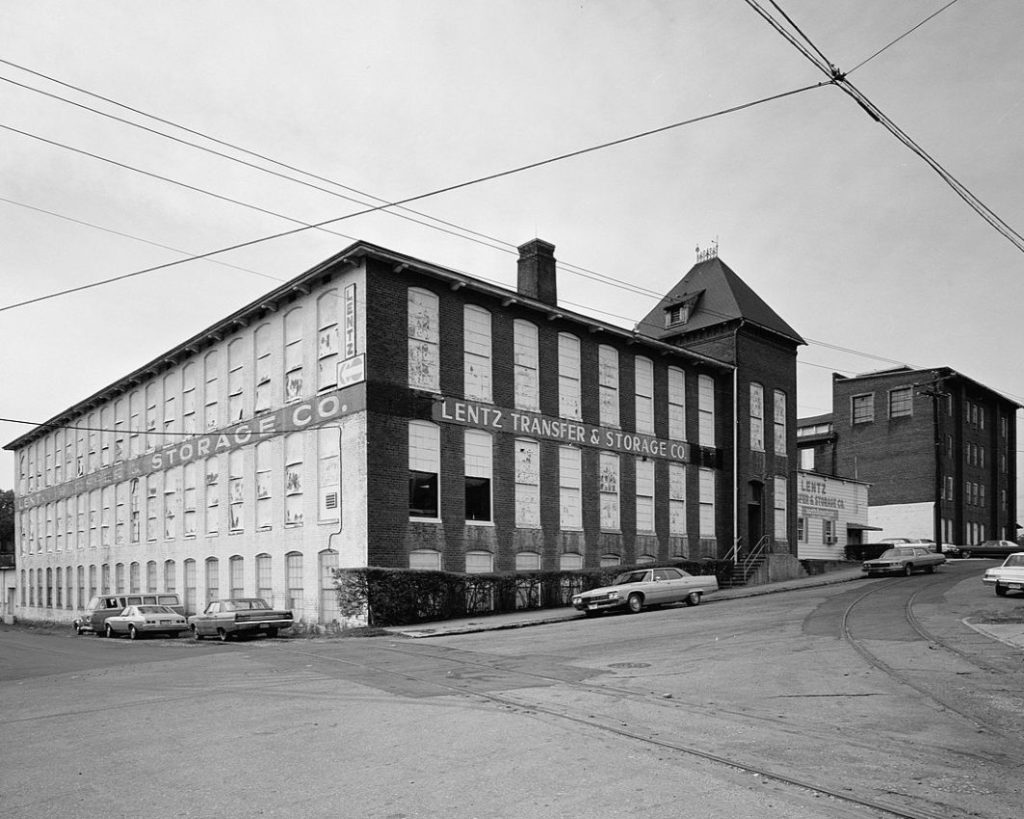
Get to Know Brookstown Mill
Brookstown Mill in Winston-Salem is one of the earliest in North Carolina and began as the Salem Manufacturing Company in 1836. It represents an early capital investment by the Moravians in pivoting from artisan crafts to mass production of cotton goods as an early representation of the Industrial Revolution. This new model was championed by Francis Fries (pronounced “freeze”), a native of Salem who studied mills in New England to learn best practices in textile manufacturing. He organized stockholders to form the Salem Manufacturing Company as a cotton mill and supervised the construction of the factory on the western edge of Salem. The building began as a three-story brick structure with a monitor roof and a cupola on its north end. The mill was equipped with a wood-burning steam engine purchased from Baltimore that drove thread-spinning frames. Thirty-six looms were installed later for weaving cotton cloth. Houses were built nearby for the mill workers’ families, as well as single men and women, and for the mill agent and the chief machinist.
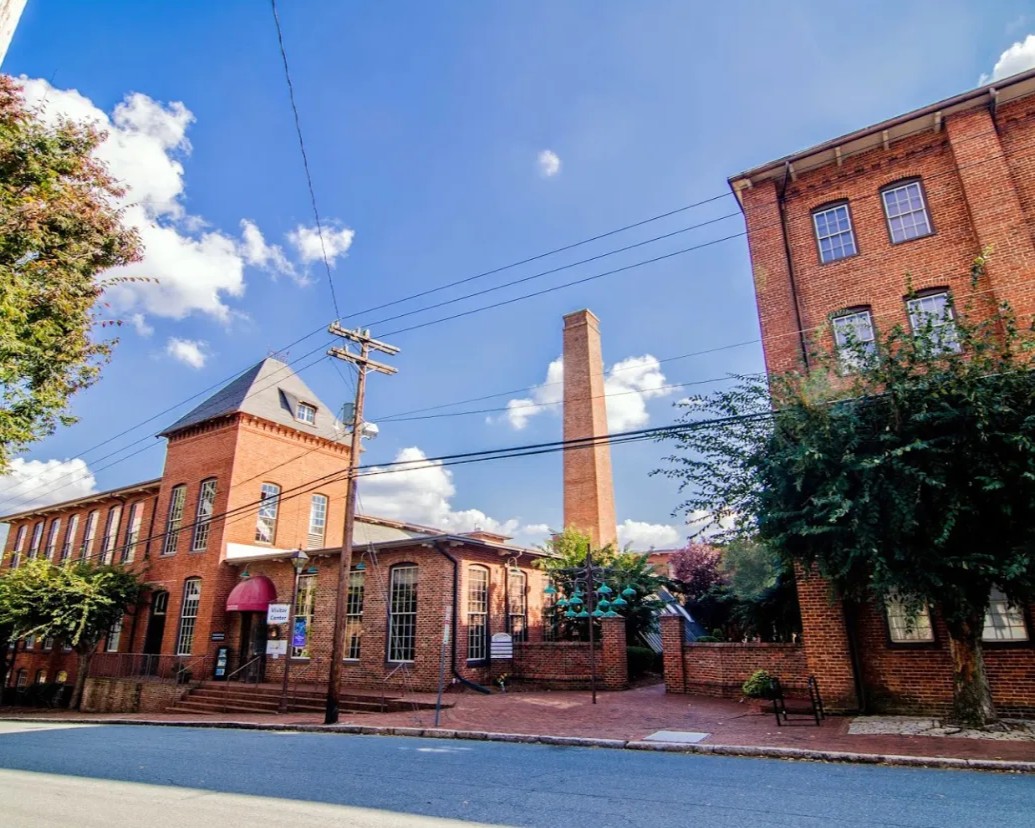
Fries continued as agent and general superintendent of the mill from 1837 to 1840, but resigned to build his own mill. The Salem Mill struggled without him, and by 1854, the property was sold to Governor John M. Morehead. In 1856, Fries obtained control of the old Salem Manufacturing Company and refitted it with flour milling machinery. Reopened as the Wachovia Flour Mills, the mill was expanded to include a four-story facade that enclosed a grain elevator. In 1880, a large freestanding mill was built on land adjoining the mill to the east to house the Arista Cotton Mills, which was established and managed by Francis Fries’ sons.
It is important to note that Fries kept well-informed about the industry trends and growth in the established textile centers of New England. Travel was expensive, so he coordinated with fellow manufacturer Edwin Holt of Alamance County to take alternating trips north, and on their return, they shared their observations related to improvements within the industry.
The entire complex was used as a warehouse before being redeveloped in 1980 using historic tax credits. Its adaptive reuse as The Historic Brookstown Inn was one of the first major industrial conversion projects in North Carolina. The complex has been protected by a preservation easement donated to PNC in 1985.