

PNC Event: Fayetteville Ramble
12:00 pm - 5:00 pm
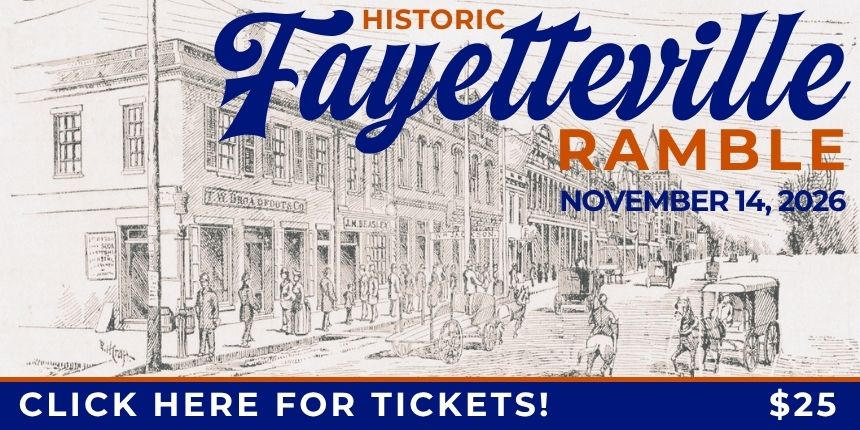
Ramble around historic Fayetteville this fall!
Explore the historic homes, buildings, and landmarks that tell the story of one of North Carolina’s oldest and most architecturally significant communities.
When: Saturday, November 14 | Ramble 12 – 4 pm | Reception 4 – 5 pm
What: Preservation North Carolina Rambles give you the chance to explore the historic homes and buildings of an NC community inside and out — and at your own pace! For each one, our organization partners with property owners and community leaders to share beautiful and interesting historic properties in a single day, many not often open to the public. The Fayetteville Ramble will include a diverse collection of historic residential, institutional, religious, and cultural sites spanning the eighteenth through the twentieth centuries. Initially settled by Scots Highlanders in the mid-eighteenth century, Fayetteville was named in honor of the Marquis de Lafayette in 1783 and emerged as a primary trading center for the backcountry. By the 1810s and 1820s, the village’s wealth attracted commissions by architect William Nichols and engineer Ithiel Town, and traces of their contributions to our state’s architectural legacy remain today. The city’s Market House was built in 1832, and the city’s position linking Cape Fear riverboat trade to the Fayetteville & Western Plank Road to Bethania remained central to trade until supplanted by the Goldsboro to Charlotte NC Railroad in 1856. The establishment of Fort Bragg in 1918 began a new era of prosperity and challenges in the city. Today, Fayetteville is enjoying renewal and growth as a popular retirement location while offering an emerging food and arts scene with its historic architecture as the backdrop.
Fayetteville Ramble Highlights
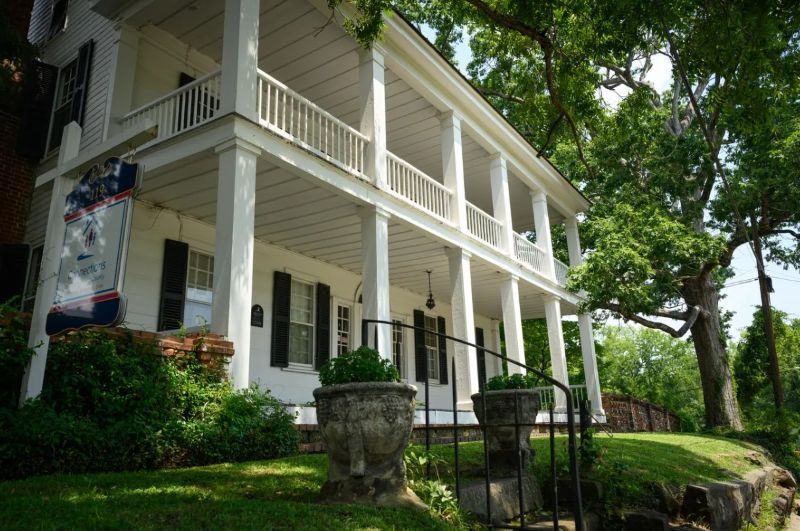
Cool Spring Exclusive Access
Cool Spring Place, also known as Cool Spring Tavern, is a historic home built in 1788. The two-story, five bay by four bay, rectangular Federal-style frame dwelling has a low hipped roof and features a double porch on the front facade. It operated as a tavern until 1795, and is believed to be the oldest existing structure in the city of Fayetteville, having survived the disastrous fire of 1831. It was listed on the National Register of Historic Places in 1972.
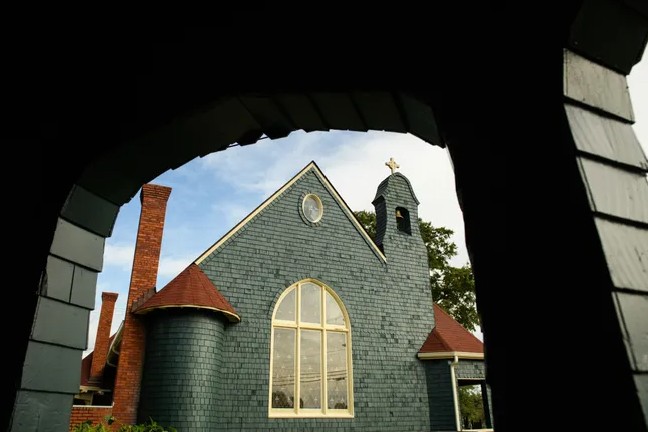
St. Joseph’s Episcopal Church
St. Joseph’s is the second oldest Episcopal congregation in Fayetteville. Chartered in 1873, it shows the historic formation of Black congregations post-Civil War who wanted autonomy. Beyond the church itself, the congregation also rallied to form the St. Joseph’s Parochial School, likely the only means of education for this area’s African American youth. This emphasis on education has been a guiding light in the church’s story. As far as architecture, it’s a complex of buildings linked by wooden arcades mimicking a quintessentially English country setting and style. Unfortunately, a fire destroyed much of the original 1896 buildings in 1916 except for the church. In 1917, a Queen Anne Style second school and parish hall and parsonage were built with Gothic and Spanish accents.
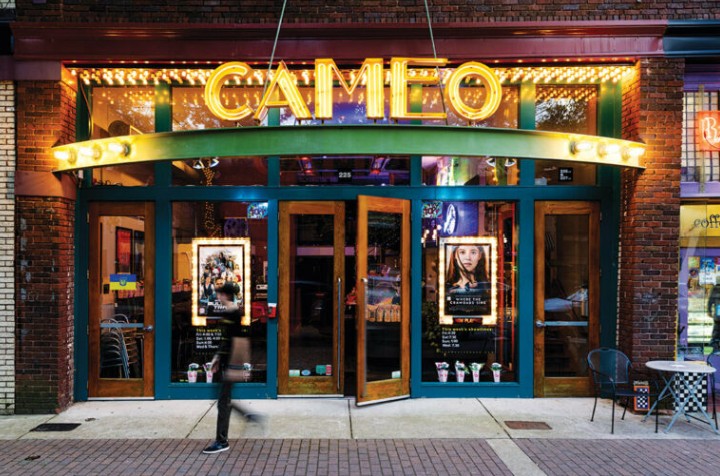
Cameo Theatre
The CAMEO Art House Theatre building was one of Fayetteville’s earliest motion picture theatres, the New Dixie. Veteran moving picture man S.A. Lambert first acquired the original Dixie in 1908. In 1914, he moved across the street to the south side of Hay Street and renamed it the New Dixie. At its opening, Mr. Lambert screened 36 moving pictures a week, and the New Dixie boasted 336 fine opera chairs, ten electrical wall lights, and—with the exception of a theatre in High Point—the only mirror screen in North Carolina. Originally a scored stucco building with a large archway facing Hay Street, it was later given its current brick façade when the adjoining alley was enclosed to make room for Brady’s Newsstand. The popularity of the New Dixie led to the construction of the Broadway and Miracle Theaters, which replaced it as Fayetteville’s state-of-the-art motion picture houses. The present CAMEO Theatre building subsequently housed several local businesses, most notably Dixie Billiards and Eddie’s Music. In 1998, connecting a passion for cinematography, architecture, and historic downtowns, Chris and Nasim Kuenzel, along with Eric Lindstrom, acquired the Dixie Theatre building to create the CAMEO, as it is today. A theatre and creative hub featuring 125 velvet-covered cast-iron opera-style chairs, Dolby Digital sound and projection, four film screening formats, and a lobby lounge where patrons can enjoy a glass of wine, imported beer, coffee, or cappuccino. In 2025, the Cameo Collective, a nonprofit organization, was founded by Brian Adam Kline and seven board members to steward the theatre into its next era. After more than two decades of independent ownership, the transition to nonprofit status ensures that CAMEO will remain a community-centered art house cinema dedicated to film exhibition, education, and cultural preservation in downtown Fayetteville.
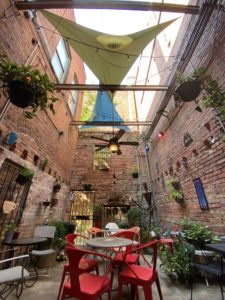 Rude Awakening Coffee House
Neighboring Cameo on Hay Street, is Rude Awakening Coffee House. The coffee shop opened in 1999 after owners Molly and Bruce Arnold rescuing the condemned building from demolition, aiming to create a welcoming community space while serving high-quality coffee. Fun fact, the Arnolds won a Preservation North Carolina Carraway Award of Merit in 2001. The building itself dates back to 1914 and thanks to thoughtful preservation maintains many of its original features including the building facade and leaded glass panels.
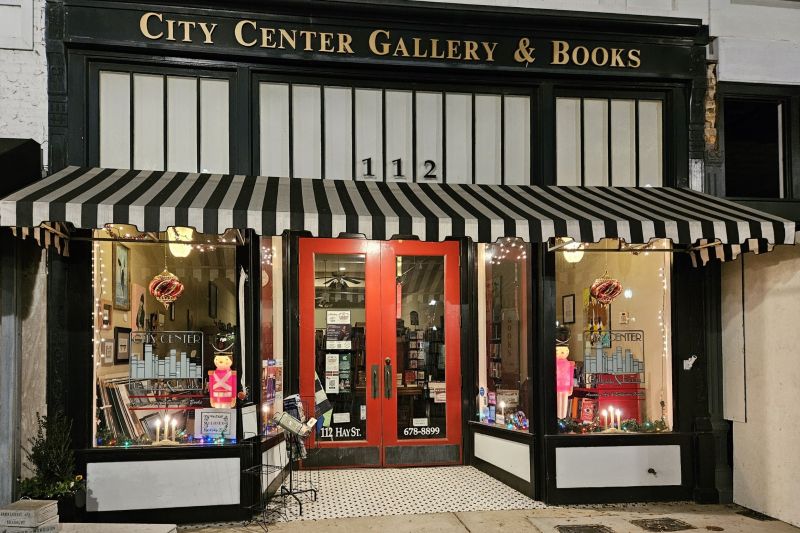
City Center Gallery & Books
Located in the heart of historic downtown Fayetteville, City Center Gallery & Books is an independent bookstore and art gallery housed in a beautifully restored circa-1890 commercial building at 112 Hay Street. Founded as an art gallery in 1999 by Diane and Hank Parfitt, the business expanded to include books when it moved to Hay Street in 2003. Today, visitors can browse thousands of new and used books and discover artwork by local artists while experiencing a welcoming downtown gathering place. During our visit, guests will also have the opportunity to tour the owners’ apartment above the gallery, offering a glimpse into the character and possibilities of living in a historic downtown building.
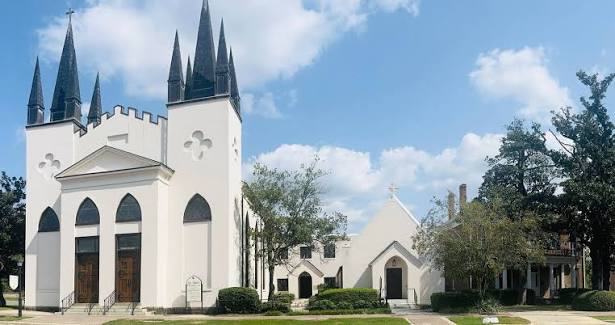
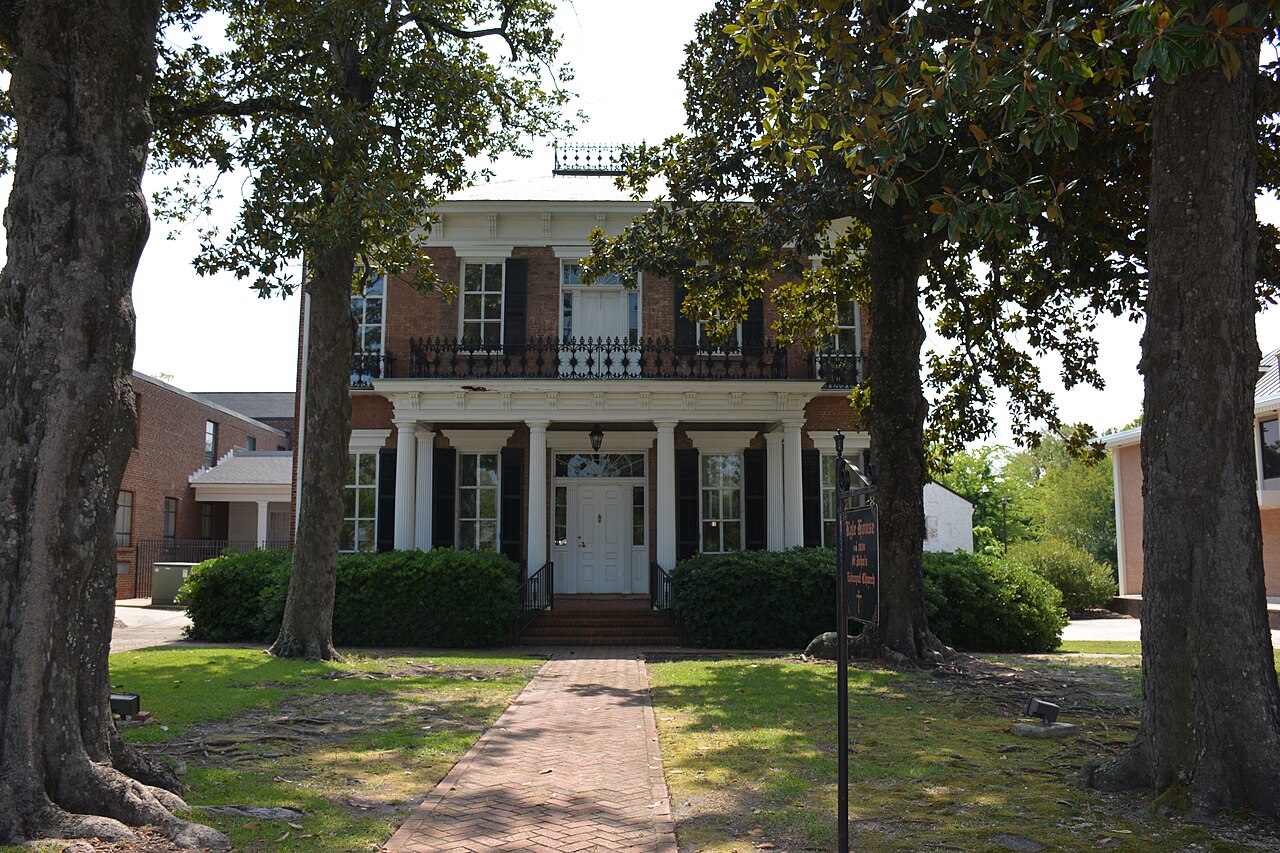 St. John’s Episcopal Church & Kyle House
Founded in 1817, St. John’s Episcopal Church is one of Fayetteville’s most significant historic landmarks. The original church was destroyed in the Great Fire of 1831 and rebuilt on its original foundations, with its distinctive Gothic Revival architecture and remarkable stained-glass windows—including works manufactured in Munich, Germany—reflecting nearly two centuries of history. Adjacent to the church, the Kyle House is one of Fayetteville’s oldest surviving residences. Built for prominent merchant James Kyle in the mid-nineteenth century, the brick home features Greek Revival architecture and has served a variety of civic and community purposes. Together, St. John’s and the Kyle House offer a fascinating look at Fayetteville’s architectural heritage and the enduring role of historic buildings in downtown life.
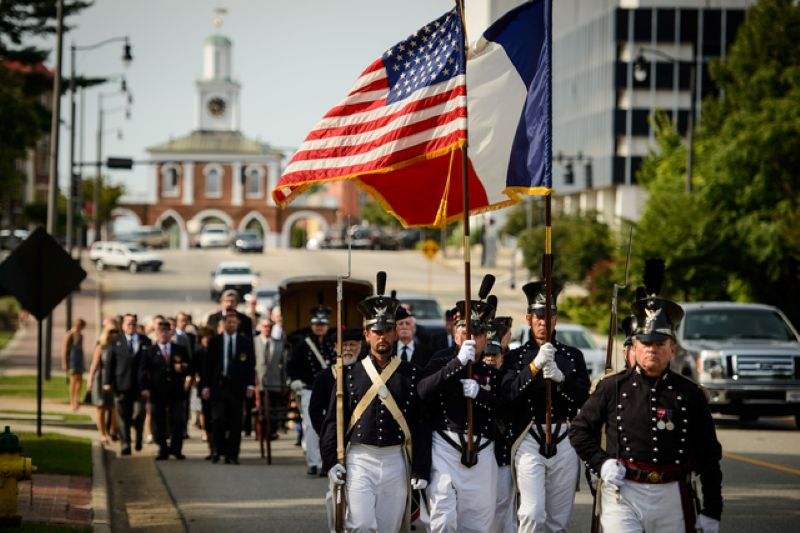 Fayetteville Independent Light Infantry Armory & Museum
Founded on August 23, 1793, the Fayetteville Independent Light Infantry (F.I.L.I.) is one of the nation’s oldest volunteer military companies and North Carolina’s official historic military command. With a history spanning more than two centuries, the organization has served through several American conflicts and continues to preserve its traditions through ceremonial appearances and community service. Visitors can explore this legacy at the F.I.L.I. Museum and Armory, which showcases the company’s remarkable military history and artifacts. The F.I.L.I. remains a distinctive part of Fayetteville’s rich military and civic heritage.
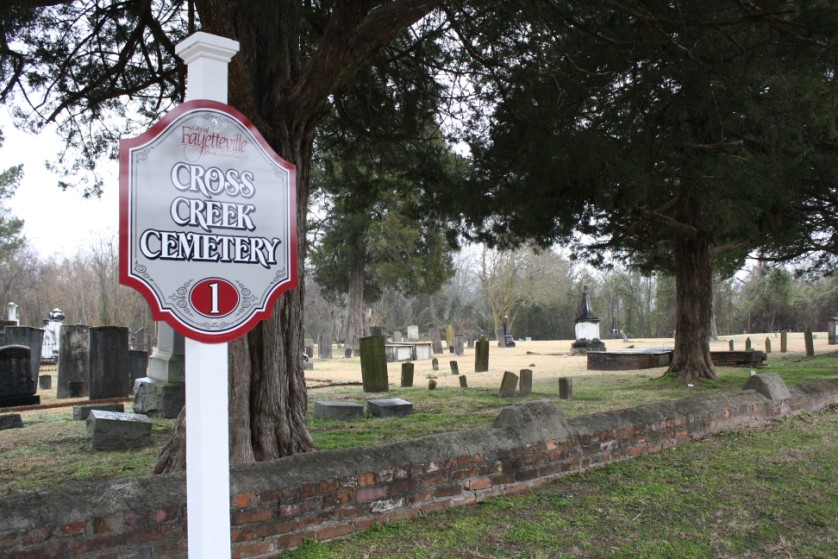 Cross Creek Cemetery #1
Established in 1785, Cross Creek Cemetery No. 1 is Fayetteville’s oldest public cemetery and a remarkable record of the city’s early history. Listed on the National Register of Historic Places, the cemetery is home to generations of Fayetteville residents and an extraordinary collection of nineteenth-century gravestones and funerary art. Many of these works were created by George Lauder, a celebrated Scottish-born stonemason who worked on the North Carolina State Capitol before establishing a marble yard in Fayetteville in 1845. Considered one of North Carolina’s most prolific nineteenth-century stonecutters, Lauder left an enduring artistic legacy throughout the cemetery, including the 1868 Confederate monument, recognized as the first of its kind in North Carolina.
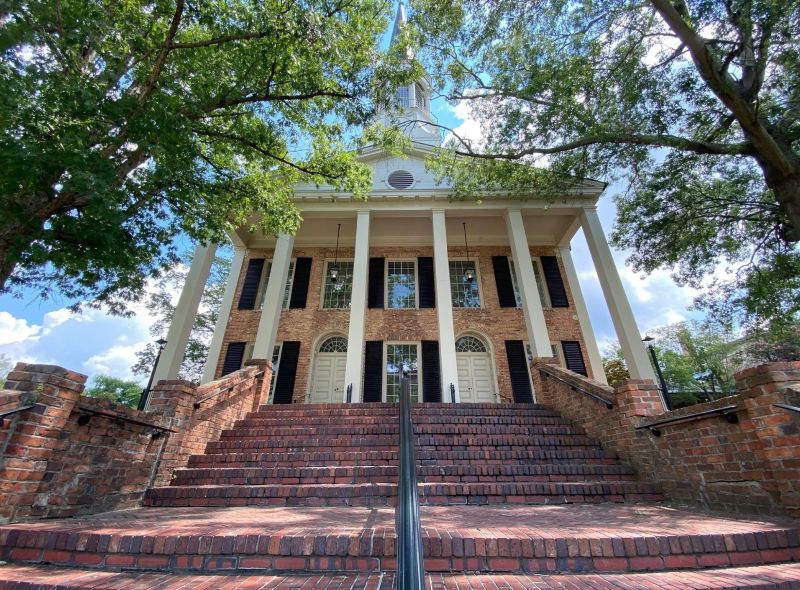
First Presbyterian Church
This storied church’s first congregation dates back to 1800 which led to the construction of its first church in 1810 which was unfortunately destroyed by the Great Fire of 1831 which impacted much of the area at that time. The following year the church community raised funds to rebuild, constructing a beautiful Gothic Revival church that still stands today with pointed arches, flying buttresses and other heritage elements like the , bears which credits early donors and bears the Latin inscription which translates “I perished in the flames the 29th of May, 1831. I arose from the ashes through the generosity of friends in the Second Presbyterian Church, Troy, New York.”
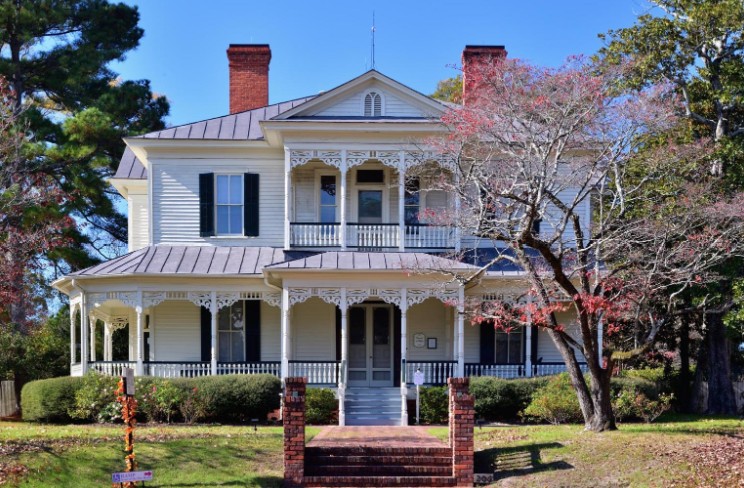
1897 Poe House
The 1897 Poe House, today the site of the Museum of the Cape Fear Historical Complex, was originally the home of the affluent E.A. Poe family before it was donated to the state. Mr. E.A. Poe was a local businessman and owner of the Poe Brick Company (not to be confused with the famous writer). Built in the late 1800s, its stunning two-story home shows Eastlake movement and Stick Style decorative elements indicative of the nineteenth-century architectural styles, characterized by intricate woodwork and a wraparound porch with a double-tiered central bay.
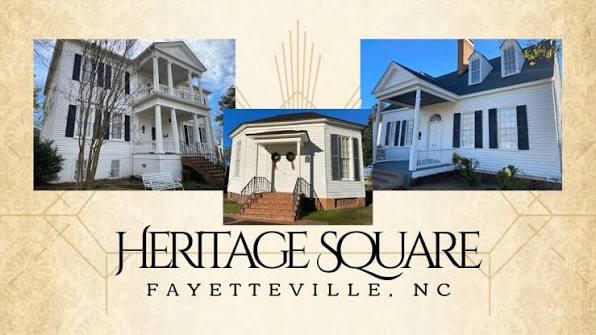
Heritage Square
Explore a remarkable collection of Fayetteville’s early architecture at Heritage Square, home to three historic treasures: the Sandford House, the Baker-Haigh-Nimocks House, and the extraordinary Oval Ballroom. Dating from the late 18th and early 19th centuries, the buildings showcase the Federal, Georgian, and Regency styles that shaped Fayetteville during its early growth. Together, they offer a rare glimpse into the city’s architectural and social history — and demonstrate the importance of preservation in keeping these stories alive for future generations.
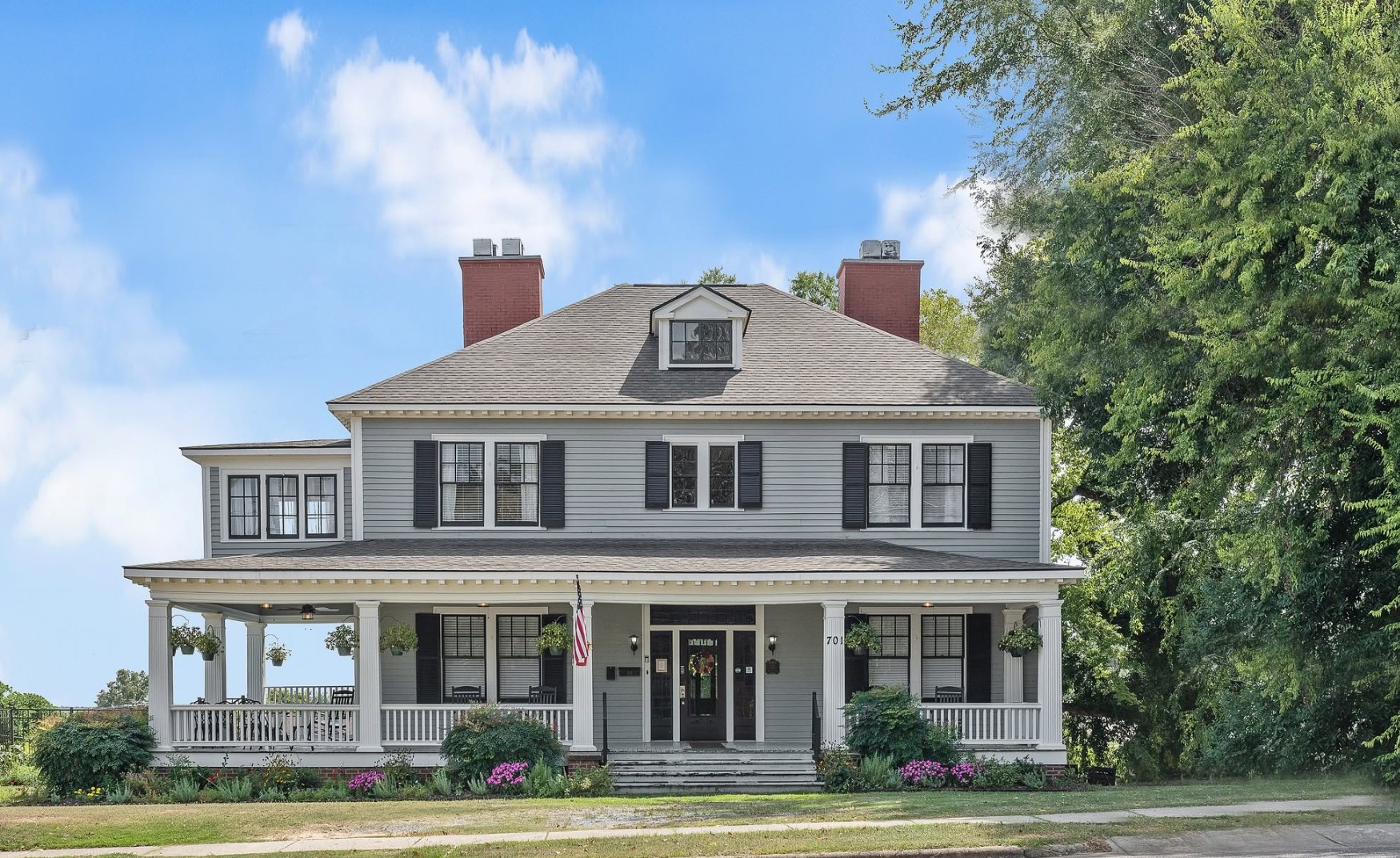
Closing Reception at MacPherson House Bed & Breakfast
Built in the 1920s by Samuel Hinsdale MacPherson, The MacPherson House is home with stories in the floorboards and heart in every corner. From its early days as a private residence to its lovingly restored life as a boutique inn, this house has been a place of gathering, rest, and Southern hospitality for over a century. The MacPherson family were amongst the first Scottish settlers in the region and you’ll find their family name on many landmarks throughout the Fayetteville community. At our reception, Ramble guests will enjoy a tour of the property along with light refreshments.
Thank You To Our Event Sponsors To Date!
Click here to become a sponsor today!
| SILVER | |||
 |
 |
 |
 |
| BRONZE | |||
 |
 |
 |
 |
 |
 |
 |
 |
 |
 |
 |
 |
| CHAMPION | |||
| Erin and Rob Hooks, Hickory, NC and Randolph Hooks, Chase City, VA | |||
| FRIEND | |||
 |
|||