

Statement on Senate Bill 876
Preservation North Carolina President and CEO
Benjamin Briggs’ Statement On Senate Bill 876
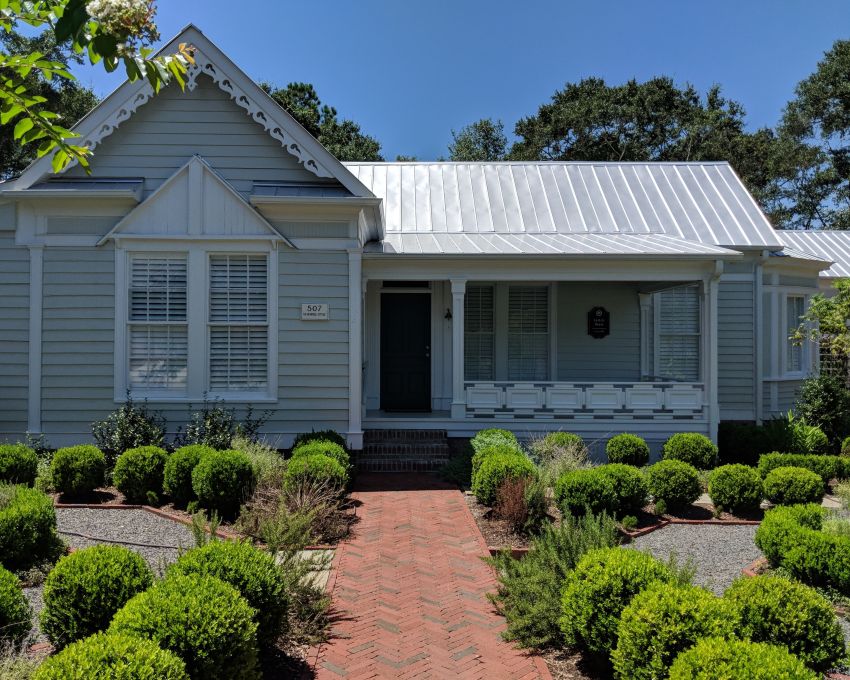
PNC Protected Property: The Guthrie-Parkhill House, Southport NC, built 1886
Recently, the North Carolina General Assembly approved Senate Bill 876, which abolishes the Southport Historic Preservation Commission and bars the city from creating new historic districts or expanding existing ones.
This means that Southport, one of North Carolina’s most iconic and historic communities, no longer has a voice for preservation. Located at the mouth of the Cape Fear River, Southport is a charming community with a seafaring culture.
Southport’s historic architecture serves as both the cornerstone of its unique character and a powerful engine for economic development. Not only have the city’s beautifully preserved structures made it a wonderful place to live and vacation, they have helped established it as a premier filming destination for major television and film productions.
As of July 7, Southport will aim to pivot to a Historic Appearance Commission, but while its intentions might be sincere, the community will not be bound by authority on historic preservation. In short, Southport’s voice for deliberate preservation has been silenced at worst, muffled at best.
In North Carolina, our state’s history plays a key role in our identity and economy. Locally designated landmarks and historic districts drive economic growth, protect property investments, and preserve the special culture of our communities.
As our state attracts an increase of visitors and residents daily, yielding fast growth, preserving the historic resources of our communities becomes even more important.
Preservation helps with property value, stability, and continuity.
Homes in North Carolina historic districts are proven to consistently appreciate faster and resist market downturns better than similar non-designated neighborhoods.
- Investment Protection: Local historic district zoning can address out-of-character development (such as oversized modern infill or loss of architectural detail), assuring buyers that changes will be made consistent with historic character and will endure fleeting television trends.
- Local designation can build appreciation for the history of neighborhoods, including historic materials, construction traditions, and family history. Historic designation is rarely as detailed as modern Homeowner’s Association deed restrictions. Design review is more carefully considered through a quasi-judicial commission of qualified community appointees.
Preservation contributes to jobs and economic stimulus.
- Job Creation: Historic rehabilitation projects create significantly more local jobs—averaging 41.4 jobs per project—compared to new infill construction, keeping our skilled trades labor dollars in our local communities.
- Heritage Tourism: Cohesive, well-preserved districts act as major tourism magnets for cities like Wilmington, Asheville, and Beaufort, capturing vital out-of-state visitor spending and accompanying community reinvestment.
Preservation is often better for the environment and adds community value.
- Sustainability: Reusing existing buildings capitalizes on “embodied energy,” dramatically reducing demolition waste in local landfills and conserving the materials used in original construction.
- Design Quality: Regulated districts mandate higher standards of architectural design and craftsmanship, resulting in a distinct visual appeal and a unique sense of place.
Preservation North Carolina will continue to monitor Southport and other threatened historical communities. Our network of statewide preservation supporters, including historic district property owners, elected officials, developers, architects and builders, will continue to work together to advocate for thoughtful preservation strategies.
Across the state, Preservation North Carolina offers an easement protection program for owners who wish to permanently protect their cherished historic properties. For additional updates related to this issue and other preservation news in our state, follow our social media channels or visit www.presnc.org to learn more about the many ways to support our statewide preservation efforts.
_____________
This news article was originally published on presnc.org on July 8, 2026